Introduction
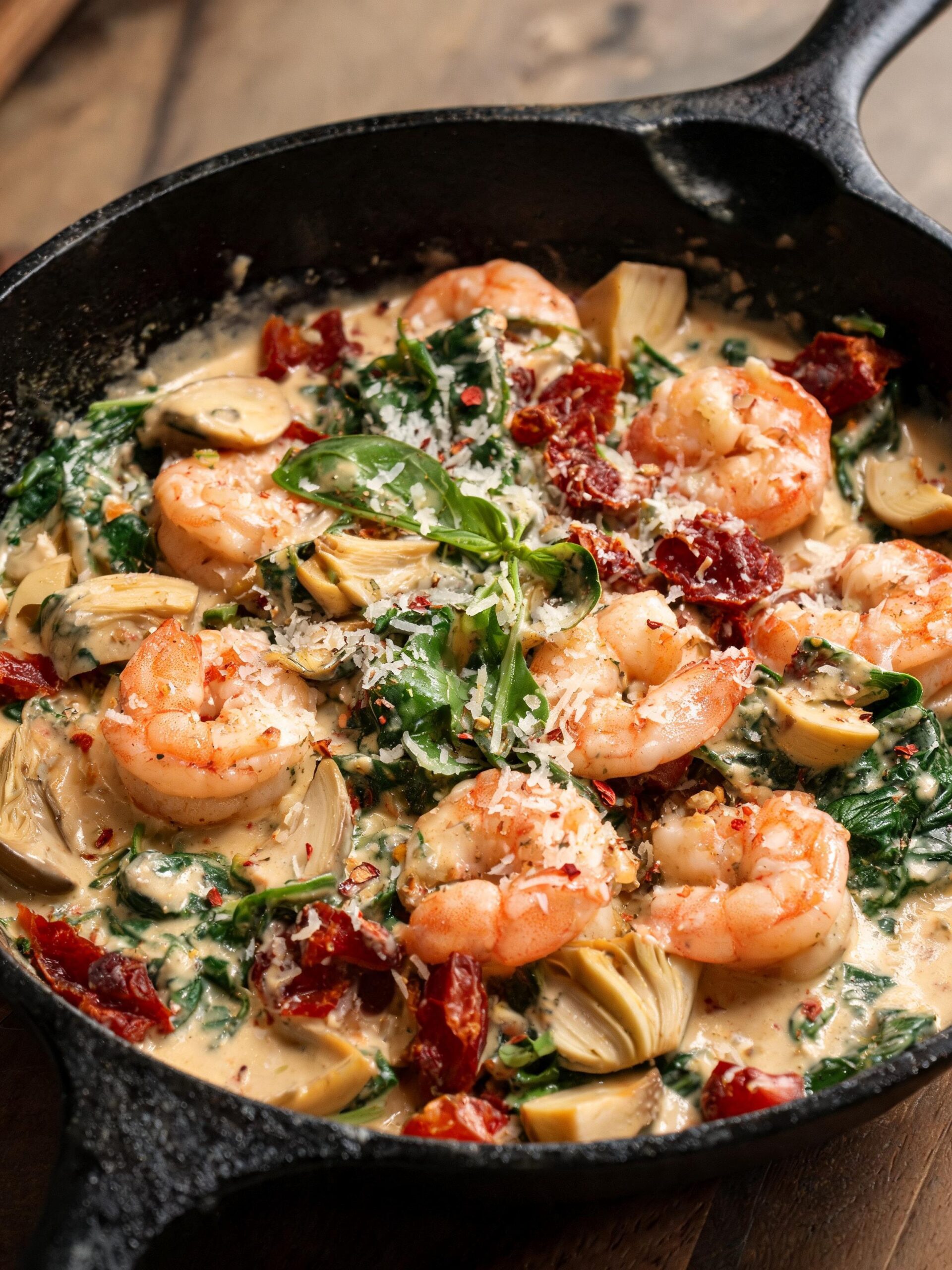
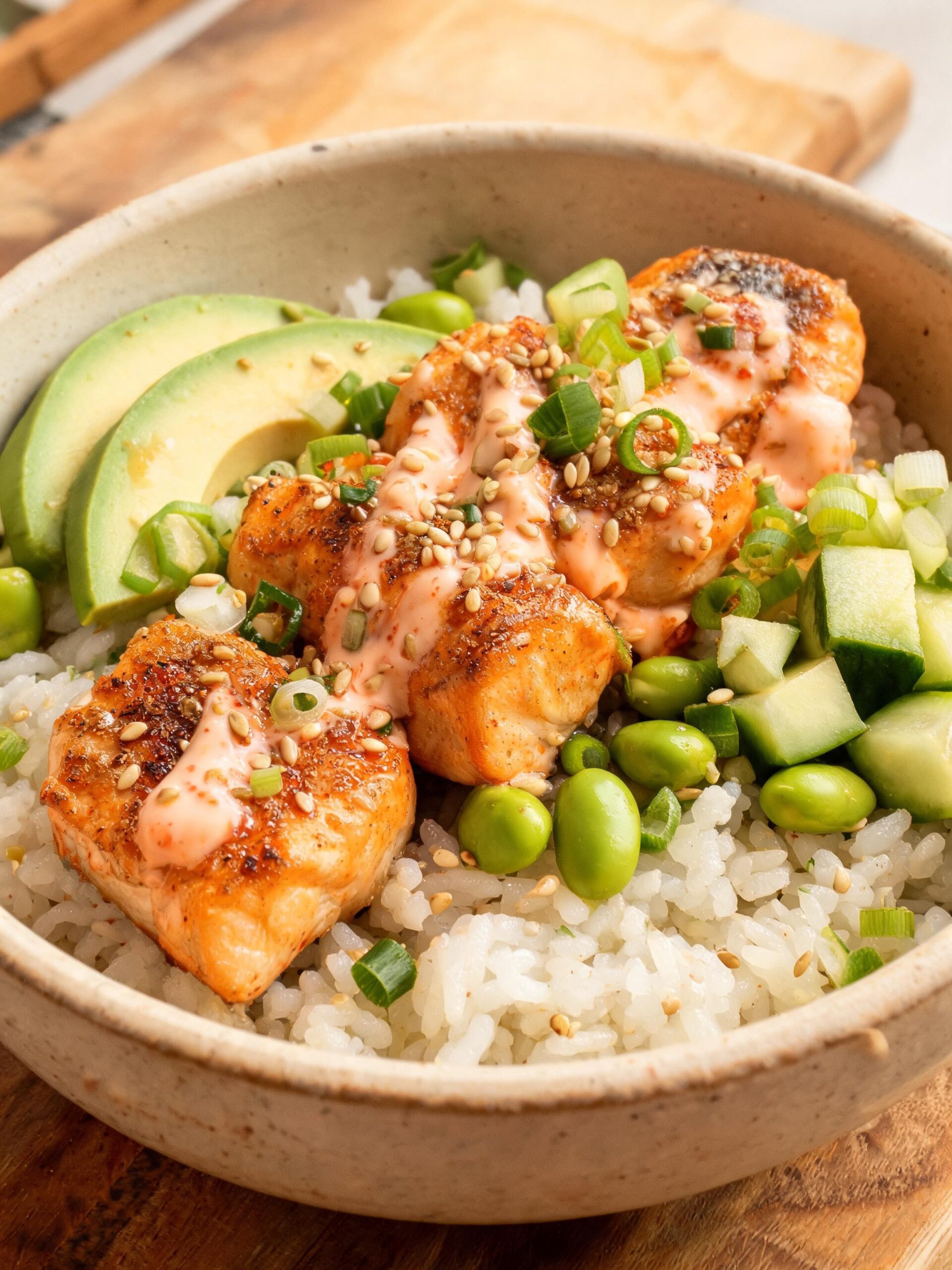
Look, let’s be honest. Sometimes you crave the incredible flavors of sushi but don’t have the time or patience to start rolling maki. That’s where this spicy salmon sushi bowl comes in. It’s the perfect solution, giving you all the components you love—perfectly seasoned rice, fresh salmon, and crisp veggies—without any of the fuss. This recipe is my go-to for a weeknight meal that feels special, much like this Quick Baked Garlic Butter Shrimp, but comes together in about 30 minutes. Forget takeout; making a restaurant-quality spicy salmon sushi bowl at home is easier than you think, and I’m going to walk you through every step.
Why You’ll Love This Recipe
- Restaurant Quality, Weeknight Speed: You get all the satisfaction of a high-end sushi dinner with about 30 minutes of active work. Most of the time is just the rice cooking.
- Completely Customizable: Think of this recipe as a template. You can swap the protein, add your favorite toppings, or adjust the spice level to make it exactly how you like it.
- Fresh, Healthy, and Satisfying: Packed with omega-3s from the salmon, healthy fats from avocado, and wholesome carbs from the rice, it’s a balanced meal that leaves you feeling full and energized, not heavy.
Ingredients List
Precision is key in a dish with so few ingredients. The quality of each component shines through, so choose the best you can find. This recipe serves four.
For the Sushi Rice:
- 1.5 cups Japanese short-grain rice (sushi rice): This is non-negotiable. Its high starch content is what creates that signature sticky, fluffy texture. Brands like Nishiki or Kokuho Rose are excellent. Do not use long-grain rice like basmati or jasmine.
- 2 cups cold water: The ratio is critical. Too much water and you get mush; too little and it’s crunchy.
- 1/4 cup rice vinegar: This adds the characteristic tang to sushi rice. Use unseasoned rice vinegar, as we’ll be adding our own sugar and salt.
- 2 tablespoons granulated sugar: Balances the acidity of the vinegar.
- 1 teaspoon salt: Enhances all the flavors.
For the Spicy Salmon:
- 1.5 lbs sushi-grade salmon fillet, skin removed: Ask your fishmonger specifically for salmon that is safe to eat raw. It should be vibrant in color and smell fresh like the ocean, not fishy.
- 1/4 cup Japanese mayonnaise (Kewpie): This is the secret weapon. It’s richer and creamier than American mayo because it’s made with only egg yolks and has a touch of rice vinegar. It’s worth seeking out.
- 2-3 tablespoons Sriracha: Adjust this to your personal heat preference. Start with two and add more if you like it extra spicy.
- 1 tablespoon soy sauce (low sodium recommended): Adds a savory, umami depth. Low sodium helps you control the saltiness.
- 1 teaspoon toasted sesame oil: A little goes a long way. It provides a nutty, aromatic finish that ties everything together.
- 2 scallions, thinly sliced: The green parts add a mild, fresh onion flavor and a pop of color.
For Assembly and Toppings:
- 1 large avocado, sliced or cubed
- 1 cup Persian cucumber, thinly sliced or diced
- 1/2 cup shelled edamame, cooked
- Toasted sesame seeds
- Shredded nori (roasted seaweed)
- Pickled ginger and wasabi (optional, for serving)
Step-by-Step Instructions
Follow these steps methodically for a perfect result every time.
- Cook the Rice: First, rinse the rice. Place the rice in a fine-mesh sieve and rinse under cold running water, swishing it around with your hand. Continue until the water runs mostly clear, about 2-3 minutes. This removes excess starch and prevents gummy rice. Combine the rinsed rice and 2 cups of water in a medium saucepan or rice cooker. Bring to a boil, then reduce heat to the lowest setting, cover, and simmer for 15 minutes. After 15 minutes, remove from heat and let it stand, covered, for another 10 minutes. Do not lift the lid during this process.
- Season the Rice: While the rice is standing, prepare the vinegar mixture. In a small bowl, whisk together the rice vinegar, sugar, and salt until the sugar and salt are fully dissolved. You can gently warm it in the microwave for 20 seconds to help it dissolve. Once the rice has rested, transfer it to a large, non-metallic bowl (wood or glass is best). Drizzle the vinegar mixture evenly over the hot rice. Using a rice paddle or spatula, gently ‘cut’ and fold the rice, being careful not to mash the grains. Continue until the rice is glossy and has cooled slightly.
- Prepare the Salmon: While the rice cools, prepare the salmon. Pat the salmon fillet completely dry with paper towels. Using a very sharp knife, slice the salmon into uniform 1/2-inch cubes. Place the cubed salmon in a medium bowl.
- Make the Spicy Sauce and Mix: In a separate small bowl, whisk together the Japanese mayonnaise, Sriracha, soy sauce, and toasted sesame oil until smooth. Pour this sauce over the cubed salmon. Add the sliced scallions. Gently fold everything together with a spatula until the salmon is evenly coated. Be gentle to avoid breaking up the pieces of fish.
- Assemble the Bowls: Divide the seasoned sushi rice evenly among four bowls. Top with a generous portion of the spicy salmon mixture. Artfully arrange the sliced avocado, cucumber, and edamame around the salmon. Garnish with a sprinkle of toasted sesame seeds and shredded nori. Serve immediately with pickled ginger and wasabi on the side, if desired.
Chef’s Pro Tips for Success
After twenty years of working with seafood, I’ve learned that the details make the dish. Here are the tips that separate a good bowl from a great one.
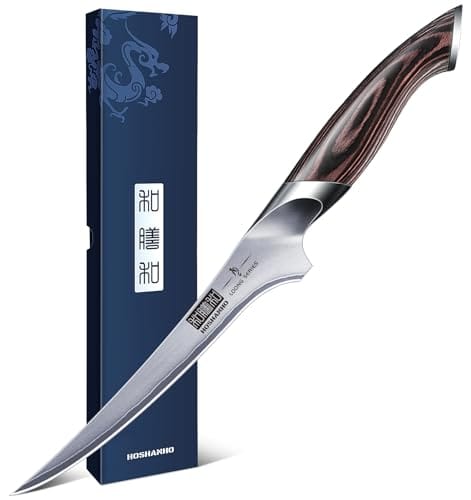
Speaking of details, the single most important tool for this dish is your knife. When you’re working with beautiful, sushi-grade salmon, the last thing you want to do is tear it with a dull blade. That’s why I rely on a super sharp, dedicated fillet knife. It glides through the fish, giving me those perfect, clean 1/2-inch cubes that have a much better texture and presentation. A high-carbon steel fillet knife like the one I use makes all the difference between a homemade bowl and a restaurant-quality one.
Upgrade your kitchen arsenal and see the difference a pro-level knife makes!
Fillet Knife 7 Inch, Super Sharp Boning Knife in High Carbon Stainless Steel
✓ prime
We earn a commission if you make a purchase, at no additional cost to you.
- Source Your Salmon Like a Pro: Don’t just grab any piece of salmon. Talk to your fishmonger. Ask for “sushi-grade” or “sashimi-grade.” Look for a fillet that is vibrant, almost translucent, and has well-defined fat lines. It should smell clean and briny, like the ocean. If it smells “fishy,” it’s not fresh enough for raw consumption. A center-cut piece will give you the most uniform cubes.
- Respect the Rice: The rice is not a background player; it’s the foundation. Seasoning it while it’s hot is crucial. The heat opens up the grains, allowing them to absorb the vinegar mixture fully. If you wait until it’s cold, the seasoning will just coat the outside. Use a wooden or glass bowl because a metal bowl can react with the vinegar and impart a metallic taste.
- Master the Knife Cut: For the most tender bite, slice your salmon against the grain. Look for the white lines (fat) running through the fillet—that’s the grain. Cut perpendicular to those lines. For extra clean cuts, you can place the salmon in the freezer for 10-15 minutes before cubing. This firms it up just enough to make slicing easier and prevents the cubes from tearing.
- Understand Sauce Dynamics: The magic of the spicy sauce comes from Kewpie mayonnaise. Its high-fat content from egg yolks gives it an unparalleled richness that coats the salmon perfectly. When mixing, taste as you go. The amount of Sriracha you need can vary based on the batch’s heat level. The sesame oil is for aroma and nutty depth—don’t skip it, but don’t overdo it either.
- Embrace Temperature and Texture Contrast: The absolute best spicy salmon sushi bowl has a dynamic interplay of temperatures and textures. You want slightly warm, fluffy rice as the base. This gentle warmth contrasts beautifully with the cool, rich salmon. Then you layer on the creamy avocado, the crisp snap of the cucumber, and the slight chew of the edamame. Each bite should be a mix of these sensations.
Common Mistakes to Avoid
I see these simple errors all the time. Avoid them, and you’re already 90% of the way to a perfect bowl.
- Using the Wrong Rice (or Cold Rice): Using a long-grain rice like jasmine will result in separate, dry grains that don’t hold together. It completely changes the dish. Similarly, using leftover, refrigerated rice is a mistake. It becomes hard and dry. The bowl relies on the soft, slightly warm, and sticky texture of freshly made sushi rice.
- Over-mixing the Salmon: When you combine the salmon cubes with the sauce, use a gentle folding motion with a rubber spatula. If you stir it vigorously with a spoon, you’ll break down the delicate fish, creating a mushy, unappealing texture. Treat the salmon with care.
- Drowning the Bowl in Sauce: The spicy mayo is delicious, but it’s potent. The goal is to lightly coat the salmon, not to create a salmon soup. If you over-sauce, you’ll lose the fresh flavor of the fish. It’s always better to mix a standard amount and serve extra sauce on the side for those who want more.
- Mixing the Salmon Too Far in Advance: Do not mix the salmon and sauce until you are ready to assemble and serve. The salt in the soy sauce and the acid from the vinegar in the mayo will begin to cure the fish, changing its texture from silky raw to slightly firm and opaque, similar to ceviche. For the best texture, mix and serve within minutes.
Variations and Serving Ideas
Once you’ve mastered the classic recipe, feel free to get creative. This bowl is a fantastic canvas for experimentation. You can easily swap the salmon for other seafood; even the filling from these air fryer crab cakes would be a delicious and unique addition.
- Protein Swaps: Substitute the salmon with sushi-grade ahi tuna for a classic poke bowl feel. You can also use cooked shrimp (chopped), imitation crab meat, or even pan-seared scallops that have been cooled and diced. For a vegetarian option, use firm tofu that has been cubed and pan-fried until golden.
- Base Variations: For a healthier, higher-fiber option, substitute the sushi rice with cooked quinoa or brown rice. For a low-carb or keto version, build your spicy salmon sushi bowl on a bed of fresh mixed greens or zucchini noodles.
- Sauce Twists: Add a dab of wasabi paste to your spicy mayo for a different kind of heat. Drizzle the finished bowl with a thick, sweet eel sauce (unagi sauce) for another layer of flavor. A splash of ponzu sauce in the salmon mixture can also add a bright, citrusy note.
- Go Wild with Toppings: This is where you can really personalize your bowl. Add chunks of fresh mango for a sweet and tropical contrast. Sprinkle on some tobiko or masago (flying fish roe) for a salty pop and interesting texture. Crispy fried shallots or onions add a fantastic crunch. Other great additions include thinly sliced radishes, shredded carrots, or a sprinkle of Japanese furikake seasoning.
What to Serve With
While this bowl is a complete meal on its own, a few simple sides can round out the experience and make it feel like a true Japanese-inspired feast.
- Miso Soup: A classic starter. A warm, savory bowl of miso soup is the perfect way to begin the meal.
- Steamed Edamame: Serve a bowl of steamed edamame pods sprinkled with flaky sea salt on the side for a simple, healthy appetizer.
- Seaweed Salad: A small side of wakame (seaweed salad) offers a refreshing, slightly sweet and savory counterpoint to the rich salmon bowl.
- Drinks: A crisp Japanese lager like Sapporo or Asahi cuts through the richness of the bowl perfectly. For a more traditional pairing, try a dry sake or a cold green tea.
Storage and Reheating
Handling raw fish requires careful attention to food safety. Here’s how to handle leftovers properly.
- Storage: The fully assembled bowl does not store well. The best practice is to store the components separately. Cooked rice can be stored in an airtight container in the fridge for up to 3 days. Chopped vegetables and sauce can also be stored separately for 2-3 days. Crucially, the raw salmon mixture should be consumed immediately. If you absolutely must store it, place it in an airtight container in the coldest part of your fridge and consume it within 24 hours, but be aware the texture will have changed.
- Reheating: Never, ever reheat the salmon. To reheat the rice, place it in a microwave-safe bowl, cover it with a damp paper towel, and heat in 30-second intervals until just warm. This method steams the rice, restoring some of its soft texture. Once the rice is warm, assemble a fresh bowl with your cold, refrigerated components.
FAQs (People Also Ask)
- Can I make this with cooked salmon?
- Yes, absolutely. This is a fantastic way to use leftover baked or pan-seared salmon. Simply flake the cooked salmon with a fork, let it cool, and then gently toss it with the spicy mayo sauce. Assemble the bowl as directed. The texture will be different, but it’s still delicious.
- How long is the raw salmon mixture safe to eat?
- For the best quality and safety, it should be consumed within an hour of mixing. Do not let it sit at room temperature for more than two hours. The acids and salt in the sauce begin to alter the fish’s texture quickly.
- What is the best substitute for Japanese Kewpie mayo?
- If you can’t find Kewpie, you can use a high-quality, full-fat American mayonnaise. To get it closer to Kewpie’s flavor profile, you can try whisking in a teaspoon of rice vinegar and a half teaspoon of sugar per cup of regular mayo. It won’t be an exact match, but it’s a solid substitute.
- Is “sushi-grade” an official FDA term?
- No, it is not a regulated term by the FDA. It’s a marketing term used by fish suppliers to indicate that the fish is of high enough quality to be eaten raw. It typically means the fish has been frozen at very low temperatures (-4°F or below) for a specific period to kill any potential parasites. Always buy from a reputable fishmonger you trust and tell them you plan to eat it raw.
- How can I prep this spicy salmon sushi bowl ahead of time?
- Meal prep is a great idea for this recipe. You can cook the rice, chop all your vegetables (except the avocado, which will brown), and mix the spicy sauce. Store each component in its own airtight container in the refrigerator for up to 2 days. When you’re ready to eat, all you have to do is cube the fresh salmon, mix it with the pre-made sauce, slice an avocado, and assemble your bowls in minutes.
Nutrition
Nutrition Facts
(Per serving. Estimates only, varies by exact ingredients used)
Conclusion
There you have it—a straightforward, no-fuss path to an incredibly satisfying meal. This spicy salmon sushi bowl proves that you don’t need to be a sushi master to enjoy the clean, vibrant flavors of Japanese cuisine at home. Give this recipe a try, and I guarantee it will become a regular in your dinner rotation. Enjoy every bite.
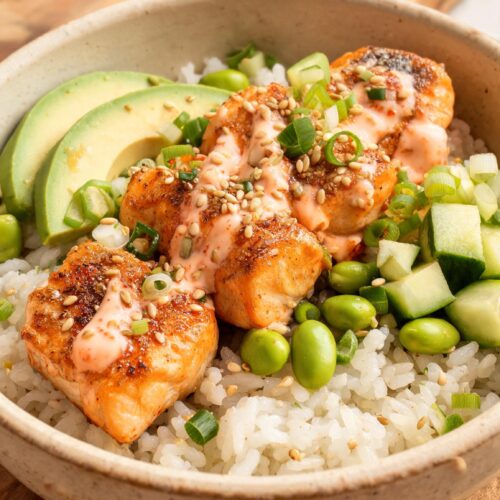
Spicy Salmon Sushi Bowl Recipe | Deconstructed Sushi Bowl with Creamy Sauce
Ingredients
- 1.5 cups Japanese short-grain rice (sushi rice)
- 2 cups cold water
- 1/4 cup rice vinegar
- 2 tablespoons granulated sugar
- 1 teaspoon salt
- 1.5 lbs sushi-grade salmon fillet, skin removed
- 1/4 cup Japanese mayonnaise (Kewpie)
- 2-3 tablespoons Sriracha, to taste
- 1 tablespoon soy sauce, low sodium
- 1 teaspoon toasted sesame oil
- 2 scallions, thinly sliced
- 1 large avocado, sliced or cubed
- 1 cup Persian cucumber, thinly sliced or diced
- 1/2 cup shelled edamame, cooked
- Toasted sesame seeds, for garnish
- Shredded nori (roasted seaweed), for garnish
Instructions
- Rinse the sushi rice under cold water until the water runs mostly clear. Combine rinsed rice and 2 cups of water in a saucepan or rice cooker. Bring to a boil, then reduce heat to low, cover, and simmer for 15 minutes. Remove from heat and let stand, covered, for 10 minutes.
- While the rice stands, whisk together the rice vinegar, sugar, and salt until dissolved. Transfer the hot rice to a large non-metallic bowl, drizzle with the vinegar mixture, and gently fold with a spatula until glossy and slightly cooled.
- Pat the salmon fillet dry and, using a sharp knife, cut it into 1/2-inch cubes. Place in a medium bowl.
- In a separate small bowl, whisk together the Japanese mayonnaise, Sriracha, soy sauce, and toasted sesame oil until smooth. Pour the sauce over the cubed salmon.
- Add the sliced scallions to the salmon bowl and gently fold everything together until the salmon is evenly coated. Be careful not to mash the fish.
- Divide the seasoned sushi rice among four bowls. Top with the spicy salmon mixture. Arrange the sliced avocado, cucumber, and edamame around the salmon.
- Garnish with toasted sesame seeds and shredded nori. Serve immediately.