Introduction
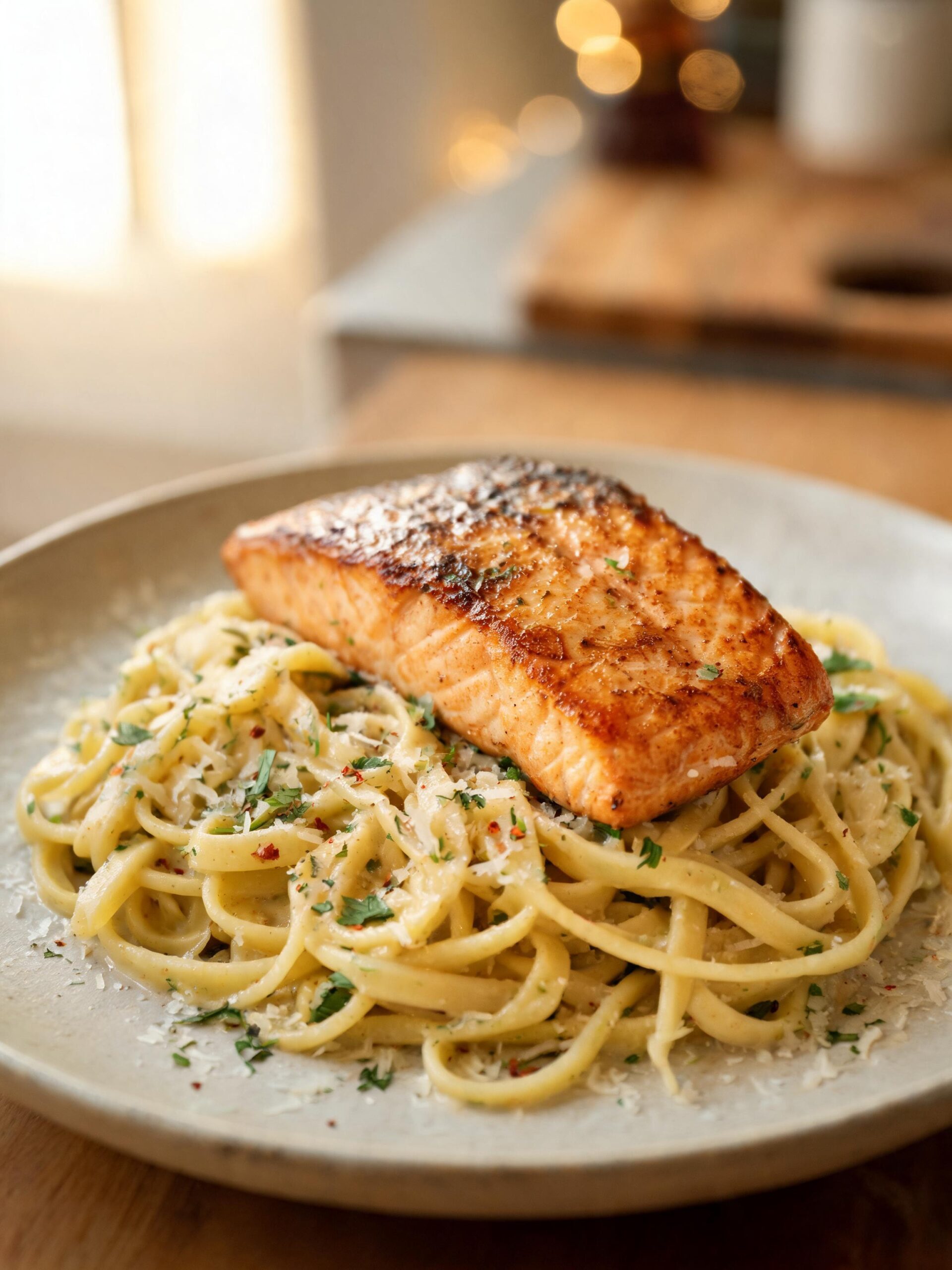
When you need a quick, impressive dinner that tastes like it came from a high-end restaurant but is secretly simple, this Creamy Lemon Garlic Salmon Pasta is the answer. For twenty years, I’ve worked the line in busy seafood kitchens, and I can tell you that the dishes people remember are the ones that balance rich, comforting flavors with fresh, bright notes, much like our popular Crispy Salt and Pepper Fried Calamari. This recipe does exactly that. It’s a complete, satisfying meal that comes together in about 30 minutes, making it my go-to for a hectic weeknight when I still want something special. We’re talking perfectly seared salmon flaked into a luscious, lemon-kissed garlic cream sauce, all tossed with tender pasta. It’s straightforward, uses ingredients you can easily find, and delivers a result that will make you feel like a professional chef in your own kitchen.
Why You’ll Love This Recipe
- Restaurant-Quality in 30 Minutes: This entire meal, from prep to plate, is designed to be fast. It’s the perfect solution for getting a sophisticated dinner on the table without spending hours cooking.
- Incredible Depth of Flavor: The combination of pan-seared salmon, aromatic garlic, a splash of white wine, rich cream, and bright lemon creates a perfectly balanced sauce that’s both decadent and fresh.
- Simple, Accessible Ingredients: There’s nothing exotic here. Every component, from the salmon fillets to the heavy cream, is readily available at your local grocery store, making this an easy recipe to tackle any night of the week.
Ingredients List
A great dish starts with quality ingredients. For this creamy Salmon Pasta, we’re using a combination of fresh components and pantry staples. Precision matters in a recipe like this, so measure carefully.
For the Salmon and Pasta:
- Salmon Fillets: 1.5 lbs (about four 6-ounce fillets), skin-on or skinless. I prefer skin-on for searing as it protects the flesh and adds flavor, but skinless works just fine. Look for fillets of even thickness for consistent cooking.
- Pasta: 12 ounces of a long pasta like fettuccine, linguine, or pappardelle. These shapes are ideal for catching the creamy sauce.
- Unsalted Butter: 2 tablespoons, divided. We’ll use one for searing the salmon and one for finishing the sauce.
- Olive Oil: 1 tablespoon. Combining it with butter raises the smoke point and prevents the butter from browning too quickly.
- Kosher Salt and Freshly Ground Black Pepper: To taste, for seasoning both the salmon and the sauce.
For the Creamy Lemon Garlic Sauce:
- Shallot: 1 large, finely minced. A shallot provides a milder, more delicate flavor than an onion, which is perfect for this sauce.
- Garlic: 4-5 cloves, minced. Don’t be shy with the garlic; it’s a key flavor component.
- Dry White Wine: 1/2 cup, such as Sauvignon Blanc or Pinot Grigio. This deglazes the pan and adds a crucial layer of acidity. If you don’t use alcohol, you can substitute with low-sodium chicken or vegetable broth with an extra squeeze of lemon juice.
- Heavy Cream: 1 1/4 cups. Do not substitute with half-and-half or milk, as the lower fat content will cause the sauce to break or be too thin.
- Reserved Pasta Water: 1 cup. This starchy water is the secret to a silky, emulsified sauce that clings to the pasta.
- Parmesan Cheese: 1/2 cup, freshly grated. Use a block of Parmigiano-Reggiano and grate it yourself. Pre-shredded cheese has anti-caking agents that will make your sauce grainy.
- Lemon: 1 large. We’ll use both the zest and the juice for a bright, multi-layered citrus flavor.
- Fresh Parsley: 1/4 cup, finely chopped, for garnish and a touch of freshness.
- Red Pepper Flakes: 1/4 teaspoon (optional), for a subtle background heat.
Step-by-Step Instructions
- Cook the Pasta: Bring a large pot of heavily salted water to a rolling boil. Add the pasta and cook according to package directions until al dente (firm to the bite). Before draining, reserve at least 1 1/2 cups of the starchy pasta water. Drain the pasta and set it aside.
- Prepare and Sear the Salmon: While the pasta cooks, pat the salmon fillets completely dry with paper towels. This is critical for getting a good sear. Season both sides generously with salt and pepper. Heat 1 tablespoon of olive oil and 1 tablespoon of butter in a large skillet or Dutch oven over medium-high heat. Once the butter is melted and foaming, place the salmon fillets skin-side up (if using skin-on). Sear for 4-5 minutes without moving them, until a golden-brown crust forms. Flip the fillets and cook for another 3-4 minutes, or until the salmon is cooked through and flakes easily with a fork. The internal temperature should be around 130°F for medium. Remove the salmon from the skillet and set it on a plate.
- Build the Sauce Base: Reduce the heat to medium. In the same skillet, add the minced shallot and cook for 2 minutes until softened. Add the minced garlic and optional red pepper flakes, and cook for another minute until fragrant. Be careful not to burn the garlic.
- Deglaze and Simmer: Pour in the white wine to deglaze the pan, scraping up any browned bits (the fond) from the bottom of the skillet with a wooden spoon. Let the wine simmer and reduce by about half, which should take 2-3 minutes.
- Create the Cream Sauce: Reduce the heat to low. Slowly pour in the heavy cream and lemon juice. Whisk to combine and bring the sauce to a gentle simmer. Let it bubble gently for 3-4 minutes to thicken slightly.
- Emulsify the Sauce: Turn off the heat. Gradually whisk in the grated Parmesan cheese until it’s completely melted and the sauce is smooth. Now, whisk in 1/2 cup of the reserved pasta water. This will help create a silky, emulsified sauce. Add more pasta water, a tablespoon at a time, until the sauce reaches your desired consistency. It should be thick enough to coat the back of a spoon. Stir in the lemon zest and the remaining 1 tablespoon of cold butter.
- Combine and Serve: Using tongs, flake the cooked salmon into large chunks, discarding the skin if you used it. Add the drained pasta and the flaked salmon to the skillet with the sauce. Gently toss everything together until the pasta and salmon are well-coated. Stir in most of the fresh parsley. Serve immediately, garnished with extra parsley and a crack of black pepper.
Chef’s Pro Tips for Success
To get that incredible, crusty sear I’m talking about, the kind that makes all the difference, I rely on a heavy-duty cast iron surface. A good cast iron skillet or griddle, like my trusty Lodge Pro-Grid, holds and distributes heat far more evenly than a standard non-stick pan. This consistent, high heat is the secret to achieving a deep, flavorful Maillard reaction on the salmon without overcooking the interior. It truly elevates the entire dish. If you’re serious about getting that perfect restaurant-quality sear at home, this is the tool I recommend.
Lodge LPGI3 Pro-Grid Cast Iron Reversible Grill/Griddle, 20-inch x 10.44-inch
✓ prime
We earn a commission if you make a purchase, at no additional cost to you.

After years of making seafood pasta, I’ve learned a few non-negotiable techniques that separate a decent dish from a spectacular one. These tips will elevate your Salmon Pasta from good to unforgettable.
- The Dry Sear is Non-Negotiable: The single most important step for flavorful salmon is getting a hard sear. Moisture is the enemy of browning. Pat your salmon fillets bone-dry with a paper towel before seasoning. A hot pan (medium-high heat) with a combination of oil and butter is key. Once you place the salmon in the pan, do not touch it for at least 4 minutes. Let it form a deep, golden-brown crust. This process, called the Maillard reaction, creates hundreds of new flavor compounds that are impossible to achieve otherwise.
- Pasta Water is Liquid Gold: Never, ever dump all your pasta water down the drain. That cloudy water is full of salt and starch, which acts as a powerful emulsifier and thickener. When you add it to your cream sauce, the starch molecules help bind the fat (from the cream and butter) and the water (from the wine and lemon juice) together, creating a stable, glossy sauce that clings beautifully to the pasta instead of pooling at the bottom of the plate. I always reserve more than I think I’ll need.
- Build Flavor on the ‘Fond’: After you sear the salmon, you’ll see browned bits stuck to the bottom of your skillet. That’s called ‘fond’, and it’s pure, concentrated flavor. Do not clean the pan. Sauté your shallots and garlic right in those salmon drippings. When you deglaze with white wine, use a wooden spoon to scrape every last bit of that fond off the bottom. It will dissolve into the wine and form the savory backbone of your entire sauce.
- Control Your Heat for a Smooth Sauce: Dairy, acid, and high heat can be a tricky combination. To prevent your cream sauce from curdling or breaking, always reduce the heat to low before adding the cream and lemon juice. And most importantly, turn the heat completely off before you add the Parmesan cheese. Adding cheese to a boiling sauce will cause the proteins to seize and clump, resulting in a grainy texture. Let the residual heat of the sauce melt the cheese slowly and smoothly.
- Finish with Cold Butter (Monter au Beurre): This is a classic French technique that adds richness, shine, and a final touch of emulsification to a sauce. Right at the end, after the cheese is incorporated and you’re happy with the consistency, stir in a tablespoon of cold, cubed butter. The cold temperature helps it melt slowly, creating a tight emulsion that gives the sauce a beautiful, velvety sheen and a richer mouthfeel.
Common Mistakes to Avoid
A great Salmon Pasta depends on perfectly cooked fish and a flawless sauce. Here are some common pitfalls I’ve seen over the years and exactly how to sidestep them.
- The Overcooked, Dry Salmon: This is the cardinal sin of cooking fish. Salmon is a delicate protein that goes from perfectly moist to dry and chalky in a matter of seconds. The mistake is relying solely on cooking time. Fillets vary in thickness. The solution is to use visual and temperature cues. Cook the salmon until it’s about 80% done on the first side, then flip for just a few minutes. The center should still be slightly translucent when you remove it from the pan. It will finish cooking from residual heat as it rests. For ultimate precision, use an instant-read thermometer; pull the salmon off the heat when it hits 125-130°F in the thickest part.
- The Broken, Oily Sauce: You see a greasy film of oil separating from the creamy base. This happens when the emulsion breaks. It’s usually caused by two things: excessive heat or not enough starch. As mentioned in the tips, always add your cheese off the heat. If your sauce still looks greasy, it’s likely you didn’t add enough of the starchy pasta water. Whisk in a few more tablespoons of hot pasta water to help bind the fats and liquids back together.
- The Watery, Lifeless Sauce: The opposite problem is a sauce that’s thin and pools in the bowl instead of coating the pasta. This typically means the sauce wasn’t reduced enough. After adding the cream, you must let it simmer gently for a few minutes to thicken. Also, don’t just dump the pasta into the sauce. Use tongs to transfer the pasta directly from the pot to the skillet, which carries over a little extra pasta water and helps the sauce cling. If it’s still too thin, let the pasta and sauce simmer together for a minute to allow the pasta to absorb some of the liquid.
- The Bland, One-Note Dish: You followed the steps, but the flavor just isn’t popping. This is almost always an issue of under-seasoning and a lack of acid. Salt your pasta water properly—it should taste like the sea. This seasons the pasta from the inside out. Season the salmon generously. And finally, don’t forget the power of acid. The lemon juice and white wine are not optional; they cut through the richness of the cream and butter, brightening the entire dish. A final squeeze of fresh lemon juice right before serving can wake everything up.
Variations and Serving Ideas
Once you master the base recipe, you can easily adapt this dish. Think of this as a template to change up your weeknight Salmon Pasta and keep things interesting.
- Add Leafy Greens: Add 3-4 large handfuls of fresh spinach or chopped kale to the sauce right before adding the pasta. Let it wilt for a minute. The greens add color, nutrients, and a nice earthy flavor that complements the salmon.
- Incorporate More Vegetables: Blanched asparagus tips, green peas (frozen works great), or sun-dried tomatoes (chopped) are fantastic additions. Add them to the sauce along with the garlic to heat through.
- Use Smoked Salmon: For a no-cook protein option, swap the seared salmon fillets for 6 ounces of high-quality hot-smoked salmon. Flake it and stir it into the finished sauce with the pasta. It adds a wonderful smoky depth.
- Make it Spicy: If you like heat, double the amount of red pepper flakes. You can also add a finely minced chili pepper along with the garlic for a more pronounced, fresh heat.
- Herb Variations: While parsley is classic, fresh dill is a natural partner for both salmon and lemon. A tablespoon of fresh tarragon or chives would also be excellent substitutions or additions.
What to Serve With
This dish is quite rich, so the best pairings are things that offer a bit of contrast in texture and flavor.
- Wine Pairing: A crisp, high-acid white wine is perfect here. A Sauvignon Blanc from New Zealand with its citrusy notes will mirror the lemon in the sauce. A dry Pinot Grigio or an unoaked Chardonnay also works beautifully to cut through the creaminess, and is a fantastic choice for other seafood classics like our authentic Spanish seafood paella.
- Simple Green Salad: A simple salad of arugula or mixed greens tossed in a sharp lemon vinaigrette is all you need. The peppery bite of the arugula and the acidity of the dressing will cleanse the palate between bites of rich pasta.
- Crusty Bread: A warm, crusty sourdough or focaccia is essential for mopping up every last bit of that delicious lemon garlic cream sauce from the bottom of your bowl.
- Roasted Vegetables: If you want a more substantial side, simple roasted asparagus or green beans tossed with olive oil, salt, and pepper provide a nice textural contrast and a touch of green to the plate.
Storage and Reheating
Reheating seafood pasta can be tricky, but it’s possible to do it well if you follow the right method.
- Storage: Store any leftovers in an airtight container in the refrigerator for up to 2 days. The quality of the salmon and the sauce diminishes after that. I do not recommend freezing this dish, as the cream sauce will separate and become grainy upon thawing.
- Reheating Method: The microwave is your enemy here; it will overcook the salmon into rubbery chunks and cause the sauce to break and become oily. The best way to reheat is gently on the stovetop. Place the leftover pasta in a small saucepan over low heat. Add a splash of milk, cream, or chicken broth (about 1-2 tablespoons per serving) to loosen the sauce and restore its creaminess. Cover the pan and heat slowly, stirring occasionally, until just warmed through. This gentle, slow heating method helps keep the salmon tender and the sauce intact.
FAQs (People Also Ask)
Can I use frozen salmon for this recipe?
Absolutely. Frozen salmon is often a high-quality and convenient option. The key is to thaw it properly. The best method is to let it thaw overnight in the refrigerator. If you’re short on time, you can place the vacuum-sealed fillets in a bowl of cold water for about an hour. Once thawed, the most critical step is to pat the fillets completely dry with paper towels to ensure you can still get a beautiful, crispy sear.
What can I use as a dairy-free substitute?
To make this dairy-free, you can substitute the heavy cream with a high-quality, full-fat canned coconut milk or a dairy-free cooking cream alternative. For the butter, use a good vegan butter or more olive oil. For the Parmesan, use a dairy-free Parmesan alternative or 2-3 tablespoons of nutritional yeast for a cheesy, savory flavor. Be aware that these substitutions will alter the final taste and texture of the dish, giving it a slight coconut undertone.
What is the best pasta shape for this creamy salmon pasta?
Long, flat noodles are the superior choice for this recipe. Fettuccine, linguine, tagliatelle, and pappardelle have a large surface area that is perfect for clinging to the rich, creamy sauce, ensuring you get a perfect ratio of pasta, sauce, and salmon in every bite. While you could use a short pasta like penne or fusilli, it won’t deliver the same luxurious experience.
How do I know when my salmon is perfectly cooked?
There are two reliable ways. The first is the visual cue: use a fork to gently press on the thickest part of the fillet. If it begins to flake easily into nice chunks, it’s done. The center should look opaque, not raw and translucent. The second, more precise method is using an instant-read thermometer. Insert it into the thickest part of the fillet; for tender, moist salmon, you’re looking for an internal temperature of 125°F to 130°F. Remember it will continue to cook slightly after you remove it from the heat.
Can I use canned salmon for this Salmon Pasta recipe?
While fresh or frozen seared salmon provides the best texture and flavor, you can use high-quality canned salmon in a pinch. I would recommend using a wild-caught canned salmon packed in water. Drain it very well. Since it’s already cooked, you would skip the searing step. Simply flake the canned salmon and gently fold it into the finished sauce along with the cooked pasta at the very end, just to heat it through.
Nutrition
Nutrition Facts
(Per serving. Estimates only, varies by exact ingredients used)
Conclusion
This Creamy Lemon Garlic Salmon Pasta is more than just a recipe; it’s a reliable, elegant solution for dinner. It proves that you don’t need a lot of time or complicated steps to create something truly delicious and satisfying. I hope this becomes a staple in your kitchen, just as it is in mine. Give it a try, and enjoy every single bite.
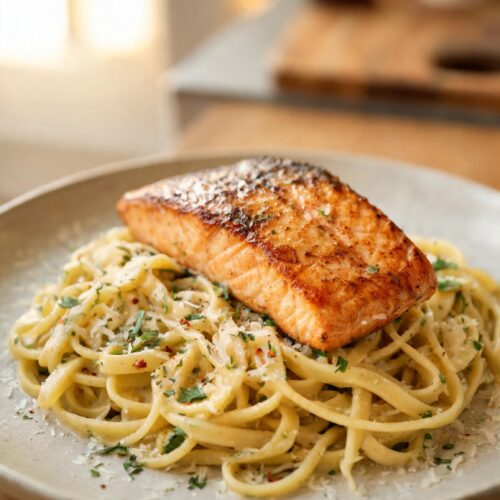
Creamy Lemon Garlic Salmon Pasta (30-Minute Meal)
Ingredients
- 1.5 lbs salmon fillets (about four 6-ounce fillets), skin-on or skinless
- 12 ounces fettuccine or linguine
- 2 tablespoons unsalted butter, divided
- 1 tablespoon olive oil
- Kosher salt and freshly ground black pepper, to taste
- 1 large shallot, finely minced
- 4-5 cloves garlic, minced
- 1/2 cup dry white wine (e.g., Sauvignon Blanc)
- 1 1/4 cups heavy cream
- 1 cup reserved pasta water
- 1/2 cup Parmesan cheese, freshly grated
- 1 large lemon, zested and juiced
- 1/4 cup fresh parsley, finely chopped
- 1/4 teaspoon red pepper flakes (optional)
Instructions
- Cook pasta according to package directions until al dente. Before draining, reserve at least 1 1/2 cups of the starchy pasta water. Drain and set aside.
- Pat salmon fillets completely dry and season generously with salt and pepper. Heat olive oil and 1 tbsp butter in a large skillet over medium-high heat. Sear salmon for 4-5 minutes per side, until golden-brown and cooked through. Remove from skillet and set aside.
- Reduce heat to medium. Add the minced shallot to the same skillet and cook for 2 minutes. Add garlic and red pepper flakes, cooking for 1 more minute until fragrant.
- Pour in the white wine to deglaze, scraping up any browned bits. Simmer until the wine reduces by half, about 2-3 minutes.
- Reduce heat to low and slowly pour in the heavy cream and lemon juice. Bring to a gentle simmer and cook for 3-4 minutes to thicken.
- Turn off the heat. Whisk in the Parmesan cheese until smooth. Whisk in 1/2 cup of reserved pasta water to create a silky sauce. Stir in the lemon zest and the remaining 1 tbsp of cold butter.
- Flake the cooked salmon into large chunks. Add the drained pasta and flaked salmon to the skillet with the sauce. Toss gently to combine.
- Stir in most of the fresh parsley and serve immediately, garnished with the remaining parsley.