Introduction
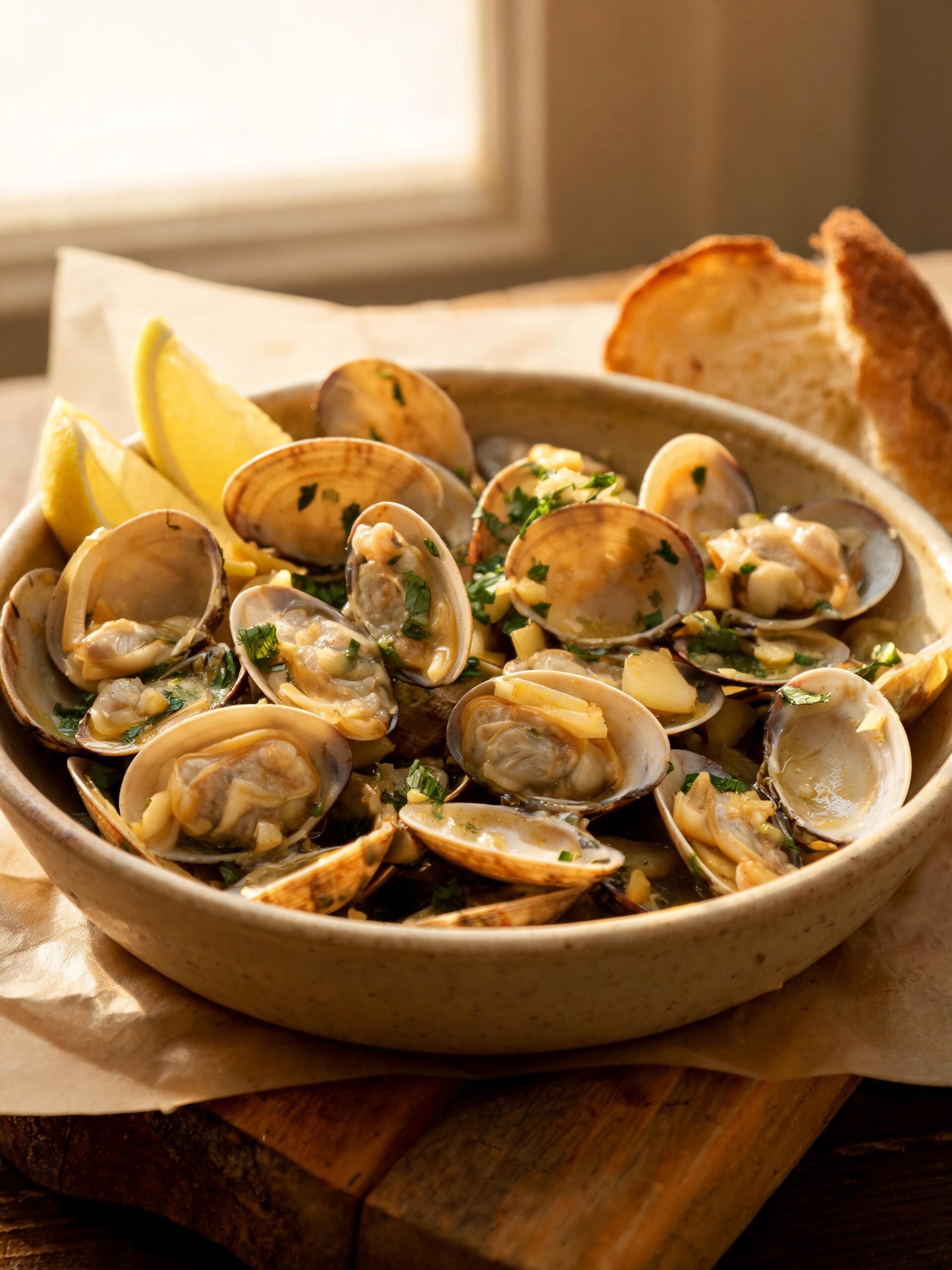
Making restaurant-quality Steamed Clams at home is one of the most rewarding kitchen experiences you can have. It’s a dish that feels incredibly elegant and special, yet it comes together in under 30 minutes with just a handful of ingredients. I’ve spent two decades behind the line in seafood restaurants, and this recipe for Garlic Butter Steamed Clams in White Wine Sauce is the one I make at home. Much like my recipe for Crispy Salt and Pepper Fried Calamari, it’s foolproof, packed with flavor, and delivers that perfect briny, garlicky broth you want to soak up with a whole loaf of crusty bread. Forget the idea that this is complicated. We’re going to walk through every step, from choosing the right clams to creating a silky, emulsified sauce that will make you feel like a professional chef. This isn’t just a recipe; it’s a technique that will give you the confidence to cook shellfish perfectly every time.
Why You’ll Love This Recipe
- Incredibly Fast: From starting your prep to setting the bowl on the table, this entire dish is done in about 30 minutes. It’s the perfect solution for a last-minute fancy dinner or a quick, impressive appetizer for guests.
- Profound Flavor from Simple Ingredients: The combination of briny clam liquor, acidic white wine, rich butter, and pungent garlic creates a sauce that is complex and deeply satisfying. It’s a testament to how great cooking doesn’t require a long ingredient list.
- The Easiest Way to Make Perfect Steamed Clams: This recipe is built on professional techniques, but they are broken down into simple, manageable steps. You’ll learn the secrets to avoiding grit, preventing rubbery clams, and creating a sauce that doesn’t separate.
Ingredients List
Precision is key in a simple recipe like this. Using high-quality ingredients will make a world of difference. This recipe serves 4 as a generous appetizer or 2-3 as a main course.
For the Clams:
- 3 lbs Littleneck or Manila Clams: These are the best choices for steaming. They are tender, flavorful, and readily available. Ensure they are live and fresh (see pro tips below).
For the Sauce and Aromatics:
- 4 tbsp Unsalted Butter: Divided into two 2-tablespoon portions. Using unsalted butter allows you to control the final seasoning, which is important as the clams will release salty liquor.
- 2 tbsp Extra Virgin Olive Oil: This is used with the first portion of butter to sauté the aromatics and prevents the butter from browning too quickly.
- 6-8 cloves Garlic: Thinly sliced, not minced. Sliced garlic is less likely to burn and infuses the oil with a sweeter, less aggressive flavor.
- 1 large Shallot: Finely chopped. Shallots provide a delicate, sweet onion flavor that complements the garlic without overpowering it.
- 1 cup Dry White Wine: Use a crisp wine you would enjoy drinking, such as Sauvignon Blanc, Pinot Grigio, or an unoaked Chardonnay. Avoid sweet wines or anything labeled “cooking wine.”
- 1/2 cup Low-Sodium Chicken or Vegetable Broth: This adds a bit more depth to the sauce and stretches the delicious broth without diluting the flavor.
- Pinch of Red Pepper Flakes (optional): For a subtle background heat that cuts through the richness of the butter. Adjust to your preference.
For Garnish and Serving:
- 1/2 cup Fresh Parsley: Roughly chopped. This adds a fresh, herbaceous note and a pop of color at the end.
- 1 Lemon: Cut into wedges for serving. A final squeeze of fresh lemon juice brightens all the flavors.
- 1 Loaf Crusty Bread: A baguette, ciabatta, or sourdough is non-negotiable for sopping up every last drop of the sauce.
Step-by-Step Instructions
Follow these steps closely for perfect results. The entire cooking process is very fast, so have all your ingredients prepped and ready to go before you turn on the heat.
- Purge and Clean the Clams: About 30-60 minutes before cooking, place the clams in a large bowl of cold, salted water (use about 1/3 cup of kosher salt per gallon of water). This encourages them to spit out any internal sand or grit. After soaking, scrub the outside of each clam shell with a stiff brush under cold running water to remove any mud or debris. Discard any clams that are open and won’t close when tapped, or any with broken shells.
- Sauté the Aromatics: In a large, heavy-bottomed pot or Dutch oven with a tight-fitting lid, melt 2 tablespoons of butter with 2 tablespoons of olive oil over medium heat. Add the chopped shallot and cook for 2-3 minutes until softened and translucent. Add the sliced garlic and optional red pepper flakes, and cook for another 60 seconds until fragrant. Be careful not to brown or burn the garlic.
- Deglaze and Build the Broth: Pour in the white wine to deglaze the pot, scraping up any flavorful bits stuck to the bottom with a wooden spoon. Bring the wine to a simmer and let it cook for 2-3 minutes to allow the alcohol to cook off and the flavor to concentrate. Add the chicken or vegetable broth and bring back to a steady simmer.
- Steam the Clams: Gently add the cleaned clams to the pot. Give them a quick stir to coat them in the broth, then immediately cover the pot with the lid. Let the clams steam for 5-8 minutes. You can give the pot a gentle shake once or twice to help them cook evenly.
- Check for Doneness: After 5 minutes, lift the lid. Most of the clams should be open. Using tongs, immediately transfer the opened clams to your serving bowls, leaving the broth behind in the pot. Leave the lid on for another 1-2 minutes to encourage any stragglers to open. Important: Discard any clams that have not opened after this time.
- Finish the Sauce: Turn the heat off. Add the remaining 2 tablespoons of cold butter and the chopped fresh parsley to the broth in the pot. Swirl the pot continuously until the butter is fully melted and incorporated. This will create a slightly creamy, emulsified sauce. Taste the sauce and season with salt and pepper if needed, though the clam liquor is often salty enough.
- Serve Immediately: Pour the finished garlic butter sauce over the clams in the bowls. Serve immediately with lemon wedges on the side and plenty of crusty bread for dipping.
Chef’s Pro Tips for Success
To get restaurant-quality steamed clams, the pot you use is just as important as the ingredients. The secret is having enough room for the clams to steam open without overcrowding, and steady, even heat to build the sauce. That’s why I always reach for my Ninja Foodi PossibleCooker. Its huge 8.5-quart capacity is perfect for a big batch of clams, and the nonstick surface ensures my shallots and garlic soften beautifully without any risk of scorching, building that perfect flavor base for the white wine sauce.
This is my secret weapon for foolproof seafood dishes. If you want to take all the guesswork out of making perfect steamed clams at home, check out the latest price on Amazon.
Ninja MC1001 Foodi PossibleCooker PRO 8.5 Quart Multi-Cooker
✓ prime
We earn a commission if you make a purchase, at no additional cost to you.
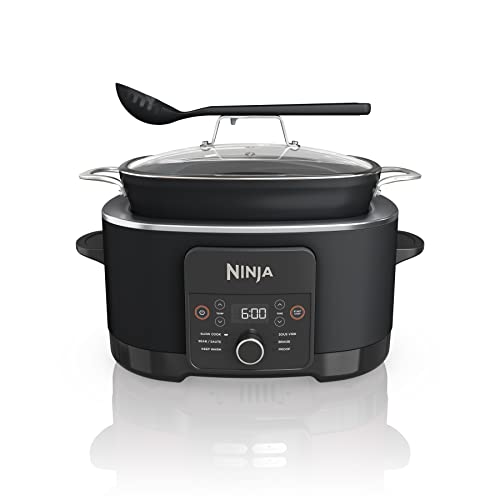
One of the biggest secrets to perfectly even steaming is using the right pot. You need something with a heavy bottom for even heat and enough space so you don’t overcrowd the clams. That’s why I rely on my Ninja Foodi PossibleCooker. Its 8.5-quart capacity gives the clams plenty of room to open, the nonstick surface is a dream for sautéing the shallots and garlic without scorching, and it holds a steady, gentle heat that’s critical for building that silky, emulsified sauce. It’s my one-pot solution for getting this dish right every single time.
If you want to take the guesswork out of one-pot seafood meals, I can’t recommend it enough. Check it out on Amazon.
Ninja MC1001 Foodi PossibleCooker PRO 8.5 Quart Multi-Cooker
✓ prime
We earn a commission if you make a purchase, at no additional cost to you.
After cooking thousands of pounds of clams, I’ve learned a few things. These are the details that separate good clams from unforgettable ones.
- Choosing Your Clams: Littlenecks and Manila clams are your best bets. Littlenecks are native to the Atlantic and have a firmer texture and brinier, saltier flavor. Manilas are from the Pacific, smaller, sweeter, and more tender. Both are excellent. When buying, your clams should be tightly closed. If any are slightly agape, give them a firm tap. If they close, they’re alive and good to go. If they stay open, they’re dead and must be discarded. They should smell fresh, like the ocean—never fishy or unpleasant.
- The Purging Process is Non-Negotiable: I cannot stress this enough. Clams are filter feeders, and they live in sand and mud. Skipping the purge is how you get a mouthful of grit. The goal of the saltwater bath is to simulate their natural environment, which tricks them into siphoning in the clean, salty water and expelling the sand from their systems. Don’t add cornmeal or flour; it’s an old myth and doesn’t work as well as a simple saline solution.
- Select Your Wine Carefully: The wine isn’t just a background note; it’s the acidic backbone of your sauce. Never, ever use a bottle labeled “cooking wine.” It’s loaded with salt and preservatives and tastes terrible. Choose a dry, crisp white wine that you would happily drink a glass of. A Sauvignon Blanc offers grassy, citrusy notes, while a Pinot Grigio is more neutral and clean. The wine’s acidity is crucial for cutting through the richness of the butter and complementing the brininess of the clams.
- Master the “Mount au Beurre” Technique: This is a classic French technique for finishing sauces. The term means “to mount with butter.” Adding the final two tablespoons of *cold* butter to the sauce *off the heat* and swirling the pan is what creates a stable emulsion. The cold temperature of the butter allows it to melt slowly, and the constant motion helps the fat droplets disperse evenly into the liquid, resulting in a velvety, glossy sauce that clings to the clams and bread. If you add the butter while the sauce is boiling, it will simply break and create an oil slick.
- Respect the Cooking Time: The window for perfectly cooked clams is small. The moment their shells pop open, the muscle inside is cooked. Any longer on the heat and that muscle will seize up, tighten, and become rubbery. That’s why it’s critical to remove the opened clams with tongs as they’re ready, rather than waiting for every single one to open. This ensures each clam is perfectly tender.
Common Mistakes to Avoid
It’s easy to make great steamed clams, but a few common errors can ruin the dish. Here’s what to watch out for.
- The Gritty Clam Disaster: You’ve made a beautiful sauce, the clams look perfect, but your first bite is crunchy with sand. This is the most common and disappointing mistake. It happens for one reason: you didn’t purge the clams properly or for long enough. A quick rinse under the tap is not enough. The 30-60 minute saltwater soak is the only way to ensure they are clean from the inside out.
- The Overcrowded Pot Problem: You dump all three pounds of clams into a pot that’s too small. You steam them for 10 minutes, and when you open the lid, the top layer is still tightly shut while the bottom layer is wide open and overcooked. Steam needs space to circulate to cook the clams evenly. If your pot isn’t large enough to hold the clams in a relatively shallow layer, cook them in two separate batches.
- Serving Rubbery Clams: This is a crime against seafood. You let the clams boil away for 15 minutes, thinking longer is better. The result is tiny, tough, chewy clams that are a chore to eat. Clams cook incredibly fast. Once their shells open, they are done. The protein is cooked and tender. Every second past that point is just making them tougher. Pull them out as they open.
- A Sauce That Tastes “Off”: You decide to use that old bottle of sweet Moscato from the back of the fridge, or a cheap “cooking wine.” The final sauce is either cloyingly sweet or harshly acidic and salty. The wine is a primary flavor component. The rule is simple: if you wouldn’t drink it, don’t cook with it. A bad wine will create a bad sauce for your Steamed Clams, and there’s no way to fix it.
Variations and Serving Ideas
This classic recipe is a perfect canvas for variations. Here are a few ideas:
- Add Chorizo or Bacon: For a smoky, spicy flavor, add 4 ounces of diced Spanish chorizo or bacon to the pot with the shallots. Let it render its fat and become crispy before proceeding with the recipe.
- Make it Tomato-Based: Add a 14.5-ounce can of diced tomatoes (drained) along with the white wine. A pinch of oregano can also be added for a more Italian-American feel.
- Creamy Garlic Sauce: For a richer sauce, reduce the chicken broth to 1/4 cup and add 1/4 cup of heavy cream along with the final two tablespoons of butter at the end.
- Serve Over Pasta: This dish is phenomenal served over linguine or spaghetti. Double the sauce ingredients to ensure you have enough to coat the pasta generously. Toss the cooked pasta directly into the pot with the sauce before serving.
What to Serve With
The beauty of this dish is its simplicity, so keep the accompaniments simple as well. However, if you’re planning a larger seafood-themed meal, these clams can serve as a fantastic appetizer before a main course like an Easy Authentic Spanish Seafood Paella.
- Crusty Bread: This is not optional. You need a vehicle for the incredible broth. A French baguette, Italian ciabatta, or a rustic sourdough are all excellent choices. Consider toasting or grilling the slices and rubbing them with a raw garlic clove.
- Simple Green Salad: A lightly dressed arugula or mixed greens salad with a simple lemon vinaigrette provides a fresh, acidic contrast to the rich, savory clams.
- French Fries: Take a cue from the Belgian classic, *moules frites* (mussels and fries). A side of crispy, salty French fries for dipping into the broth is an absolute game-changer.
Storage and Reheating
Leftover seafood can be tricky, but it is possible to enjoy these clams the next day if you handle them correctly.
- Storage: Do not store the clams in their shells. Once cool, remove the clam meat from the shells and place it in an airtight container. Strain the leftover broth through a fine-mesh sieve to remove any sediment and store it in a separate airtight container. Both will keep in the refrigerator for up to 2 days.
- Reheating: The key to reheating is to be gentle and avoid overcooking. Pour the broth into a small saucepan and bring it to a very gentle simmer over low heat. Once the broth is warm, add the cold clam meat. Let it sit in the warm broth for just 30-60 seconds, or until just heated through. Do not let it boil. This method warms the clams without making them rubbery.
FAQs (People Also Ask)
1. What kind of clams are best for steaming?
The best and most common choices are Littlenecks and Manila clams. They are small, tender, and cook quickly. Cherrystones or Quahogs are much larger and tougher, and are better suited for chowders or stuffed clam recipes.
2. How do I know if a clam is bad or dead before cooking?
A live clam’s shell will be tightly closed. If it’s slightly open, give it a sharp tap on the counter. If it’s alive, it will slowly close its shell. If it remains open, it’s dead and should be thrown away. Also, discard any clams with cracked or broken shells. A fresh clam should smell like the ocean; a foul or fishy odor means it’s spoiled.
3. Can I use frozen clams for this recipe?
You can, but fresh is always superior in texture and flavor. If using frozen, make sure they are pre-cooked, shelled clams. Thaw them completely in the refrigerator first. You can add them to the sauce at the very end, just like you would with leftovers, and gently warm them through. Do not attempt to steam frozen clams in their shells.
4. Can I make this recipe without wine?
Yes. While the wine adds a crucial layer of acidic complexity, you can substitute it. Use an equal amount of low-sodium chicken or seafood broth and add 1 to 2 tablespoons of fresh lemon juice at the end to mimic the acidity that the wine provides.
5. Why didn’t all of my clams open after steaming?
If a clam does not open after being steamed for a sufficient amount of time (around 8-10 minutes), it’s because it was likely dead before it went into the pot. The adductor muscle, which holds the shell closed, does not relax upon cooking in a dead clam. Never try to pry open a cooked clam that has remained shut. Discard it immediately.
Nutrition Facts
(Per serving. Estimates only, varies by exact ingredients used)
Conclusion
There you have it—a simple, elegant, and absolutely delicious way to prepare Steamed Clams that rivals any seafood restaurant. This dish is about more than just food; it’s about creating an experience. It’s the sound of the shells clinking in the bowl, the steam rising with the scent of garlic and wine, and the shared joy of dipping bread into that incredible sauce. I hope you give this recipe a try and that it brings a little bit of that coastal restaurant magic into your own kitchen. Enjoy every bite.
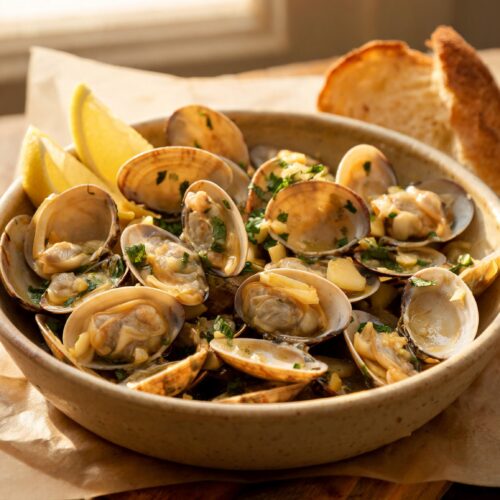
Garlic Butter Steamed Clams in White Wine Sauce
Ingredients
- 3 lbs littleneck or Manila clams
- 4 tbsp unsalted butter, divided
- 2 tbsp extra virgin olive oil
- 6 cloves garlic, thinly sliced
- 1 large shallot, finely chopped
- 1 cup dry white wine (like Sauvignon Blanc or Pinot Grigio)
- 1/2 cup low-sodium chicken or vegetable broth
- 1/4 tsp red pepper flakes (optional)
- 1/2 cup fresh parsley, chopped
- 1 lemon, cut into wedges for serving
- 1 loaf crusty bread, for serving
Instructions
- Purge Clams: Place clams in a large bowl of cold, salted water for 30-60 minutes. After soaking, scrub shells under running water. Discard any open or broken clams.
- Sauté Aromatics: In a large pot with a lid, melt 2 tbsp of butter and 2 tbsp of olive oil over medium heat. Add shallot and cook until soft, about 3 minutes. Add sliced garlic and red pepper flakes, cooking for 1 more minute until fragrant.
- Deglaze: Pour in the white wine, bring to a simmer, and let it reduce for 2-3 minutes. Add the chicken broth and return to a simmer.
- Steam Clams: Add the cleaned clams to the pot, stir, and cover with the lid. Steam for 5-8 minutes, shaking the pot occasionally.
- Remove Cooked Clams: After 5 minutes, open the lid and use tongs to transfer any opened clams to serving bowls. Cover again for 1-2 minutes for any remaining clams to open. Discard any that stay shut.
- Finish Sauce: Turn off the heat. Add the remaining 2 tbsp of cold butter and the chopped parsley to the broth in the pot. Swirl the pot until the butter has melted and the sauce is glossy.
- Serve: Pour the sauce over the clams in the bowls. Serve immediately with lemon wedges and crusty bread.