Introduction
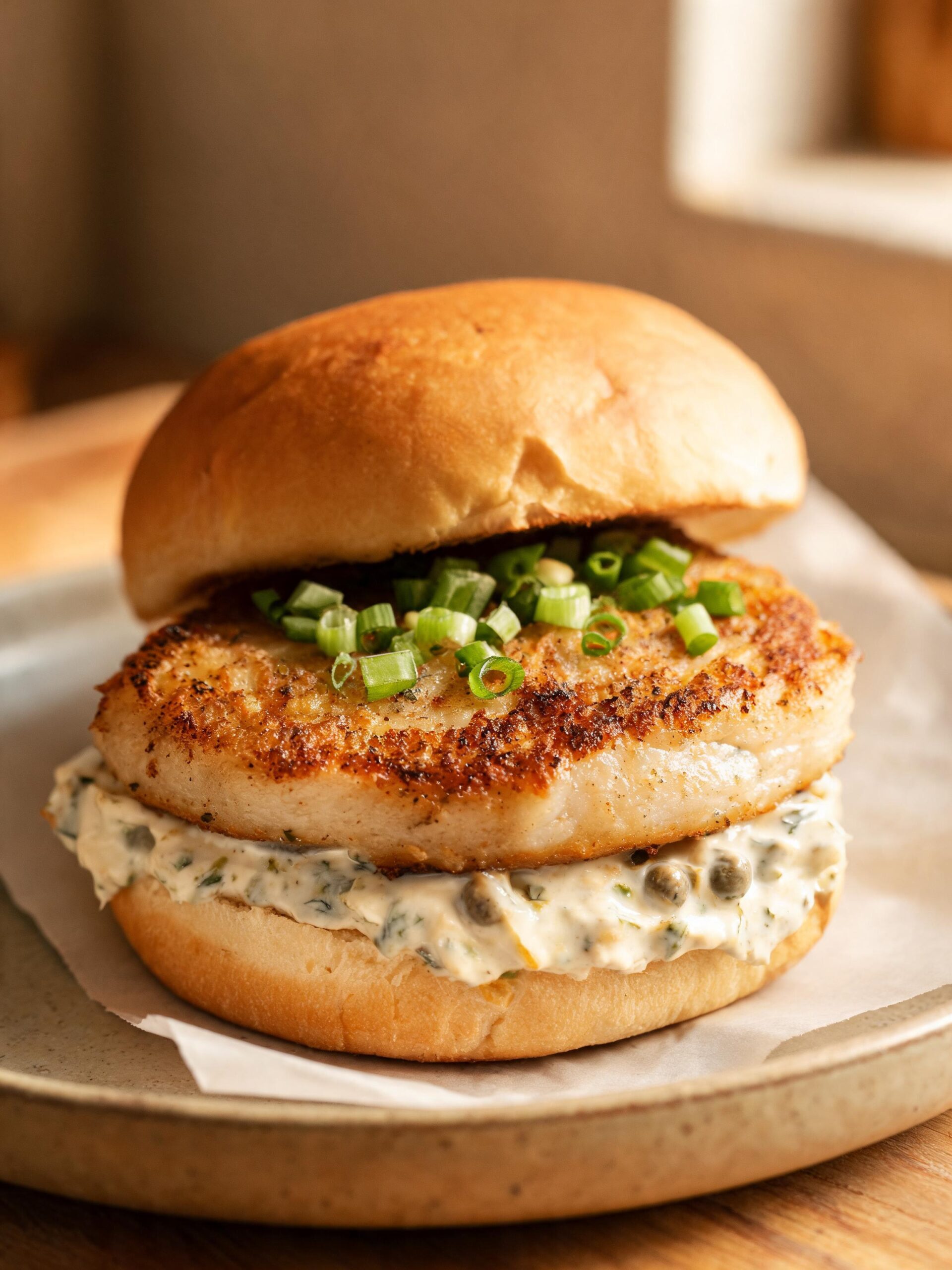
There’s a specific kind of tired that comes after a long day near the water. You don’t want to cook something complicated or dirty every pan in the kitchen. You just want something that tastes real. That’s exactly when this Lemon Pepper Tuna recipe became a regular thing in my house. It’s a fantastic hot meal, but for those days when you crave something cool and creamy, a Panera-style tuna salad sandwich can be just as satisfying.
I remember the first time I made it — I had two tuna steaks I’d pulled from the cooler after a morning out on the boat, a lemon rolling around on the counter, and some cracked pepper I’d been using for everything that week. That was it. No plan. Just hunger and a hot pan. What came out of that kitchen was something I’ve been making ever since.
This easy lemon pepper tuna isn’t fancy. It doesn’t need to be. It’s the kind of meal that reminds you why fresh fish cooked simply at home always beats anything overthought.
Why You’ll Love This Recipe
- It’s on the table in under 30 minutes — real weeknight speed without cutting corners on flavor
- The lemon and pepper do all the heavy lifting, so the tuna actually gets to taste like tuna
- You don’t need any special equipment or hard-to-find ingredients — just a pan and things you probably already have
Quick Recipe Snapshot
Quick Recipe Snapshot
⏱ Prep Time: 15 minutes
🔥 Cook Time: 10–12 minutes
🍽 Servings: 4
🐟 Main Protein: Fresh or thawed tuna steaks
🍋 Key Flavors: Lemon zest, cracked black pepper, garlic, olive oil
✅ Skill Level: Beginner-friendly
🥗 Good For: Weeknight dinner, light lunch, coastal summer meals
Ingredients List
For the Tuna:
- 4 tuna steaks (about 6 oz each, roughly 1 inch thick) — thicker cuts hold up better in the pan and stay moist inside
- 2 tablespoons olive oil — helps the crust form without burning
- 1 teaspoon coarse black pepper — freshly cracked if you have it, the flavor difference is real
- 1 teaspoon lemon pepper seasoning — layering this with fresh lemon is what makes it pop
- 1 teaspoon garlic powder
- ½ teaspoon sea salt
- Zest of 1 large lemon — this is where most of the brightness comes from
- 2 tablespoons fresh lemon juice — added at the end, not during cooking
For Serving (Optional but Worth It):
- Extra lemon wedges
- Fresh parsley, roughly chopped
- A drizzle of olive oil or a small pat of butter if you want richness
Step-by-Step Instructions
- Take the tuna steaks out of the fridge about 10 minutes before cooking. Cold fish straight into a hot pan tends to seize up and cook unevenly. Just let them sit on the counter while you get everything else ready.
- In a small bowl, mix together the black pepper, lemon pepper seasoning, garlic powder, sea salt, and lemon zest. Give it a stir so it’s all combined.
- Pat the tuna steaks dry with paper towels. This step matters more than people think — moisture on the surface steams the fish instead of searing it, and you lose that crust.
- Rub both sides of each steak with olive oil, then press the seasoning mix onto both sides. Don’t be shy about pressing it in.
- Heat a cast iron skillet or heavy-bottomed pan over medium-high heat. Let it get genuinely hot before the fish goes in — about 2 minutes. You should feel heat rising when you hold your hand a few inches above.
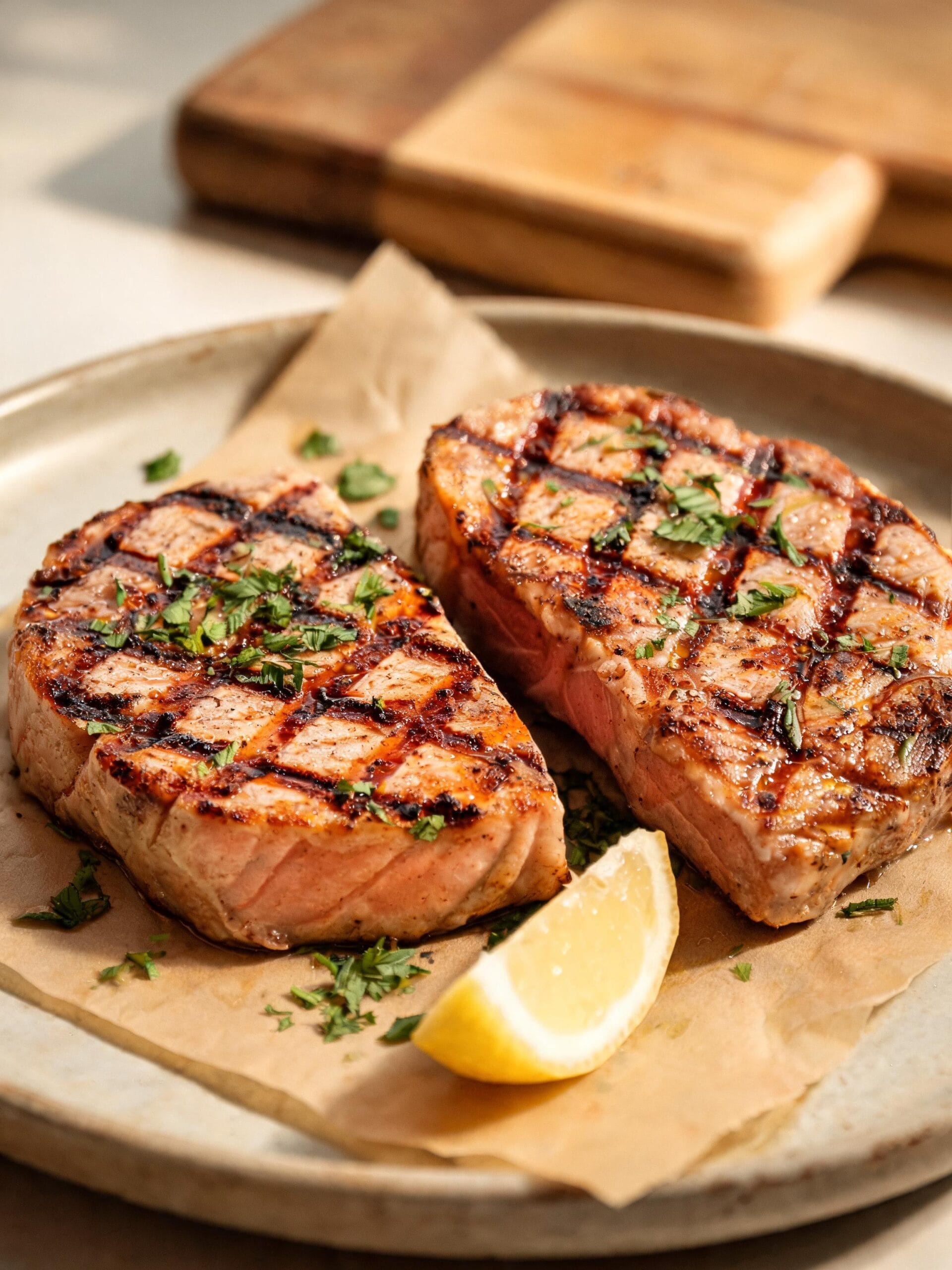
- Place the tuna steaks in the pan without moving them. For a sear with a pink center, cook 2 to 3 minutes per side. For fully cooked through, go 4 to 5 minutes per side depending on thickness. (I usually do 3 minutes a side — still a little pink in the middle, which is how I like it.)
- Pull them off the heat and immediately squeeze fresh lemon juice over the top. That hit of acid right at the end brightens everything.
- Let them rest for a minute or two before serving. Scatter some parsley on top if you’ve got it.
That’s really it. Simple as a fishing morning, honest as salt air.
Small Tricks From Cooking Fish at Home
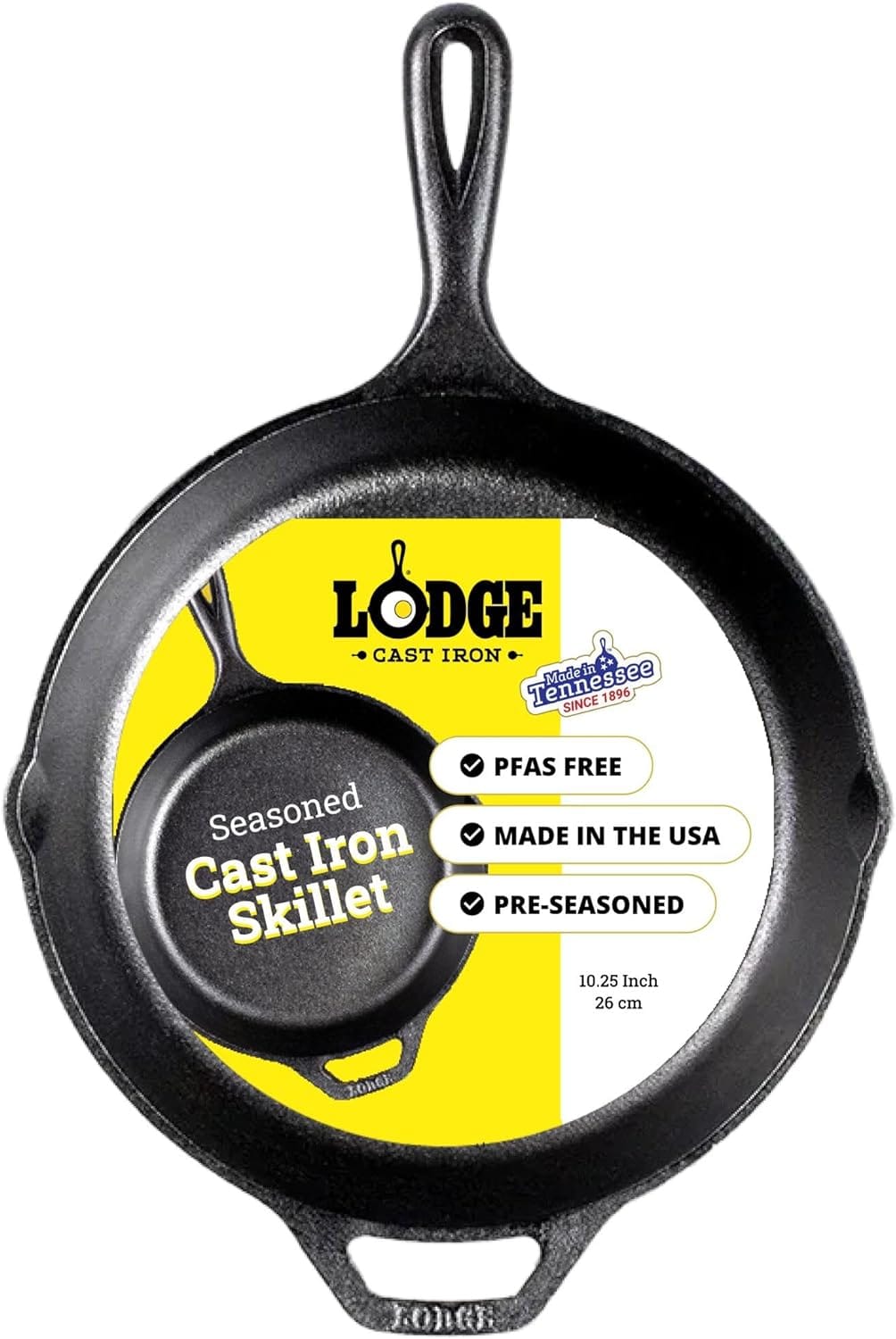
I’ve said it a dozen times, but a genuinely hot pan is the secret to perfect seared tuna. And for me, that always means cast iron. I use my Lodge 10.25-inch skillet for this recipe because it holds heat like nothing else. That steady, high temperature is what gives the tuna that amazing crust without overcooking the center. It’s the difference between a sad, grey steak and a restaurant-quality meal right in your own kitchen.
If you don’t have a reliable cast iron skillet, it’s the single best investment you can make for your kitchen. Grab the one I trust below.
Lodge 10.25 Inch Cast Iron Skillet with Assist Handle
✓ prime
We earn a commission if you make a purchase, at no additional cost to you.
The pan has to be hot before the fish goes in. I learned this the embarrassing way — dropped a steak into a lukewarm pan and it stuck, fell apart, and turned into a mess. A properly hot pan means the fish releases cleanly when it’s ready to flip.
Lemon zest and lemon juice are doing two completely different jobs here. The zest carries the oil from the skin — that’s where the deep lemony flavor lives. The juice adds brightness and a little acidity at the end. Using both is what makes a quick lemon pepper tuna dinner taste like you actually thought about it.
Don’t press down on the fish while it’s cooking. I know it’s tempting. But pressing squeezes out the moisture and you end up with something dry and a little sad.
If your tuna steaks are uneven in thickness — one end thinner than the other — angle the pan slightly or fold a small piece of foil under one side of the pan. Sounds ridiculous but it works.
Resting the fish for even just a minute after cooking makes a difference. The juices redistribute. It’s the same reason you rest a steak. Fish is no different.
Common Mistakes to Avoid
Overcooking is the one that gets people most. Tuna goes from perfect to dry really fast. If you’re cooking it fully through, check it at 4 minutes per side and press the center gently — it should feel firm but not hard. Once it feels like pressing a rubber eraser, it’s overdone.
Skipping the drying step. I know it seems like a small thing but wet fish in a hot pan splatters, steams, and doesn’t build a crust. Paper towels take 10 seconds. Do it.
Adding the lemon juice too early. If you squeeze lemon into the pan while the fish is still cooking, the acid starts to break down the surface and you lose the sear. Always add it after the heat is off.
Using pre-ground pepper from the shaker that’s been in the cabinet for two years. Old pre-ground pepper has almost no punch left. Cracking it fresh — even with a rough crack on the counter — makes the homemade lemon pepper tuna taste completely different. Livelier. More coastal somehow.
Variations and Serving Ideas
Spicy version: Add ½ teaspoon of cayenne or a pinch of red pepper flakes to the seasoning mix. The heat plays really well against the lemon. If you want to go further, a drizzle of sriracha after plating works too.
Mild version: Cut the black pepper in half and skip the lemon pepper seasoning — just use the fresh zest and juice with garlic and salt. It’s gentler, cleaner, and still really satisfying. Good for kids or anyone sensitive to heat.
Coastal twist: After the tuna comes off the pan, deglaze with a splash of white wine and let it reduce for 30 seconds, then pour that over the fish. It pulls up all the good bits from the pan and makes something that tastes like it came from a little seafood shack near the water.
What to Serve With
This fish wants something that contrasts with it a little. Something crispy or something fresh — not another soft thing on the plate.
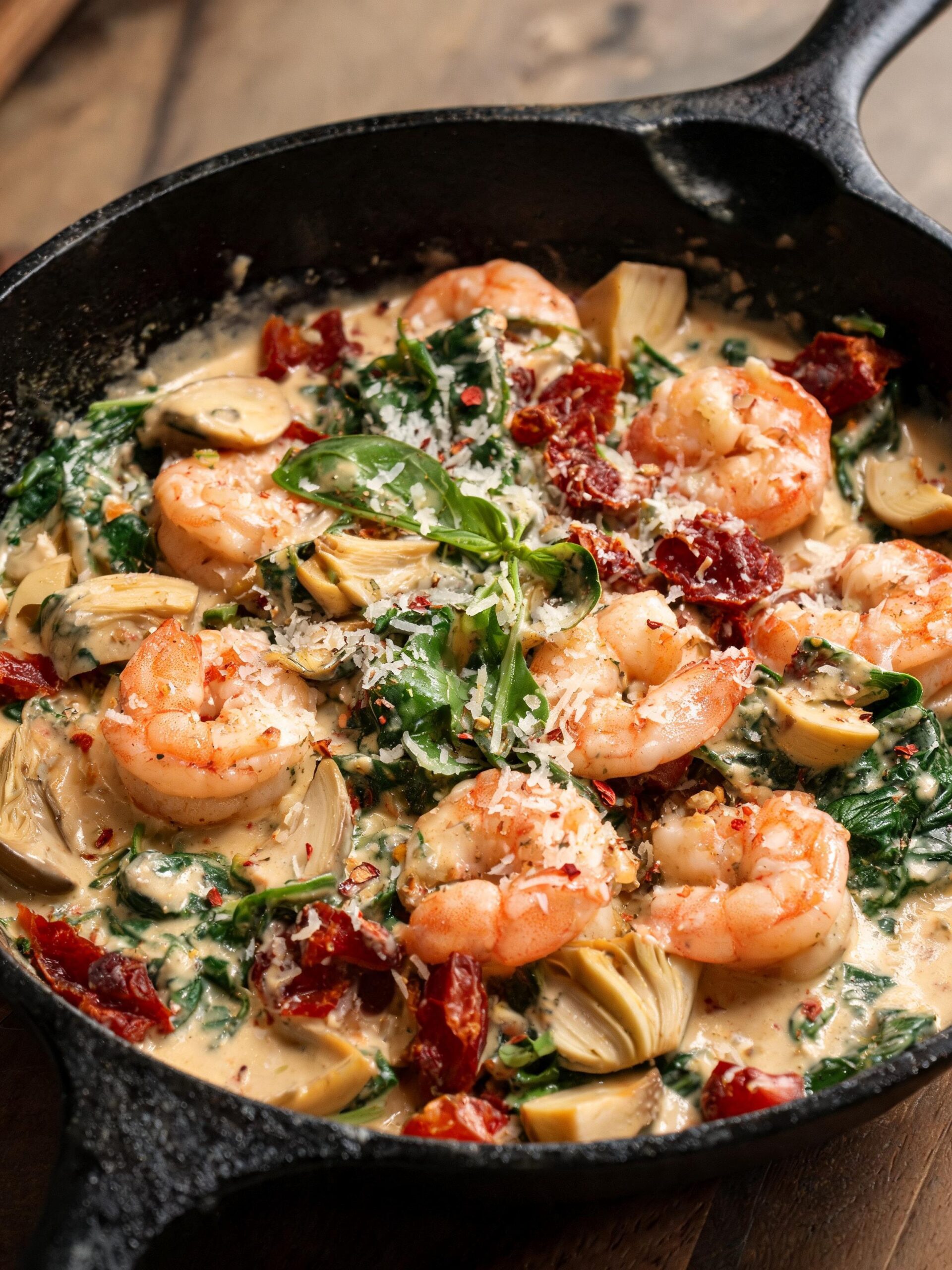
Roasted potatoes with a little olive oil and sea salt work great. They’re sturdy and absorb the lemon drippings from the fish. A simple green salad with cucumber and a light vinaigrette cuts through the richness. If you want something warm and filling, a side of white rice or orzo soaks up any juices nicely. For a more flavorful rice dish with a Southern twist, this shrimp sausage dirty rice makes for a hearty and impressive side.
In summer I’ll sometimes just do sliced tomatoes with salt and a little olive oil alongside it. That’s a full meal right there when the tomatoes are good.
Storage and Reheating
Cooked tuna keeps in the fridge for up to 2 days in a sealed container. After that it gets a little funky and the texture changes in a way that’s hard to fix.
DO NOT microwave it. Microwaving cooked tuna makes the whole kitchen smell like low tide and the texture turns rubbery and strange. It’s not worth it.
The best way to reheat it is in a pan on low heat with a tiny bit of olive oil, just until it’s warmed through — maybe 2 minutes. Or honestly, eat it cold the next day over a salad. Cold leftover tuna on greens with a squeeze of lemon is one of those accidental good lunches.
DO NOT freeze it after cooking. The texture breaks down completely and it won’t come back.
FAQs (People Also Ask)
Can I use canned tuna instead of fresh steaks?
You can, but it’s a different dish entirely. Canned tuna won’t sear and the texture is much softer. If that’s what you have, mix the lemon pepper seasoning into the drained tuna and use it in a wrap or over rice. Still good, just different.
How do I know when the tuna is done?
Press the center gently with your finger. If it still feels very soft and squishy, it needs more time. Firm but with a little give means it’s cooked through with some moisture left. Hard like a hockey puck means it’s overcooked. For a pink center, 2 to 3 minutes per side on medium-high is usually right for a 1-inch steak.
Can I use frozen tuna steaks?
Yes, just thaw them properly first — overnight in the fridge is best. Don’t thaw in the microwave or under hot water, it changes the texture. Once fully thawed, pat them very dry before seasoning. Frozen tuna holds more water than fresh, so the drying step is even more important.
How long does this take start to finish?
About 25 minutes total, including the resting time. It’s genuinely one of the faster dinners you can make with real fish. Even on a tired weeknight it’s doable.
What can I substitute for lemon pepper seasoning?
If you don’t have a lemon pepper blend, just use extra cracked black pepper and a little more lemon zest. You can also mix black pepper with a tiny pinch of dried thyme and some citric acid if you have it. The fresh zest does most of the work anyway.
Nutrition
Nutrition Facts
(Per serving. Estimates only, varies by exact ingredients used)
Conclusion
Some of the best meals I’ve ever eaten came from the least planning. A cooler with fish, a lemon on the counter, a hot pan. That’s the whole story of this recipe.
There’s something about coastal style lemon pepper tuna that just feels right after a day near the water — or even just a long day that needed to end with something honest and good. It doesn’t ask much of you. And somehow it gives a lot back.
I hope it finds you on one of those evenings where simple is exactly what you needed.
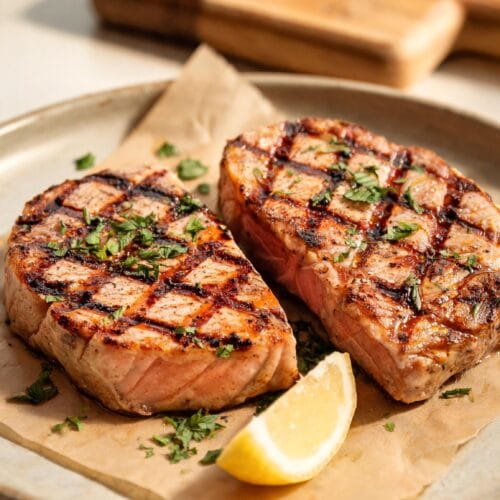
Lemon Pepper Tuna
Ingredients
- 4 tuna steaks (about 6 oz each, 1 inch thick)
- 2 tablespoons olive oil
- 1 teaspoon coarse cracked black pepper
- 1 teaspoon lemon pepper seasoning
- 1 teaspoon garlic powder
- 1/2 teaspoon sea salt
- Zest of 1 large lemon
- 2 tablespoons fresh lemon juice
- Lemon wedges for serving
- 2 tablespoons fresh parsley, roughly chopped (optional)
Instructions
- Remove tuna steaks from the fridge 10 minutes before cooking and let them rest at room temperature.
- In a small bowl, combine black pepper, lemon pepper seasoning, garlic powder, sea salt, and lemon zest. Stir to mix.
- Pat tuna steaks completely dry on both sides with paper towels.
- Rub both sides of each steak with olive oil, then press the seasoning mixture firmly onto both sides.
- Heat a cast iron skillet or heavy pan over medium-high heat for about 2 minutes until very hot.
- Place tuna steaks in the pan without moving them. Cook 2 to 3 minutes per side for a pink center, or 4 to 5 minutes per side for fully cooked through.
- Remove from heat and immediately squeeze fresh lemon juice over the top of each steak.
- Rest for 1 to 2 minutes, then garnish with chopped parsley and extra lemon wedges before serving.