Introduction
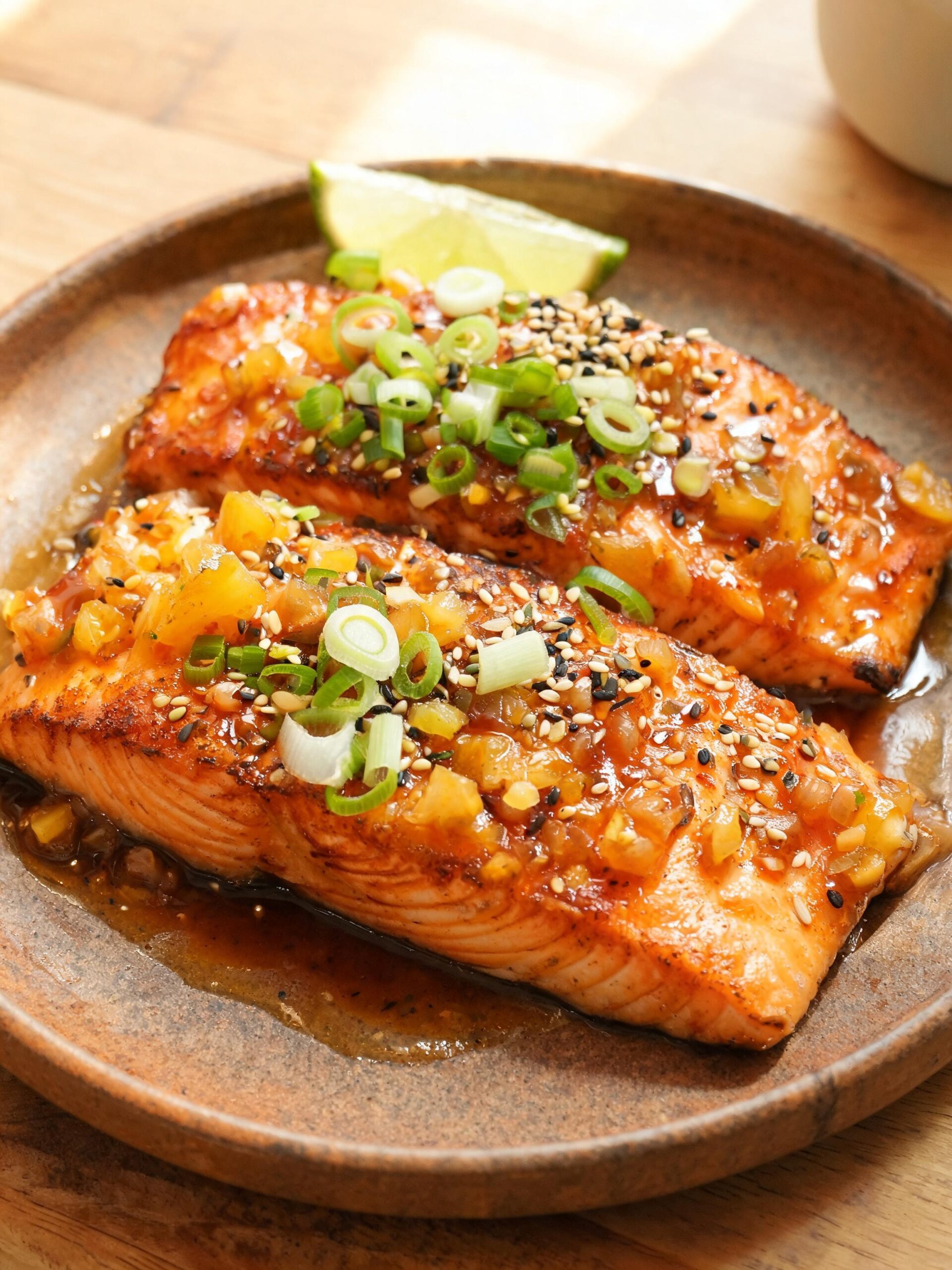
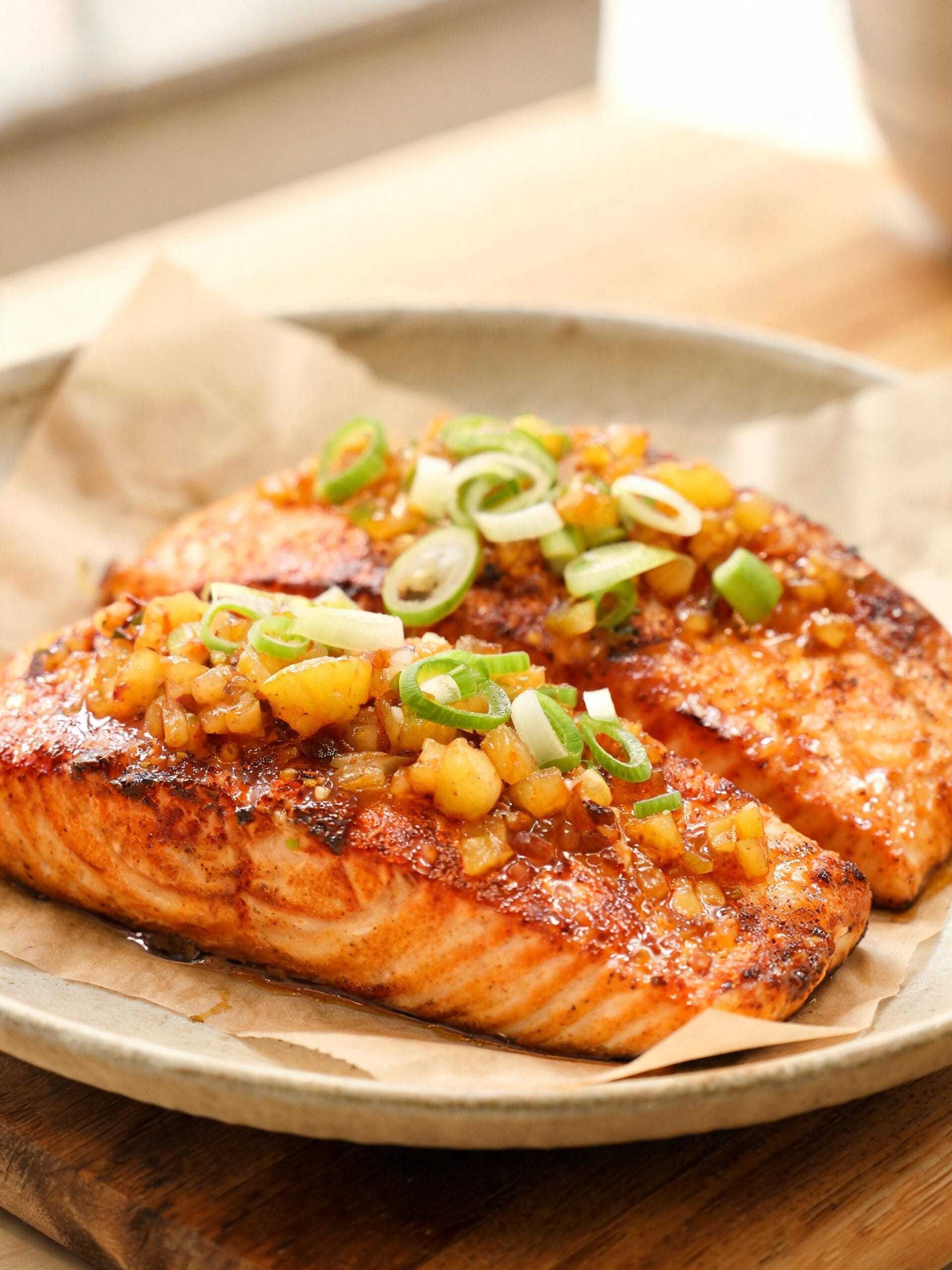
I had a half-used pineapple sitting on the counter and a couple of salmon fillets I’d picked up from the dockside market that morning. Nothing planned. Just that kind of late afternoon where the breeze is coming off the water and you don’t want to think too hard about dinner—the same mood that might have you whipping up a creamy copycat tuna salad sandwich. That’s honestly how this Sweet and Spicy Pineapple Salmon came to be. Not from a recipe book or from TV, but just from opening the fridge and letting the coast decide.
There’s something about pineapple and salmon together that just makes sense when you live near the water. The sweetness cuts through the richness of the fish in a way that feels natural, almost like they were always supposed to meet. And when you add a little heat to that — some chili flakes, a touch of sriracha — it becomes one of those easy pineapple salmon dinners you find yourself making again and again without even thinking about it.
It’s not fancy. It’s not complicated. It’s just really, really good.
Why You’ll Love This Recipe
- It comes together in about 30 minutes, start to finish — which on a weeknight after a long day near the water, that matters more than anything.
- The flavor hits every note: sweet from the pineapple, a little heat from the chili, savory from the soy, and that buttery salmon underneath holding it all together.
- You don’t need any special equipment or skills. If you can turn on a stove and watch a pan, you can make this.
Quick Recipe Snapshot
Quick Recipe Snapshot
| ⏱ Prep Time | 15 minutes |
| 🔥 Cook Time | 20 minutes |
| 🍽 Servings | 4 |
| 📊 Difficulty | Easy |
| 🐟 Main Protein | Salmon |
| 🌶 Heat Level | Medium (adjustable) |
Ingredients List
For the Salmon:
- 4 salmon fillets (about 6 oz each) — skin-on holds together better in the pan, trust me on that one
- 1 tablespoon olive oil
- ½ teaspoon salt
- ¼ teaspoon black pepper
- ½ teaspoon garlic powder
For the Sweet and Spicy Pineapple Glaze:
- 1 cup fresh pineapple, finely diced — fresh makes a real difference here, the juice releases into the pan and caramelizes in a way canned just doesn’t
- 3 tablespoons soy sauce — low sodium works fine if that’s what you have
- 2 tablespoons honey — this is what helps the glaze stick and get that little char on the edges
- 1 tablespoon sriracha — add more if you want more heat, less if you’re cooking for kids
- ½ teaspoon red chili flakes
- 2 cloves garlic, minced
- 1 teaspoon fresh ginger, grated — just a small knob, it lifts the whole thing
- 1 tablespoon lime juice — added at the end, keeps it bright
- 1 teaspoon cornstarch mixed with 1 tablespoon cold water — this thickens the glaze so it coats instead of just running off
To Finish:
- 2 green onions, sliced thin
- Fresh cilantro, a small handful (optional but really good)
- Lime wedges for serving
Step-by-Step Instructions
- Take the salmon out of the fridge about 10 minutes before you cook it. Cold fish straight into a hot pan tends to cook unevenly — the outside gets done before the center catches up. Pat the fillets dry with paper towels. This matters more than people think. Wet fish steams instead of sears, and you lose that golden crust.
- Season both sides of each fillet with salt, pepper, and garlic powder. Keep it simple here — the glaze is doing the heavy lifting flavor-wise.
- In a small bowl, mix together the soy sauce, honey, sriracha, chili flakes, minced garlic, grated ginger, and lime juice. Stir in the cornstarch slurry. Set it aside for now.
- Heat the olive oil in a large skillet over medium-high heat. You want it hot but not smoking. Lay the salmon fillets in skin-side down and don’t move them. Let them cook for about 4 to 5 minutes until the skin is crispy and the flesh has cooked about halfway up the sides — you can see it changing color as it goes.
- Flip the fillets carefully. Cook for another 2 to 3 minutes on the flesh side. At this point the salmon should be almost done. Remove the fillets and set them on a plate for a moment. (Don’t worry, they’ll finish in the glaze.)
- In the same pan, lower the heat to medium and add the diced pineapple. Let it cook for about 2 minutes, stirring occasionally. It’ll start to soften and release its juice. That juice mixing with whatever the salmon left behind in the pan — that’s where the flavor lives.
- Pour the sauce mixture over the pineapple. Stir and let it bubble for about a minute until it thickens slightly. It should coat the back of a spoon when it’s ready.
- Slide the salmon fillets back into the pan. Spoon the glaze over the top generously. Let everything cook together for another 1 to 2 minutes. The glaze will cling to the fish and get a little caramelized around the edges. That’s exactly what you want.
- Scatter the green onions and cilantro over the top. Serve immediately with lime wedges on the side.
Small Tricks From Cooking Fish at Home
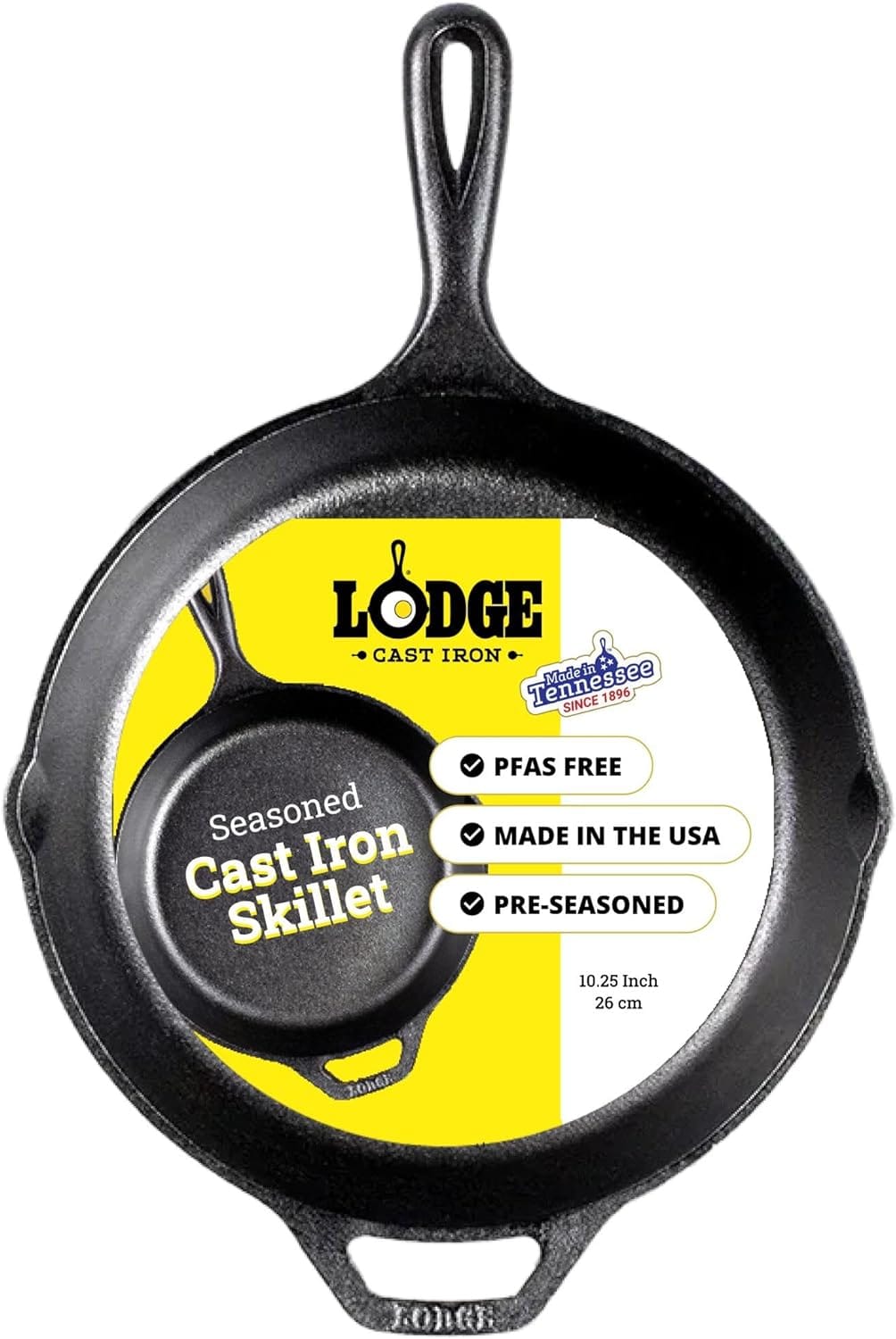
I’ve talked a lot about getting that perfect golden crust and crispy skin, and the truth is, the pan you use makes all the difference. For this pineapple salmon, I always reach for my Lodge Cast Iron Skillet. Nothing holds and distributes heat quite like it, which means you get that aggressive, even sear the second the fish hits the pan. It’s the secret to getting skin that shatters like glass and keeping the inside perfectly flaky and moist, preventing the dreaded ‘soggy bottom’ that can ruin a beautiful fillet.
If you’re serious about cooking fish at home, a good cast iron skillet isn’t just a piece of equipment—it’s an investment in countless perfect dinners. Grab the one I trust in my own kitchen.
Lodge 10.25 Inch Cast Iron Skillet with Assist Handle
✓ prime
We earn a commission if you make a purchase, at no additional cost to you.
Dry the fish. Every single time. I used to skip this step when I was in a rush and the fish would just kind of steam in the pan and slide around. Now I keep a stack of paper towels right next to the stove when I’m cooking salmon. Dry it, season it, then it goes in the pan. That’s the order.
Don’t crowd the pan. If you’re making this for more than four people and you double the recipe, cook the salmon in batches. Crowding drops the pan temperature and the fish ends up gray and soft instead of golden. I learned this the hard way one summer when I was trying to feed eight people at once and every fillet came out looking sad.
Fresh pineapple over canned, if you can manage it. Canned pineapple is packed in juice or syrup and it makes the glaze watery and a little flat. Fresh pineapple has this brightness to it that actually holds up to the heat. The chunks get slightly caramelized at the edges and that texture against the flaky salmon is really something.
Let the glaze bubble before you add the fish back in. If you put the salmon in too early, the sauce is still thin and it won’t stick. Give it that minute to thicken. You’ll see it change — it goes from watery to glossy and that’s your cue.
Watch the heat when the honey goes in. Honey burns fast. If your pan is too hot when you add the glaze, the sugars will scorch before the pineapple has a chance to soften. Medium heat is your friend here. Patience too, even if it’s just a couple of minutes.
Common Mistakes to Avoid
Flipping the salmon too early is probably the most common thing I see. The fish will release from the pan naturally when it’s ready. If you try to flip it and it sticks, it’s not done yet. Give it another minute. Forcing it just tears the fillet apart and then you’ve got a mess.
Skipping the cornstarch. I know it seems like a small thing but without it the glaze just runs off the fish and pools at the bottom of the pan. The cornstarch slurry is what makes it actually coat the salmon and stay there. It’s one extra step that takes about 20 seconds and it’s worth it every time.
Overcooking the salmon. This one hurts because you can’t undo it. Salmon should still be slightly translucent in the very center when you pull it off the heat — it keeps cooking from the residual warmth. If you wait until it looks fully cooked all the way through in the pan, it’ll be dry by the time it hits the plate.
Using bottled lime juice instead of fresh. It’s a small thing but the flavor difference is real. Fresh lime at the end of cooking brightens everything up. Bottled lime juice has a slightly off, almost metallic taste that you notice especially in a glaze this simple.
Variations and Serving Ideas
If you want more heat, double the sriracha and add a finely diced fresh jalapeño to the pineapple when it goes in the pan. The jalapeño softens and gets a little sweet from the pineapple juice and it adds a different kind of heat than just the chili flakes — more fresh, more sharp.
For a milder version, leave out the sriracha entirely and just use a pinch of chili flakes or skip the heat altogether. The pineapple-honey-soy combination is genuinely delicious even without the spice. Good for kids or anyone who runs from anything hot.
For a coastal twist, add a handful of fresh mango diced alongside the pineapple. Mango and salmon is a combination that feels like it belongs somewhere tropical and warm, which honestly is exactly the kind of dinner you want on a long summer evening near the water. A few thin slices of avocado on the side pull it all together.
What to Serve With
Steamed jasmine rice is the most natural pairing here. The rice soaks up whatever glaze runs off the salmon and it balances the sweetness without competing with it. Nothing fancy, just plain rice cooked right.
If you want something with a little crunch to contrast the soft fish and sticky glaze, a simple cucumber salad with rice vinegar and sesame oil works really well. Cool, crisp, slightly acidic — it cuts through the richness in a way that makes the whole plate feel lighter.
Roasted broccoli or broccolini is another good one. Something green and slightly charred on the edges. The bitterness of the broccoli plays nicely against the sweet pineapple glaze. If you’re looking for a more substantial side to make it a complete meal, a hearty shrimp and sausage dirty rice would also be an incredible pairing. You can roast the broccoli in the oven while the salmon cooks on the stove and have everything ready at the same time.
And always, always lime wedges on the table. A squeeze of fresh lime right before you eat it wakes the whole dish up.
Storage and Reheating
Leftover salmon keeps in the fridge in a sealed container for up to 2 days. After that the texture starts to go and it’s just not as good. Salmon doesn’t age gracefully in the fridge the way some other proteins do.
To reheat, put it in a skillet over low heat with a tiny splash of water or extra pineapple juice. Cover it loosely and let it warm slowly. About 3 to 4 minutes is usually enough. The low and slow approach keeps it from drying out.
DO NOT microwave salmon if you can help it. The microwave makes it rubbery and it fills your kitchen with that strong fish smell that lingers for hours. It’s just not worth it.
DO NOT freeze the cooked salmon with the glaze on it. The pineapple breaks down when frozen and thawed and the texture gets mushy and strange. If you want to freeze salmon, freeze it raw and make the glaze fresh when you’re ready to cook.
FAQs (People Also Ask)
Can I use frozen salmon for this recipe?
Yes, but thaw it completely in the fridge overnight first. Never cook salmon straight from frozen for this — the outside will overcook before the inside thaws through. Once it’s fully thawed, pat it very dry and it’ll cook just like fresh.
How do I know when the salmon is done?
The flesh should flake easily when you press it gently with a fork. It should look opaque on the outside but still have a slightly soft, almost translucent center. If you have a thermometer, 125°F to 130°F in the thickest part is where you want it for a moist result. 145°F is the food safety standard if you prefer it fully cooked through.
Can I substitute the pineapple for something else?
Mango works really well as a swap and gives a similar tropical sweetness. Peaches in summer are surprisingly good too — they soften quickly and caramelize beautifully. If you’re in a pinch, even a good quality pineapple juice reduced down in the pan can work, though you lose some of the texture.
How long does this keep in the fridge?
Two days, realistically. The glaze holds up okay but the salmon itself starts to dry out a bit after that. It’s best eaten the day it’s made, honestly. The second-day version is still good in a rice bowl with some extra lime though.
Is this recipe hard to make?
Not at all. If you’ve ever cooked anything in a pan before, you can make this. The glaze comes together in a bowl in about two minutes. The salmon cooks in under 15 minutes. The whole thing is done in half an hour and most of that time you’re just watching the pan.
Can I bake the salmon instead of pan-searing it?
Yes. Put the fillets on a lined baking sheet, pour the glaze and pineapple over the top, and bake at 400°F for about 12 to 15 minutes depending on thickness. You won’t get the same crispy skin but the flavor is still really good and it’s even more hands-off.
Nutrition Facts
(Per serving. Estimates only, varies by exact ingredients used)
Conclusion
Some of the best things I’ve ever cooked came out of nothing. A quiet afternoon, a piece of fish, something sitting on the counter that needed to be used. That’s how this homemade pineapple salmon dinner started and it’s stayed in my regular rotation ever since.
There’s something about that combination — the sweet, the heat, the way the glaze gets sticky and caramelized around the edges of the fish — that just feels right. Especially when you eat it outside, with the sound of water somewhere nearby, and a lime wedge squeezed over the top at the last second.
It doesn’t need to be more than that.
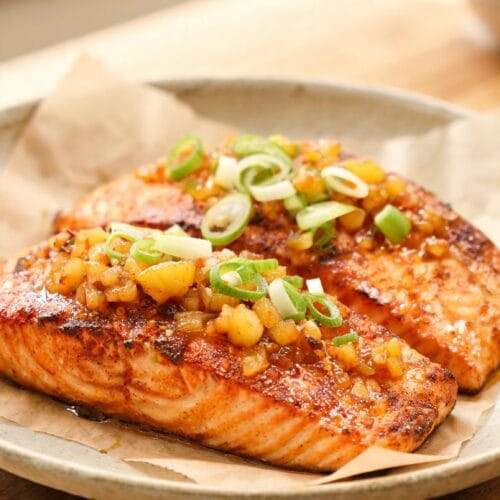
Sweet & Spicy Pineapple Salmon
Ingredients
- 4 salmon fillets (about 6 oz each), skin-on
- 1 tablespoon olive oil
- ½ teaspoon salt
- ¼ teaspoon black pepper
- ½ teaspoon garlic powder
- 1 cup fresh pineapple, finely diced
- 3 tablespoons low-sodium soy sauce
- 2 tablespoons honey
- 1 tablespoon sriracha
- ½ teaspoon red chili flakes
- 2 cloves garlic, minced
- 1 teaspoon fresh ginger, grated
- 1 tablespoon fresh lime juice
- 1 teaspoon cornstarch mixed with 1 tablespoon cold water
- 2 green onions, thinly sliced
- Small handful fresh cilantro (optional)
- Lime wedges for serving
Instructions
- Remove salmon from the fridge 10 minutes before cooking. Pat all fillets completely dry with paper towels on both sides.
- Season both sides of each fillet with salt, black pepper, and garlic powder.
- In a small bowl, whisk together soy sauce, honey, sriracha, chili flakes, minced garlic, grated ginger, and lime juice. Stir in the cornstarch slurry until combined. Set aside.
- Heat olive oil in a large skillet over medium-high heat until hot but not smoking. Place salmon fillets skin-side down and cook undisturbed for 4 to 5 minutes until skin is crispy and flesh is cooked halfway up the sides.
- Flip fillets carefully and cook flesh-side down for 2 to 3 more minutes. Remove salmon to a plate temporarily.
- Reduce heat to medium. Add diced pineapple to the same pan and cook for about 2 minutes, stirring occasionally, until softened and beginning to caramelize.
- Pour the sauce mixture over the pineapple. Stir and let it bubble for 1 minute until the glaze thickens and turns glossy.
- Return salmon fillets to the pan. Spoon the glaze generously over the top of each fillet. Cook together for 1 to 2 more minutes until the glaze clings to the fish and caramelizes slightly at the edges.
- Transfer to plates. Top with sliced green onions and fresh cilantro. Serve immediately with lime wedges on the side.