Introduction
Some nights I come home with a couple of white fish fillets, salt still dried on my hands from the afternoon, and I just want something that doesn’t fight me. That’s honestly how this easy Mediterranean baked fish became my go-to, much like my favorite creamy tuna salad sandwich recipe. Not because I planned it. Because I was tired, hungry, and the tomatoes on the counter were starting to look at me.
I had olives, a lemon, some olive oil, and a handful of herbs I keep around. Threw it all in a baking dish and hoped for the best. Turned out to be one of those meals where you stand over the pan eating it before you even sit down.
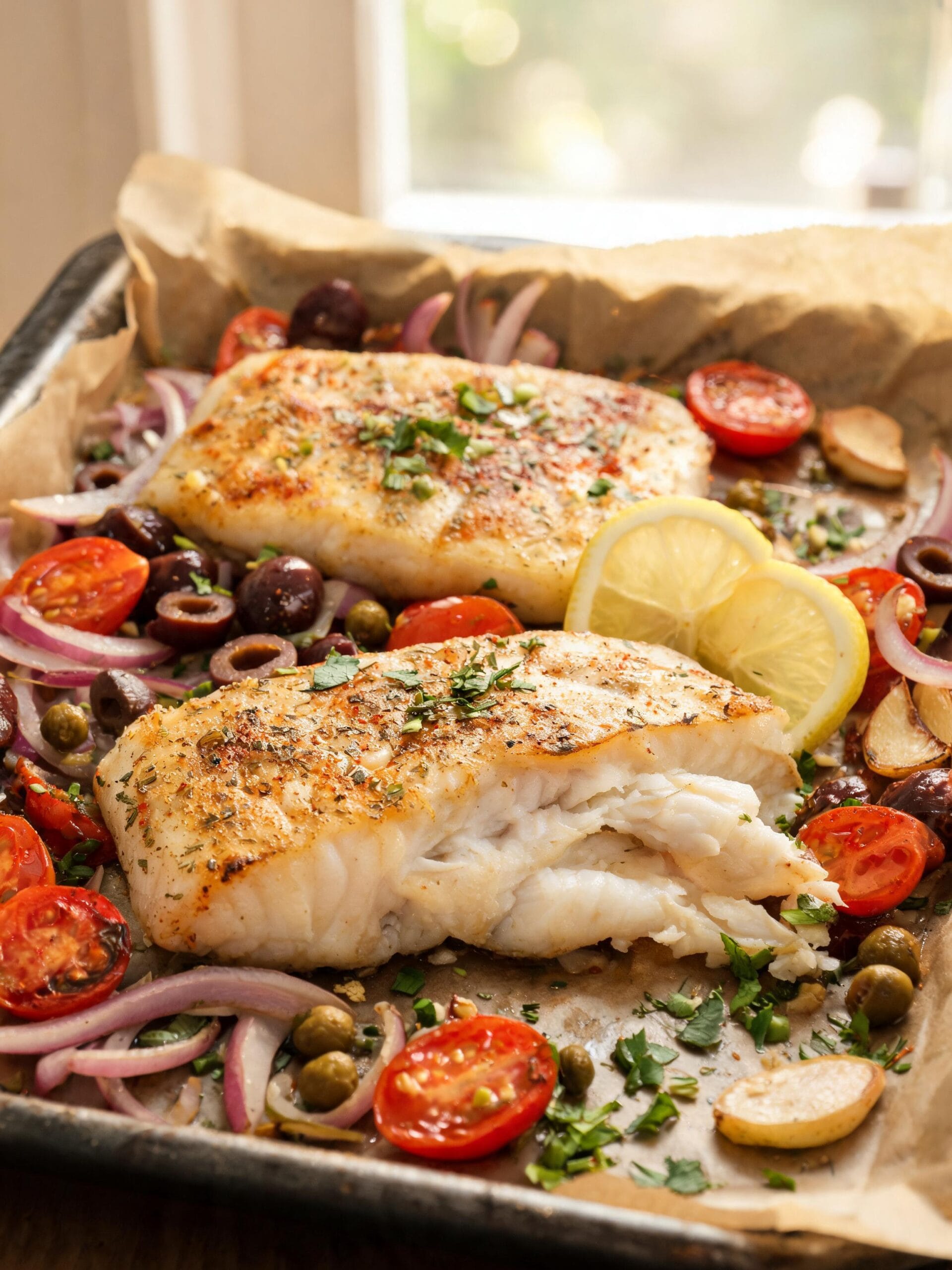
This coastal style baked fish is the kind of recipe that sounds fancier than it is. It’s not. It’s just honest food — the kind that tastes like somewhere warm and close to the water, even if you’re eating it at your kitchen table in the middle of the week.
Why You’ll Love This Recipe
- It’s genuinely fast — from fridge to table in about 35 minutes, no hovering required
- The flavors do the heavy lifting — tomatoes, olives, lemon, and herbs turn a plain fish fillet into something that actually tastes like you tried
- Almost impossible to mess up — even if you’re new to cooking fish at home, this one forgives small mistakes
Quick Recipe Snapshot
Quick Recipe Snapshot
| Prep Time | 15 minutes |
| Cook Time | 20 minutes |
| Total Time | 35 minutes |
| Servings | 4 |
| Difficulty | Easy — beginner friendly |
| Best Fish | Cod, tilapia, sea bass, snapper |
| Oven Temp | 400°F (200°C) |
Ingredients List
For the fish:
- 4 white fish fillets (about 6 oz each) — cod, tilapia, or snapper all work well here
- 3 tablespoons olive oil — the good kind if you have it, it really does make a difference in the pan
- 1 teaspoon salt
- ½ teaspoon black pepper
- 1 teaspoon dried oregano — that slightly dusty, herby smell is what makes this feel Mediterranean
- ½ teaspoon smoked paprika
For the topping:
- 1 cup cherry tomatoes, halved — they burst in the oven and make a little sauce on their own
- ½ cup Kalamata olives, pitted and roughly chopped
- 3 garlic cloves, thinly sliced
- 1 small red onion, thinly sliced
- 2 tablespoons capers, drained — optional, but they add a nice briny pop
- 1 lemon, half sliced into rounds, half kept for squeezing at the end
- 2 tablespoons fresh parsley, chopped — for after it comes out of the oven
Step-by-Step Instructions
- Heat your oven to 400°F. Pull out a baking dish big enough that the fillets aren’t stacked on top of each other — they need space to cook evenly.
- Drizzle about a tablespoon of olive oil across the bottom of the dish. Lay the fish fillets in, not touching if you can help it.
- Mix the remaining olive oil with the salt, pepper, oregano, and smoked paprika in a small bowl. Spoon or brush that over the top of each fillet. Don’t be shy with it.
- Scatter the cherry tomatoes, olives, red onion, garlic slices, and capers right over and around the fish. Tuck the lemon rounds in between wherever they fit. It’ll look a little crowded — that’s fine, everything shrinks down as it cooks.
- Slide it into the oven uncovered. Bake for 18 to 22 minutes depending on how thick your fillets are. You’re looking for the fish to flake easily when you press it gently with a fork. The tomatoes should be soft and slightly collapsed.
- Pull it out, squeeze that other lemon half over everything, scatter the fresh parsley on top, and bring the whole dish straight to the table. That’s it.
Honestly, I usually taste a corner of the fish right there at the oven. Old habit. It’s just too hard to wait.
Small Tricks From Cooking Fish at Home
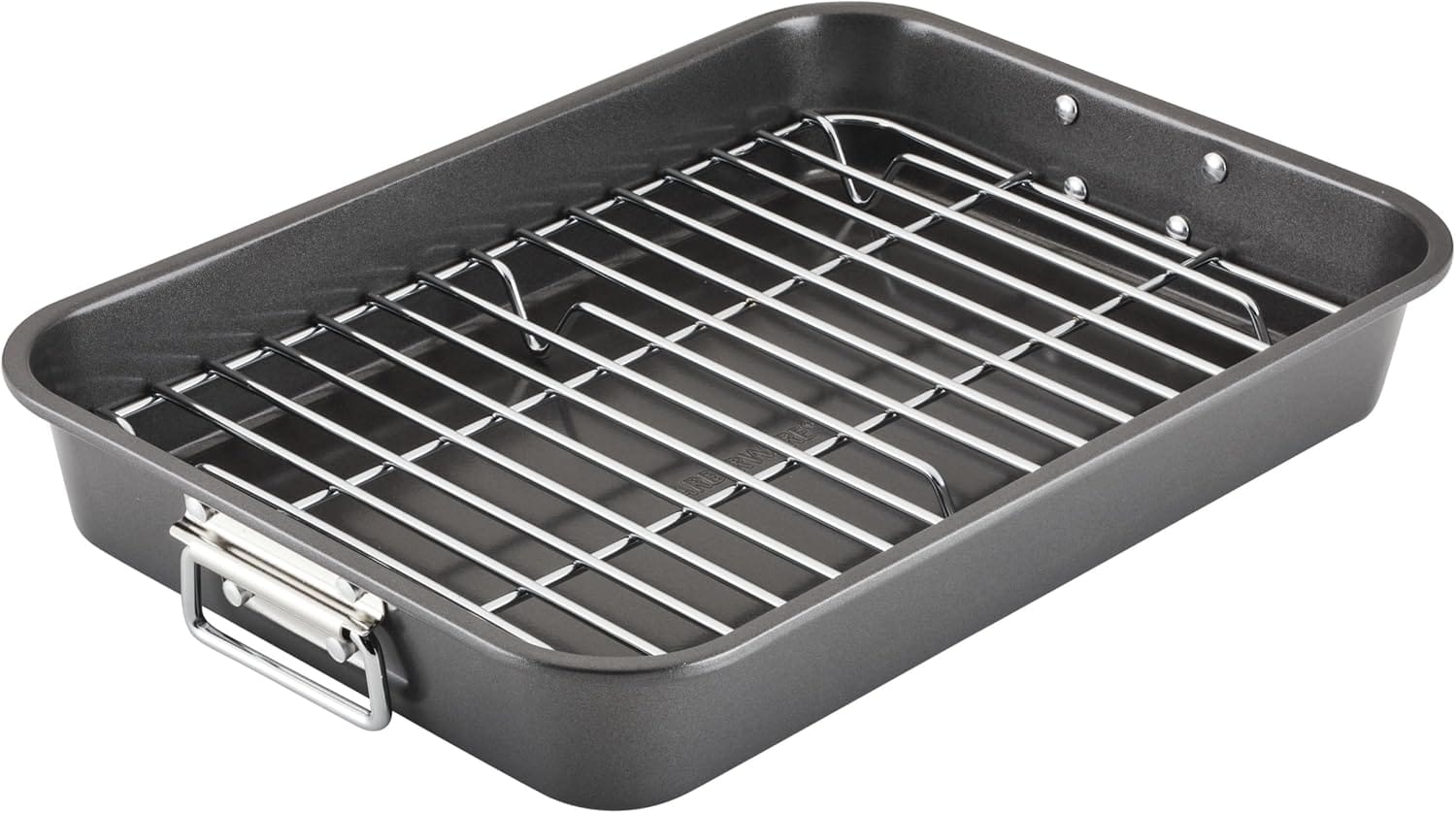
You know that tip about oiling the pan to prevent sticking? It’s crucial, but I like to give myself a little extra insurance. My go-to for this recipe is the Farberware Nonstick Roaster. It’s the perfect size to let everything roast without getting crowded, and the nonstick surface is a lifesaver. The fish slides right out, every single time, with all the delicious crust intact. It just takes the guesswork out of it.
If you want to guarantee your fish comes out perfectly every time, I can’t recommend it enough. Grab one for yourself and see the difference it makes!
Farberware Nonstick Bakeware 11-Inch x 15-Inch Roaster with Flat Rack
✓ prime
We earn a commission if you make a purchase, at no additional cost to you.
Pat the fish dry before you season it. I learned this the hard way — wet fillets steam instead of bake, and you end up with something soft and a little sad instead of that slightly golden edge you want.
Don’t skip the olive oil on the bottom of the pan. Fish sticks. It always sticks when you think it won’t. A good coat of oil saves you from losing half the fillet to the dish when you try to lift it out.
Room temperature fish cooks more evenly. I pull mine from the fridge about 10 to 15 minutes before it goes in. Cold fish straight into a hot oven tends to cook unevenly — the outside gets ahead of the inside.
The tomatoes aren’t just for flavor — they release liquid as they cook and essentially baste the fish from the sides. That’s why the fish stays moist even if you go a minute or two over. The vegetables are doing some of the work for you.
Fresh lemon at the end matters more than lemon during cooking. Lemon baked into the dish the whole time can go slightly bitter. The squeeze at the end stays bright and clean. My grandmother did it that way and I never questioned it.
Common Mistakes to Avoid
Overcooking is the big one. Fish goes from perfect to rubbery faster than you expect. Start checking at 18 minutes. If a fork slides in and the flesh separates in clean layers, it’s done. Don’t wait for it to look fully opaque all the way through before you pull it — carryover heat finishes the job.
Using a dish that’s too small. If the fillets are overlapping or the vegetables are piled too deep, things steam instead of roast and you lose all the texture. Use the biggest dish that fits in your oven.
Forgetting to season the fish itself, not just the topping. The vegetables and olives have plenty of flavor but the fish needs its own salt and seasoning underneath. I’ve made this mistake when I was in a rush and the fish tasted flat even though everything around it was delicious.
Skipping the rest time. Let it sit for two or three minutes after it comes out. The juices settle back into the fish and it holds together better when you serve it. I know it’s hard to wait. Do it anyway.
Variations and Serving Ideas
Spicy version: Add a pinch of red pepper flakes to the olive oil mixture before you coat the fish. You can also slice a small fresh chili and scatter it in with the tomatoes. It doesn’t overpower — it just wakes everything up.
Mild version: Leave out the capers and olives if you’re cooking for someone who doesn’t love briny flavors. Replace them with thinly sliced zucchini and a few sun-dried tomatoes. Still feels Mediterranean, just softer.
Coastal twist: Add a handful of raw shrimp tucked around the fish fillets in the last 8 minutes of baking. They cook fast and turn this into a little mixed seafood situation that feels like something you’d eat at a table near the water with your shoes off.
What to Serve With
Crusty bread is my first answer. Always. You want something to drag through the tomato and olive oil that pools at the bottom of the dish. If you’re looking for something more substantial, a flavorful rice dish like this shrimp and sausage dirty rice would also be incredible. Don’t waste that sauce!
A simple green salad on the side — something with a sharp vinaigrette cuts through the richness of the olive oil nicely. Arugula with lemon and a little shaved parmesan works really well.
Roasted potatoes or a scoop of plain couscous if you need something more filling. The couscous especially soaks up the pan juices in a way that makes it feel like it was planned all along, even when it wasn’t.
Rice works too. Nothing fancy. Just something to catch the sauce.
Storage and Reheating
Store leftovers in an airtight container in the fridge. It’ll keep for up to 2 days. After that the texture starts to go and it’s just not worth eating.
To reheat, use a low oven — around 300°F — covered loosely with foil for about 10 minutes. Add a tiny splash of water or olive oil before you cover it to keep it from drying out.
DO NOT microwave fish if you can avoid it. It turns rubbery and the smell fills the whole kitchen. If you have to use the microwave, go low power in short bursts and stop the second it’s warm.
DO NOT freeze this once it’s been baked. The tomatoes turn watery, the fish texture falls apart, and it just doesn’t come back to anything worth eating. Make it fresh — it only takes 35 minutes anyway.
FAQs (People Also Ask)
Can I use frozen fish fillets?
Yes, but thaw them completely first and pat them very dry. Frozen fish holds a lot of water and if you skip that step the whole dish ends up watery. Thaw overnight in the fridge if you can.
How do I know when the fish is done?
Press gently with a fork in the thickest part. If it flakes apart in clean layers, it’s ready. The flesh should be just opaque — not glassy. When in doubt, 20 minutes at 400°F is usually right for a standard fillet.
Can I substitute the olives or capers?
Absolutely. If you don’t have Kalamata olives, any pitted olive works. If you hate capers, just leave them out — the dish is still great without them. A few artichoke hearts make a nice swap if you have them.
How long does it actually take start to finish?
About 35 minutes total. 15 minutes to prep everything and get it in the dish, 20 minutes in the oven. It’s genuinely one of the faster dinners I make.
Is this recipe good for beginners?
It’s one of the best ones to start with if you’re new to cooking fish at home. There’s no flipping, no stovetop timing, no complicated technique. You season it, you pile things on top, you bake it. The oven does most of the work.
Nutrition Facts
(Per serving. Estimates only, varies by exact ingredients used)
Conclusion
There’s something about this dish that always takes me back to late afternoons near the water — that specific kind of tired that feels good, when the day is done and dinner doesn’t need to be complicated to feel like enough.
A baking dish, some fish, whatever’s in the pantry. That’s really all this is. And somehow it always comes out tasting like more than the sum of its parts. That’s the thing about simple coastal food — it doesn’t try to impress you. It just feeds you well.
I hope it does the same for you.
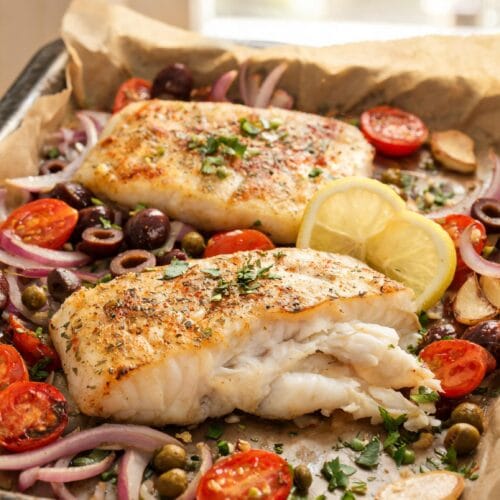
Easy Mediterranean Baked Fish
Ingredients
- 4 white fish fillets (about 6 oz each), such as cod, tilapia, or snapper
- 3 tablespoons olive oil, divided
- 1 teaspoon salt
- ½ teaspoon black pepper
- 1 teaspoon dried oregano
- ½ teaspoon smoked paprika
- 1 cup cherry tomatoes, halved
- ½ cup Kalamata olives, pitted and roughly chopped
- 3 garlic cloves, thinly sliced
- 1 small red onion, thinly sliced
- 2 tablespoons capers, drained (optional)
- 1 lemon, half sliced into rounds and half reserved for finishing
- 2 tablespoons fresh parsley, chopped
Instructions
- Preheat your oven to 400°F (200°C). Drizzle 1 tablespoon of olive oil across the bottom of a large baking dish.
- Pat the fish fillets completely dry with paper towels and lay them in the dish without overlapping.
- In a small bowl, mix the remaining 2 tablespoons of olive oil with the salt, black pepper, dried oregano, and smoked paprika. Spoon or brush this evenly over each fillet.
- Scatter the cherry tomatoes, olives, red onion, garlic slices, and capers over and around the fish. Tuck the lemon rounds in between the fillets.
- Bake uncovered for 18 to 22 minutes, or until the fish flakes easily when pressed gently with a fork and the tomatoes are soft and slightly collapsed.
- Remove from the oven, squeeze the reserved lemon half over everything, scatter fresh parsley on top, and serve directly from the baking dish.