Introduction
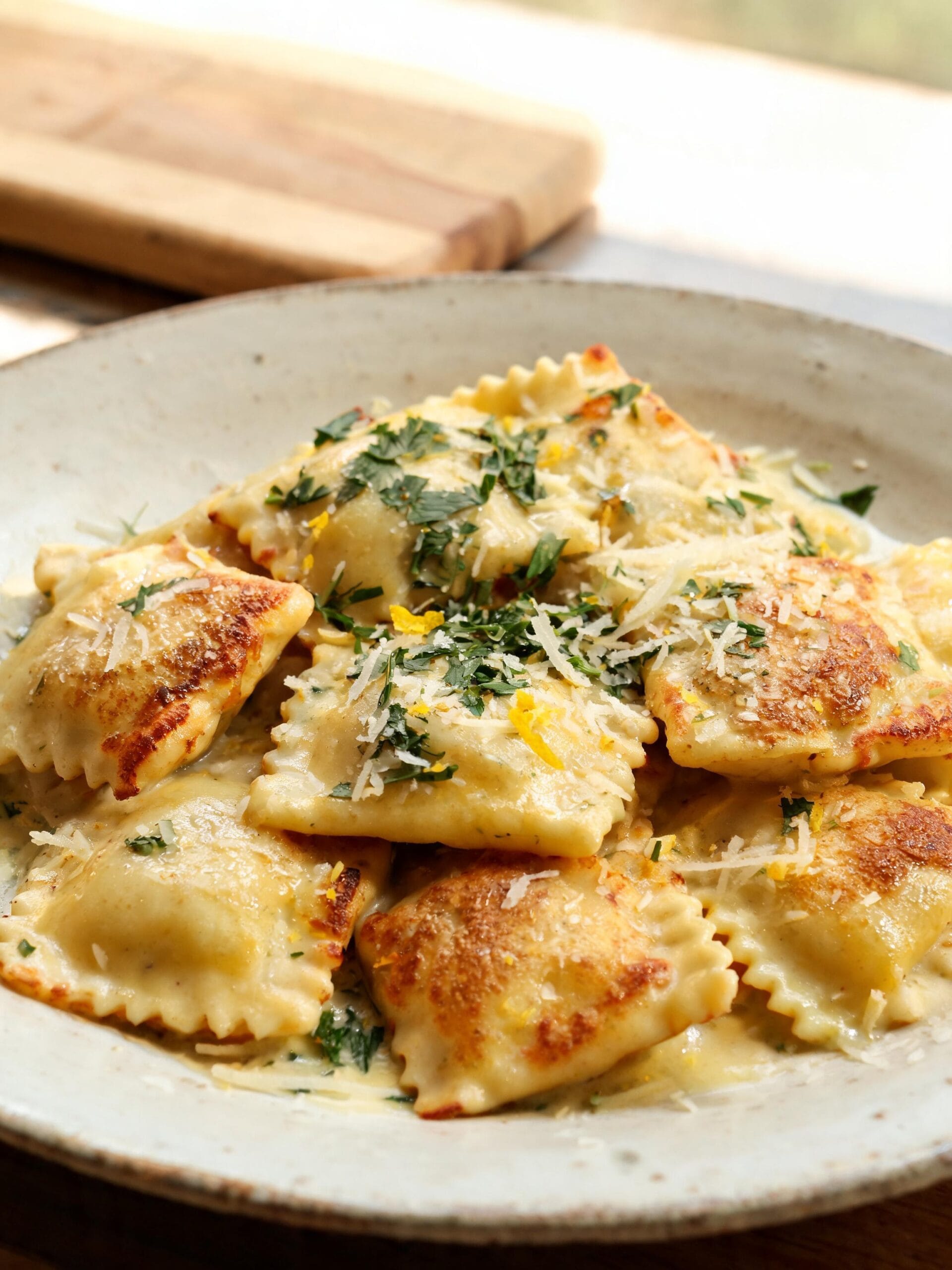
I remember the first time I tried to figure out a proper sauce for lobster ravioli and just stood there in my kitchen staring at a bag of store-bought ravioli like it owed me an explanation. I had leftover lobster from a trap haul the day before, which usually leads to one of our favorite easy seafood boil recipes. But this time, I had cream, I had butter, and I had absolutely no idea what I was doing. I just started cooking and hoped for the best.
Turns out, the best homemade sauce for lobster ravioli doesn’t need much. It doesn’t need a recipe from some fancy food magazine or a list of ingredients you can’t pronounce. It needs butter that foams up slow in the pan, a pour of heavy cream, a little garlic that goes soft and golden before you even blink, and something bright at the end to cut through all that richness. Lemon. Fresh herbs. Maybe a splash of white wine if there’s an open bottle nearby.
That’s it. That’s the whole story.
This is the sauce I make now every single time I pull lobster ravioli out of the freezer or pick up a fresh pack from the fish market down the road. It’s become one of those weeknight things that feels way more special than the effort it actually takes.
Why You’ll Love This Recipe
- It comes together in about 20 minutes, start to finish, which means dinner is actually happening tonight without a big production.
- The flavor is rich and coastal without being heavy — that butter-cream base wraps around the lobster filling in a way that just makes sense.
- You don’t need any special skills. If you can melt butter without burning it, you can make this sauce.
Quick Recipe Snapshot
Prep Time: 15 minutes
Cook Time: 20 minutes
Total Time: 35 minutes
Servings: 4
Difficulty: Easy
Best For: Weeknight dinner, date night at home, coastal-inspired comfort food
What you’ll need in short: butter, garlic, shallot, white wine, heavy cream, lemon, fresh tarragon or parsley, salt, pepper, and a pinch of red pepper flakes if you want a little warmth.
Ingredients List
For the Sauce:
- 4 tablespoons unsalted butter — the base of everything, don’t skimp here
- 3 cloves garlic, minced — goes in early so it has time to mellow out
- 1 small shallot, finely diced — adds a quiet sweetness that garlic alone can’t do
- ½ cup dry white wine — something you’d actually drink, not cooking wine from a bottle that’s been open for a month
- 1 cup heavy cream — this is what makes the sauce cling to the pasta
- Zest of 1 lemon plus 1 tablespoon fresh lemon juice — the brightness that keeps the whole thing from feeling too heavy
- 2 tablespoons fresh tarragon or flat-leaf parsley, chopped — tarragon is more coastal and slightly anise-y, parsley is simpler and cleaner
- ½ teaspoon salt, or more to taste
- ¼ teaspoon black pepper
- Pinch of red pepper flakes — optional, but I almost always add it
- 2 tablespoons freshly grated Parmesan — just a little, stirred in at the end to help the sauce come together
For the Pasta:
- 1 pound lobster ravioli — fresh, refrigerated, or frozen all work here
- Salt for the pasta water — more than you think, the water should taste like the sea
Step-by-Step Instructions
- Get a big pot of salted water on the stove over high heat. You want it boiling before you start the sauce so everything finishes around the same time.
- In a wide skillet — I use a 12-inch stainless one that’s seen better days — melt the butter over medium heat. Let it foam up and just barely start to turn golden at the edges. That’s when you add the shallot.
- Cook the shallot for about 2 minutes, stirring occasionally, until it goes soft and translucent. Then add the garlic and cook another minute. Don’t walk away here. Garlic goes from golden to burnt faster than you expect, and burnt garlic in a cream sauce is a hard thing to come back from.
- Pour in the white wine. It’ll sizzle and steam and smell incredible. Let it cook down for about 2 to 3 minutes until it’s reduced by roughly half. You’re not trying to cook off every drop, just concentrate the flavor a little.
- Lower the heat to medium-low and pour in the heavy cream. Stir it in slowly. Let it come up to a gentle simmer — not a full boil, just little bubbles around the edges — and cook for about 5 minutes until it thickens slightly. It won’t be super thick, more like a loose, silky coating.
- While the sauce is doing its thing, drop your ravioli into the boiling water. Fresh ravioli usually takes 3 to 4 minutes. Frozen takes a minute or two longer. Follow the package, but taste one before you drain everything.
- Stir the lemon zest, lemon juice, Parmesan, and herbs into the sauce. Taste it. Add salt and pepper as needed. If it feels too rich, a little more lemon juice fixes that immediately.
- Use a slotted spoon or spider strainer to transfer the ravioli directly from the water into the sauce. Don’t drain them completely dry — a little pasta water goes with them and that’s actually a good thing. It helps the sauce loosen and stick.
- Toss everything gently. Serve right away with a little extra Parmesan on top and maybe a few torn herb leaves if you have them.
Side note: I always taste the sauce one more time right before I add the pasta. That last adjustment matters more than any step before it.
Small Tricks From Cooking Fish at Home
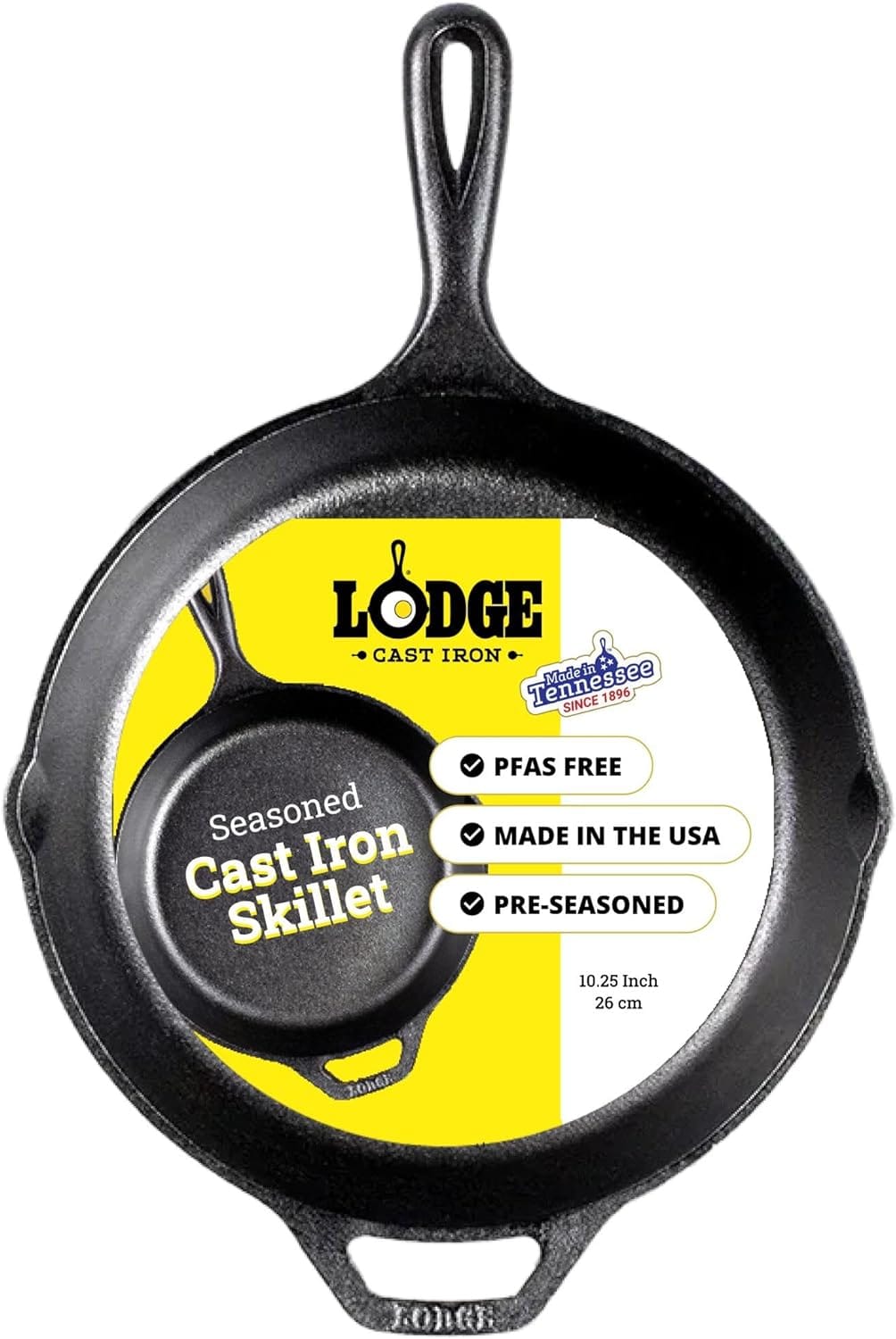
Speaking of the right tools, I learned a long time ago that a reliable skillet is half the battle, especially with a delicate cream sauce. While my old stainless pan has served me well, for a sauce this simple where every element matters, I reach for my Lodge Cast Iron Skillet. It holds heat so evenly across the entire surface, which is the secret to getting that perfect gentle simmer without any hot spots. It means my cream never threatens to break, and the garlic and shallots soften to that perfect sweet spot without a hint of scorching. It’s that kind of control that turns a good sauce into a great one, every single time.
If you want that same level of confidence when making sauces, do yourself a favor and get one.
Lodge 10.25 Inch Cast Iron Skillet with Assist Handle
✓ prime
We earn a commission if you make a purchase, at no additional cost to you.
The pasta water thing is real. I used to drain my pasta completely and then wonder why the sauce looked thin and slippery on the plate. Keeping a little starchy water clinging to the ravioli when you transfer them makes the sauce behave differently — it emulsifies better, clings better, just works better.
Don’t rush the shallot. I used to throw everything in at once when I was hungry and impatient. The shallot needs those two minutes to go soft. If it’s still a little raw when the wine goes in, you’ll taste it at the end and it won’t be pleasant.
Cream sauces hate high heat. I learned this the hard way when I cranked the burner trying to speed things up and the cream broke — it separated into greasy pools and grainy bits and I had to start over. Medium-low is your friend. Slow and gentle.
Fresh herbs go in at the end, not the beginning. I used to add them early thinking more time meant more flavor. It doesn’t. It just makes them turn dark and slightly bitter. Last minute, right before you plate.
If your sauce looks too thick before the pasta goes in, add a small splash of the pasta water to loosen it. If it looks too thin, let it simmer another minute or two. It’ll tighten up.
Common Mistakes to Avoid
Boiling the cream. This is probably the most common one. The second you see a full rolling boil in that pan, pull the heat back. Cream that boils hard can break, and once it does, the texture is gone. You can sometimes save it with a splash of cold cream and some gentle stirring, but it’s better to just not let it happen.
Using pre-minced garlic from a jar. I know it’s convenient and I’ve done it plenty of times, but it genuinely tastes different in a simple sauce like this. The fresh stuff has a brightness that the jarred version just doesn’t carry. For a sauce this simple, the garlic matters more than usual.
Overcooking the ravioli. Lobster filling is already cooked inside those little pasta pillows. You’re just rehydrating and warming the pasta itself. A minute too long and they get bloated and start to split open. Watch them closely, especially if they’re fresh.
Forgetting to salt the pasta water. The sauce has salt in it, but the pasta itself needs to absorb some seasoning while it cooks. Under-salted pasta tastes flat no matter how good the sauce is. The water should genuinely taste salty before the ravioli goes in.
Variations and Serving Ideas
If you want something spicy: Double the red pepper flakes and add a small pinch of cayenne when the cream goes in. It gives the sauce a slow warmth that builds as you eat. Good with a cold glass of something dry.
If you want something milder: Skip the wine and use a splash of low-sodium chicken broth instead. Pull back on the lemon juice and use just the zest. The sauce stays creamy and gentle — good for people who find cream sauces a little overwhelming.
Coastal twist: Add a handful of small cooked shrimp, like the kind used in garlic butter shrimp bites, or a few pieces of lump crab meat to the sauce right before the ravioli goes in. It turns a simple weeknight dinner into something that feels like you’re eating at a picnic table ten feet from the water.
What to Serve With
Crusty bread is non-negotiable for me. Something with a real crust that you can drag through the leftover sauce in the bowl. Sourdough, a French baguette, even a good ciabatta — anything that gives you that contrast between the soft ravioli and something you have to actually bite into.
A simple green salad with a sharp vinaigrette helps cut through the richness of the cream. Arugula works especially well because it’s slightly bitter and peppery on its own.
Roasted asparagus or broccolini on the side adds something green and slightly charred that balances the whole plate without competing with the sauce.
And honestly, a glass of cold Pinot Grigio or Sauvignon Blanc alongside this is just the right ending to a long day.
Storage and Reheating
If you have leftover ravioli already tossed in the sauce, store them together in an airtight container in the fridge. They’ll keep for about 2 days. The pasta will absorb some of the sauce overnight, which is actually fine — it gets a little richer.
To reheat, add a splash of cream or water to the pan and warm everything over low heat, stirring gently. DO NOT microwave this on high — the cream sauce will separate and the ravioli will turn rubbery. Low and slow is the only way.
DO NOT freeze the finished dish. The cream sauce does not survive freezing. It breaks completely and the texture of the ravioli suffers too. Make only what you’ll eat in the next couple of days.
If you want to prep ahead, make the sauce and store it separately from the cooked pasta. Reheat the sauce gently and cook fresh ravioli when you’re ready to eat.
FAQs (People Also Ask)
Can I use a different pasta if I can’t find lobster ravioli?
Yes. This sauce works well with any filled pasta — crab ravioli, shrimp tortellini, even cheese-filled pasta if that’s what you have. The sauce is the star here and it plays well with most things.
Can I substitute the heavy cream?
Half-and-half works in a pinch but the sauce will be thinner and less rich. I wouldn’t use milk — it doesn’t hold up the same way and tends to curdle more easily when heated. If you want a dairy-free version, full-fat coconut cream is surprisingly good here, though it adds a very slight sweetness.
How do I know when the ravioli is done?
They’ll float to the surface of the water and the pasta should feel tender when you press gently on the edge. Taste one — that’s the most reliable test. The filling is already cooked, so you’re really just checking the pasta texture.
Can I use frozen lobster ravioli straight from the freezer?
Yes, drop them in boiling water still frozen. Just add a minute or two to the cooking time and watch them closely. Don’t thaw them first — they tend to get sticky and fall apart if you try to thaw before boiling.
How long does this take start to finish?
Honestly about 35 minutes if you’re moving at a normal pace. Maybe 25 if you’ve made it before and have a rhythm going. It’s genuinely one of the faster dinners I make that still feels like something worth sitting down for.
Nutrition
Nutrition Facts
(Per serving. Estimates only, varies by exact ingredients used)
Conclusion
There’s something about making a simple cream sauce on a Tuesday night that still feels a little like a small celebration to me. Maybe it’s the butter foaming in the pan. Maybe it’s the smell of garlic and wine hitting the air at the same time. Maybe it’s just that lobster, even in ravioli form, carries some memory of the water with it.
This easy sauce for lobster ravioli started as me just improvising with what I had after a long day on the water. Now it’s one of those recipes I don’t even have to think about anymore. The hands just know what to do.
I hope it becomes that for you too.
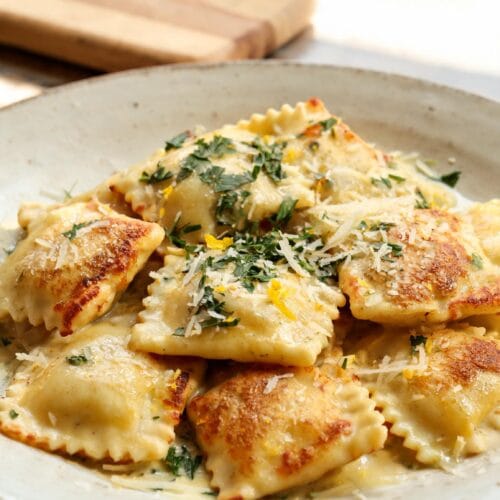
Buttery Lemon Cream Sauce for Lobster Ravioli
Ingredients
- 4 tablespoons unsalted butter
- 3 cloves garlic, minced
- 1 small shallot, finely diced
- 1/2 cup dry white wine
- 1 cup heavy cream
- Zest of 1 lemon
- 1 tablespoon fresh lemon juice
- 2 tablespoons fresh tarragon or flat-leaf parsley, chopped
- 1/2 teaspoon salt, or more to taste
- 1/4 teaspoon black pepper
- Pinch of red pepper flakes (optional)
- 2 tablespoons freshly grated Parmesan
- 1 pound lobster ravioli (fresh, refrigerated, or frozen)
- Salt for pasta water
Instructions
- Bring a large pot of generously salted water to a boil over high heat.
- In a wide 12-inch skillet, melt butter over medium heat until foamy and just beginning to turn golden at the edges. Add the diced shallot and cook for 2 minutes until soft and translucent.
- Add the minced garlic and cook for 1 minute, stirring constantly. Do not let it brown.
- Pour in the white wine. Let it sizzle and reduce for 2 to 3 minutes until reduced by about half.
- Reduce heat to medium-low and pour in the heavy cream. Stir gently and bring to a soft simmer — small bubbles around the edges only. Cook for 5 minutes until slightly thickened.
- Drop the lobster ravioli into the boiling water and cook according to package directions, usually 3 to 4 minutes for fresh or 5 to 6 minutes for frozen. Taste one before draining.
- Stir lemon zest, lemon juice, Parmesan, and fresh herbs into the cream sauce. Season with salt, pepper, and red pepper flakes to taste.
- Using a slotted spoon or spider strainer, transfer ravioli directly from the water into the sauce, bringing a little pasta water with them. Toss gently to coat.
- Serve immediately with extra Parmesan and fresh herb leaves on top.