Introduction
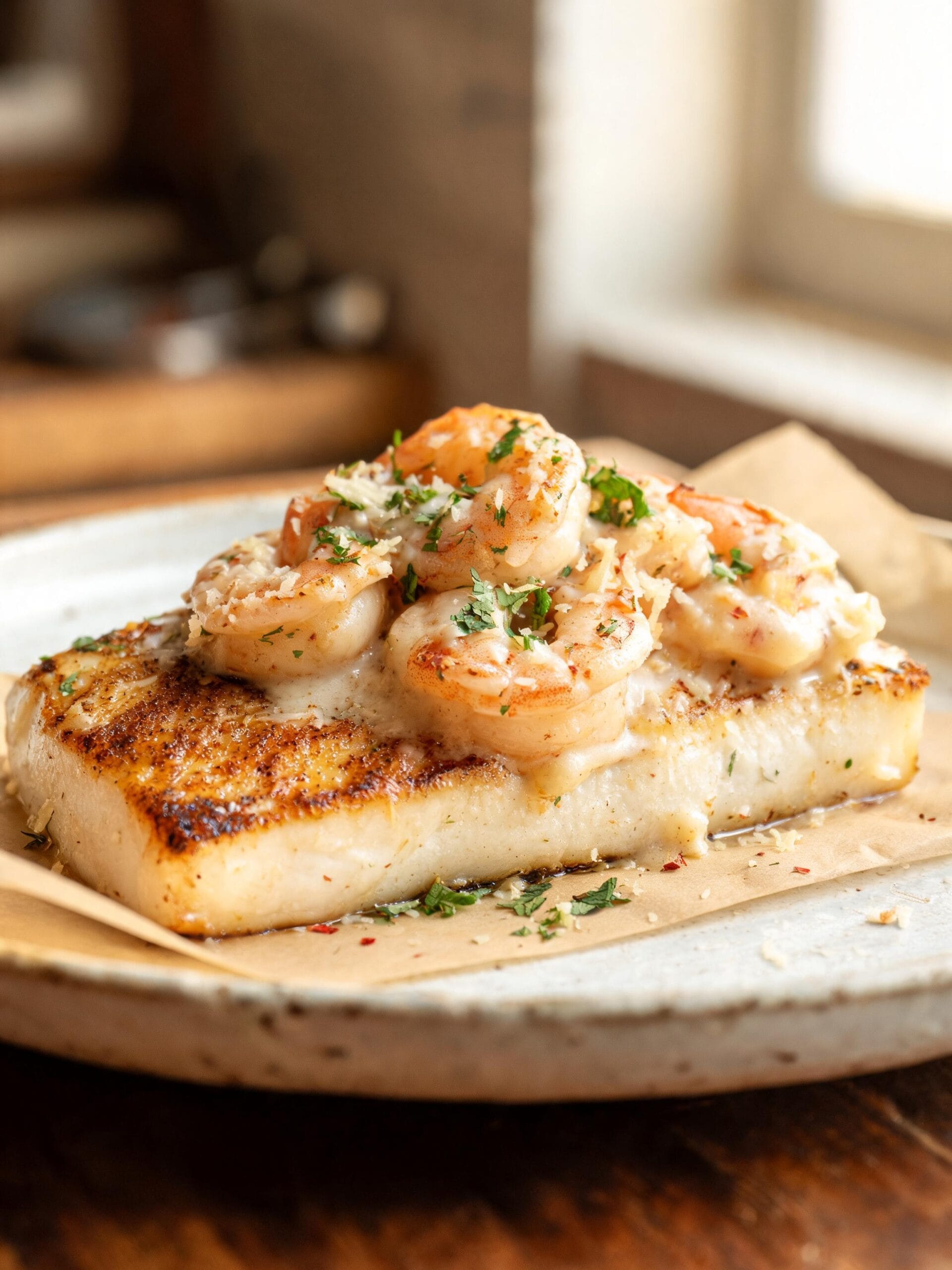
The first time I made Alaska Halibut Topped with Creamy Parmesan Shrimp, it wasn’t planned at all. My uncle had dropped off a big bag of halibut fillets from his last trip up north, and I had a pound of shrimp in the freezer that needed to get used. The fridge was half empty, there was a block of parmesan in the back, and I thought — okay, let’s just see what happens. It’s these moments of improvisation that often lead to the best meals, whether it’s this halibut dish or a surprisingly good creamy tuna salad sandwich made from pantry staples.
What came out of that oven stopped me mid-bite. The halibut was flaky and tender, and that creamy shrimp topping had melted into it in this way that felt almost too good for a Tuesday night. I’ve made this easy Alaska halibut dinner probably a dozen times since then, and it never gets old.
If you’ve got halibut and shrimp and about 35 minutes, this one’s for you.
Why You’ll Love This Recipe
- It comes together fast — we’re talking real weeknight fast, not food-blog fast where “quick” means an hour.
- The flavor is rich and coastal without being heavy or complicated. The parmesan and cream do something beautiful with the shrimp that just works.
- You don’t need to be a skilled cook. If you can turn on an oven and stir a pan, you’ve got this.
Quick Recipe Snapshot
Recipe: Alaska Halibut Topped with Creamy Parmesan Shrimp
Serves: 4
Prep Time: 15 minutes
Cook Time: 20 minutes
Total Time: 35 minutes
Difficulty: Easy
Best For: Weeknight dinner, casual coastal meal, impressing someone without trying too hard
Ingredients List
For the Halibut:
- 4 Alaska halibut fillets (about 6 oz each) — thick, firm fillets hold up best under the topping
- 2 tablespoons olive oil
- 1 teaspoon garlic powder
- 1/2 teaspoon smoked paprika
- Salt and black pepper to taste
- Juice of half a lemon
For the Creamy Parmesan Shrimp Topping:
- 1 lb medium shrimp, peeled and deveined — smaller shrimp spread more evenly across the fillet
- 2 tablespoons unsalted butter
- 3 cloves garlic, minced
- 1/2 cup heavy cream — this is what makes the sauce cling and stay rich
- 3/4 cup freshly grated parmesan cheese
- 1/4 teaspoon red pepper flakes (optional but worth it)
- 2 tablespoons fresh parsley, chopped
- Salt to taste
Step-by-Step Instructions
- Preheat your oven to 400°F. Line a baking sheet with foil and give it a light brush of olive oil so nothing sticks.
- Pat your halibut fillets dry with a paper towel. This matters more than people think — wet fish steams instead of baking, and you lose that nice edge.
- Rub each fillet with olive oil, garlic powder, smoked paprika, salt, pepper, and a squeeze of lemon. Lay them on the baking sheet and set aside.
- In a skillet over medium heat, melt the butter. Add the minced garlic and let it cook for about a minute — just until it smells good, not until it browns.
- Add the shrimp. Cook them for 2 to 3 minutes, just until they turn pink. Don’t go longer. Shrimp keep cooking in the oven and you don’t want them rubbery by the time dinner hits the table.
- Pour in the heavy cream and stir. Let it come to a gentle simmer, then add the parmesan. Stir until it melts into the cream and the whole thing thickens slightly — maybe 2 minutes. Add red pepper flakes if using, and taste for salt.
- Spoon the creamy shrimp mixture generously over each halibut fillet. Don’t be shy. Pile it on.
- Slide the baking sheet into the oven and bake for 14 to 16 minutes. The halibut should flake easily with a fork when it’s done. If your fillets are thinner, check at 12 minutes.
- Pull it out, scatter fresh parsley on top, and serve immediately. This one doesn’t wait well on the counter.
Side note — the first time I made this I forgot to pat the fish dry and the sauce kind of slid off into a puddle on the pan. Still tasted great, but the presentation was rough. Dry fish first. Always.
Small Tricks From Cooking Fish at Home
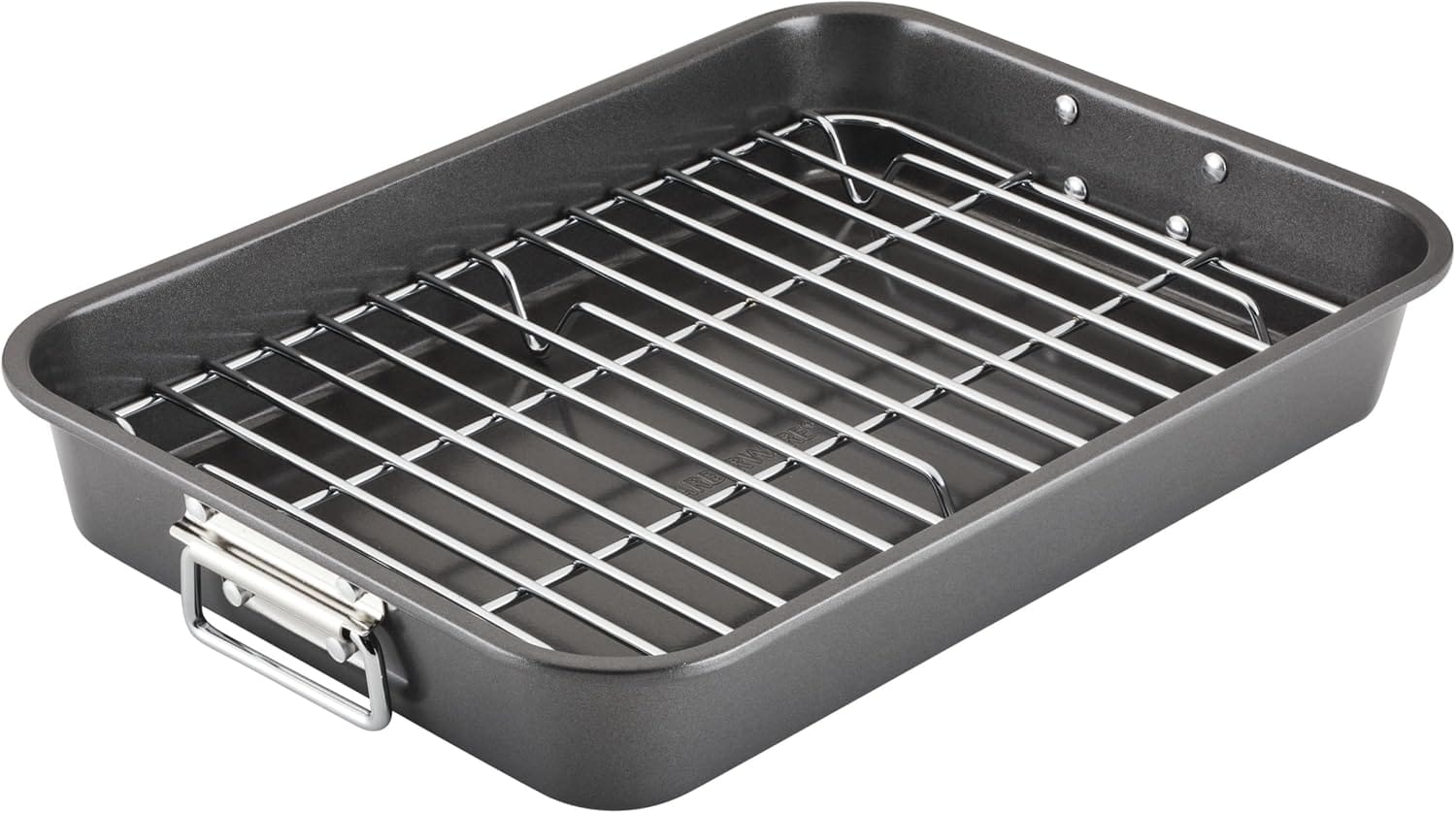
I talk a lot about using foil to save on cleanup, and that’s a solid trick. But honestly, for a delicate fish like halibut, especially with a creamy topping that can stick, nothing beats a truly great nonstick pan. This is where my Farberware Nonstick Roaster comes in. I use it for this recipe because it guarantees the fish will slide right off, with no flaky bits left behind. It takes the stress out of the final step and makes sure your beautiful dinner makes it to the plate in one piece.
If you’re ready to stop worrying about fish sticking to the pan, this is the one to get. You can grab it on Amazon.
Farberware Nonstick Bakeware 11-Inch x 15-Inch Roaster with Flat Rack
✓ prime
We earn a commission if you make a purchase, at no additional cost to you.
Room temperature fish cooks more evenly. I pull the fillets out of the fridge about 15 minutes before they go in the oven. Cold fish straight from the fridge tends to cook unevenly — the outside gets done before the center catches up.
Don’t skip the foil on the baking sheet. Halibut is lean and it can stick, especially with a creamy topping dripping down the sides. Foil saves you from scrubbing the pan at 9pm.
Grate your own parmesan. The stuff in the green can doesn’t melt the same way — it kind of clumps. Fresh grated parmesan goes silky and smooth into the cream, and that’s what makes the topping feel like something special instead of something thrown together.
I learned the hard way that overcooking shrimp in the pan before they go in the oven is a real problem. They finish cooking while the halibut bakes, so pull them off the heat the second they turn pink. Slightly underdone in the pan is exactly right.
Lemon matters. Even just a squeeze over the top right before serving brightens the whole dish. The cream and parmesan are rich, and that little bit of acid cuts through it just enough.
Common Mistakes to Avoid
Overcooking the halibut is probably the most common thing that goes wrong. Halibut is lean, which means it dries out fast. Once it flakes easily, it’s done. There’s no grace period with white fish — pull it out and serve it.
Using pre-shredded parmesan from a bag. I know it’s convenient. But it’s coated in anti-caking agents that stop it from melting properly, and your sauce ends up grainy instead of smooth. Just grab a block and a grater.
Piling the topping on cold fish. If your halibut is ice cold going into the oven, the sauce takes longer to heat through and the fish can overcook trying to catch up. Let the fish sit out a few minutes first.
Skipping the seasoning on the fish itself. The creamy shrimp topping is flavorful, but the halibut underneath needs its own seasoning or the whole dish tastes one-dimensional. Don’t skip the salt, pepper, and paprika on the fillet.
Variations and Serving Ideas
Spicy version: Double the red pepper flakes in the sauce and add a pinch of cayenne to the halibut seasoning. It gives the whole dish a slow heat that works really well against the richness of the cream.
Mild version: Skip the red pepper flakes entirely and add a small pinch of nutmeg to the cream sauce instead. It keeps things gentle and warm — good for kids or anyone who doesn’t want any heat.
Coastal twist: Add a handful of fresh crab meat into the shrimp topping right before spooning it over the fish. It feels indulgent and very Pacific Northwest, especially if you’ve got fresh crab on hand from a trip or a local market.
What to Serve With
This dish is rich, so you want sides that balance it out rather than double down on heaviness.
A simple green salad with lemon vinaigrette works perfectly — something crisp and bright to cut through the cream. Roasted asparagus or green beans are good too, especially if you roast them in the same oven. For an even heartier meal, consider serving it with a flavorful side like our shrimp sausage dirty rice to create a true Southern-style feast.
For something more filling, garlic mashed potatoes or a scoop of white rice soaks up the extra sauce beautifully. Crusty bread on the table is never a bad idea either — people will want to drag it through whatever’s left on the plate.
Avoid heavy pasta or anything starchy and creamy on the side. The topping already brings the richness. You want contrast on the plate, not more of the same.
Storage and Reheating
Leftover halibut keeps in the fridge for up to 2 days in an airtight container. After that, the texture starts to suffer and the shrimp get a little rubbery.
To reheat, use a low oven — around 275°F — covered loosely with foil, for about 10 minutes. This is the gentlest way to warm it through without drying it out.
DO NOT microwave this. Microwaving halibut turns it rubbery and the cream sauce separates into a greasy mess. It’s not worth it.
DO NOT freeze it after cooking. The cream sauce does not freeze well and the halibut texture falls apart after thawing. Make what you’ll eat.
FAQs (People Also Ask)
Can I use frozen halibut?
Yes, but thaw it completely in the fridge overnight and pat it very dry before cooking. Frozen halibut that’s been properly thawed works almost as well as fresh. Just don’t try to cook it from frozen — the texture won’t be right.
Can I substitute a different fish?
Absolutely. Cod and mahi-mahi both work well here. They have a similar mild flavor and firm enough texture to hold the topping. Tilapia works in a pinch but it’s thinner, so reduce the cook time.
How do I know when the halibut is done?
Press the thickest part gently with a fork. If it flakes apart easily and the flesh looks opaque all the way through, it’s done. For a 6 oz fillet at 400°F, that’s usually right around 14 to 16 minutes.
Can I make the shrimp topping ahead of time?
You can make it up to a few hours ahead and keep it covered in the fridge. Reheat it gently in a pan over low heat with a splash of cream before spooning it over the fish. Don’t let it sit overnight — the shrimp texture changes.
How long does this take start to finish?
About 35 minutes total. 15 minutes of prep and 20 minutes of cooking. It’s genuinely fast for how impressive it looks on the plate.
Nutrition
Nutrition Facts
(Per serving. Estimates only, varies by exact ingredients used)
Conclusion
There’s something about a dish that comes together by accident that always tastes a little better than one you planned for weeks. That’s how this started — a bag of halibut, leftover shrimp, a block of parmesan — and now it’s one of those meals I find myself thinking about on long drives home from the water.
It’s simple. It’s coastal. And it tastes like you put in way more effort than you did. That’s the best kind of dinner there is.
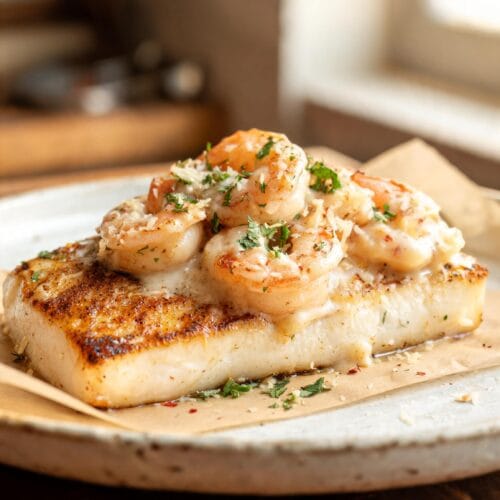
Alaska Halibut Topped with Creamy Parmesan Shrimp
Ingredients
- 4 Alaska halibut fillets (about 6 oz each)
- 2 tablespoons olive oil
- 1 teaspoon garlic powder
- 1/2 teaspoon smoked paprika
- Salt and black pepper to taste
- Juice of half a lemon
- 1 lb medium shrimp, peeled and deveined
- 2 tablespoons unsalted butter
- 3 cloves garlic, minced
- 1/2 cup heavy cream
- 3/4 cup freshly grated parmesan cheese
- 1/4 teaspoon red pepper flakes (optional)
- 2 tablespoons fresh parsley, chopped
- Salt to taste
Instructions
- Preheat oven to 400°F. Line a baking sheet with foil and brush lightly with olive oil.
- Pat halibut fillets completely dry with paper towels.
- Rub each fillet with olive oil, garlic powder, smoked paprika, salt, pepper, and a squeeze of lemon. Place on the prepared baking sheet.
- In a skillet over medium heat, melt the butter. Add minced garlic and cook for 1 minute until fragrant.
- Add shrimp and cook 2 to 3 minutes until just pink. Remove from heat.
- Pour in heavy cream, stir, and bring to a gentle simmer. Add parmesan and stir until melted and slightly thickened, about 2 minutes. Add red pepper flakes if using and season with salt.
- Spoon the creamy shrimp mixture generously over each halibut fillet.
- Bake for 14 to 16 minutes until halibut flakes easily with a fork.
- Remove from oven, garnish with fresh parsley, and serve immediately.