Introduction
I still remember the first time I made baked salmon after a long day out on the water. We’d come in late, sun already dipping behind the tree line, and I didn’t have the energy for anything complicated. Just a fillet, some olive oil, a lemon from the back of the fridge, and a hot oven. That was it. When it comes to easy seafood dinners, simple is often best, whether it’s this salmon or a classic tuna salad sandwich. And somehow, this simple meal was one of the best things I’d eaten in months.
There’s something about this dish that just works. It doesn’t need much. The fish does most of the talking if you let it. And if you’ve never made it before, I want you to know — this is probably the most forgiving seafood recipe you’ll ever try at home. No special equipment, no weird ingredients, no timing that’ll make your hands sweat.
This easy baked salmon has become the recipe I come back to more than anything else. Weeknights when I’m tired. Sundays when I want something that feels a little special without actually being hard. It fits both.
Why You’ll Love This Recipe
- It’s genuinely fast — from fridge to table in about 30 minutes, and most of that time the oven is doing the work while you’re just standing there.
- The flavor is real and clean. Lemon, garlic, a little butter — nothing fake, nothing complicated. It tastes like something that came from somewhere, not from a box.
- You don’t need to know how to cook to pull this off. If you can turn on an oven and squeeze a lemon, you’ve already got the skills.
Quick Recipe Snapshot
Quick Recipe Snapshot
⏱ Prep Time: 15 minutes
🔥 Cook Time: 18–20 minutes
🍽 Servings: 4
📊 Difficulty: Easy — beginner friendly
🌊 Vibe: Coastal home kitchen, weeknight dinner
Ingredients List
For the salmon:
- 4 salmon fillets (about 6 oz each) — skin-on holds together better in the oven
- 2 tablespoons olive oil — helps the outside get a little color without drying out
- 2 tablespoons unsalted butter, melted — adds that soft richness that makes it feel like a real meal
- 4 garlic cloves, minced
- 1 lemon, sliced thin (half for cooking, half for serving)
- 1 teaspoon salt
- ½ teaspoon black pepper
- 1 teaspoon smoked paprika — just enough to give it a little warmth
- 1 teaspoon dried thyme or fresh if you have it
Optional but worth it:
- 1 tablespoon honey — a tiny drizzle before it goes in the oven gives the top a gentle glaze
- Fresh parsley, chopped, for the end
- Red pepper flakes if you want a little heat
Step-by-Step Instructions
- Pull your salmon out of the fridge about 10 to 15 minutes before you plan to cook it. Cold fish straight into a hot oven tends to cook unevenly — the outside gets done before the inside catches up. Just let it sit on the counter while you get everything else ready.
- Preheat your oven to 400°F. Line a baking sheet or a baking dish with foil. I always use foil. Cleanup is part of the cooking experience and I’d rather spend that time outside.
- Mix the olive oil, melted butter, minced garlic, salt, pepper, smoked paprika, and thyme together in a small bowl. It’ll smell incredible even before anything hits the heat.
- Pat the salmon fillets dry with a paper towel. This step feels unnecessary but it actually matters — moisture on the surface steams the fish instead of letting it roast, and you lose that slightly golden top.
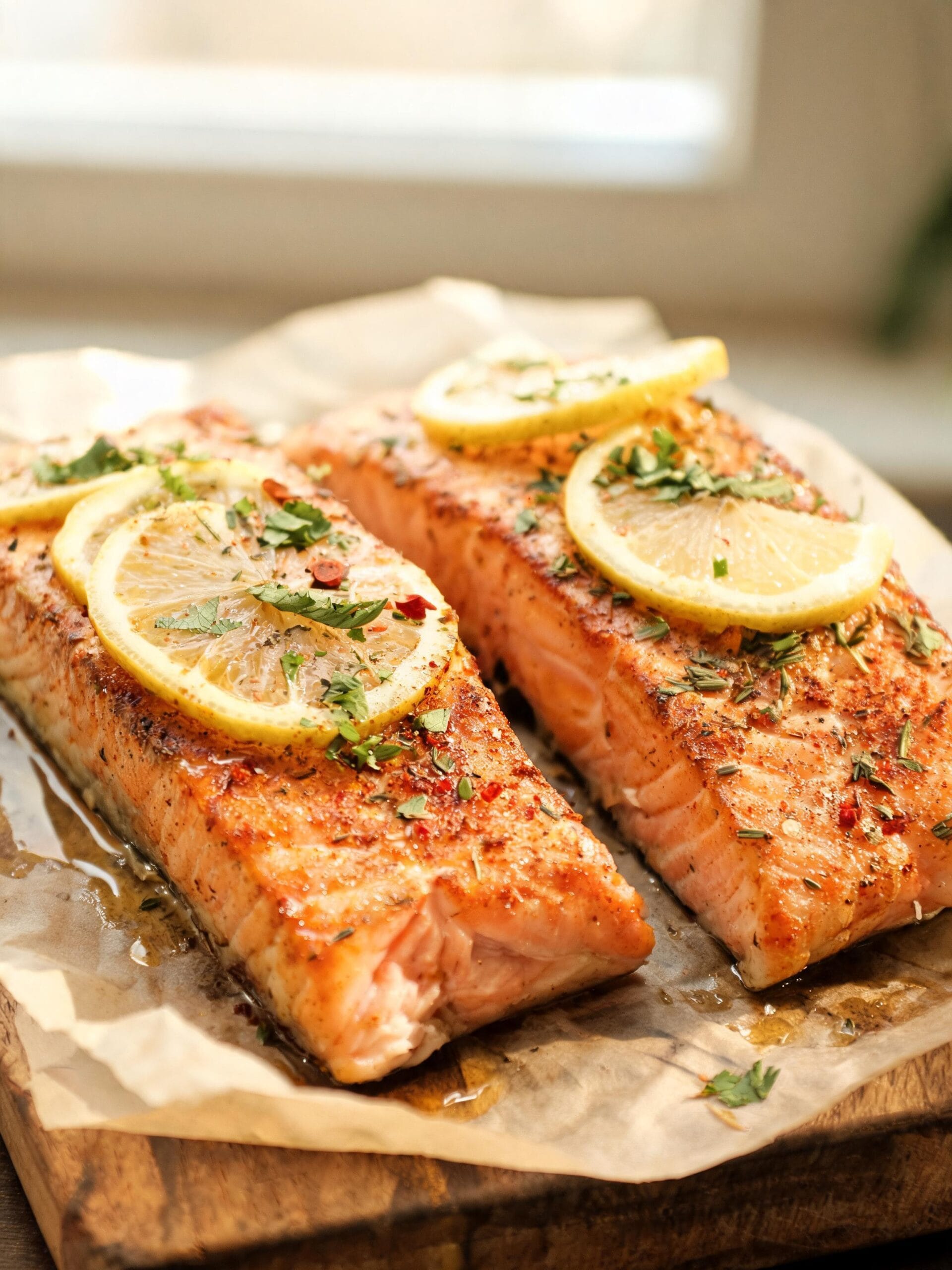
- Place the fillets skin-side down on your lined pan. Spoon the butter and oil mixture over each one, making sure the garlic gets on there too. Lay a couple of lemon slices on top of each fillet. If you’re using honey, drizzle just a little over the top now.
- Slide the pan into the oven. For fillets that are about an inch thick, 18 minutes is usually right. If yours are thinner, check at 14 or 15. You’re looking for the flesh to turn from that deep translucent pink to a lighter, more opaque color. It should flake when you press it gently with a fork — not fall apart, just give a little.
- Take it out and let it rest for two or three minutes before you serve it. I know it’s hard to wait. But it finishes cooking slightly as it sits and the juices settle back in.
That’s really it. Simple as that.
Small Tricks From Cooking Fish at Home
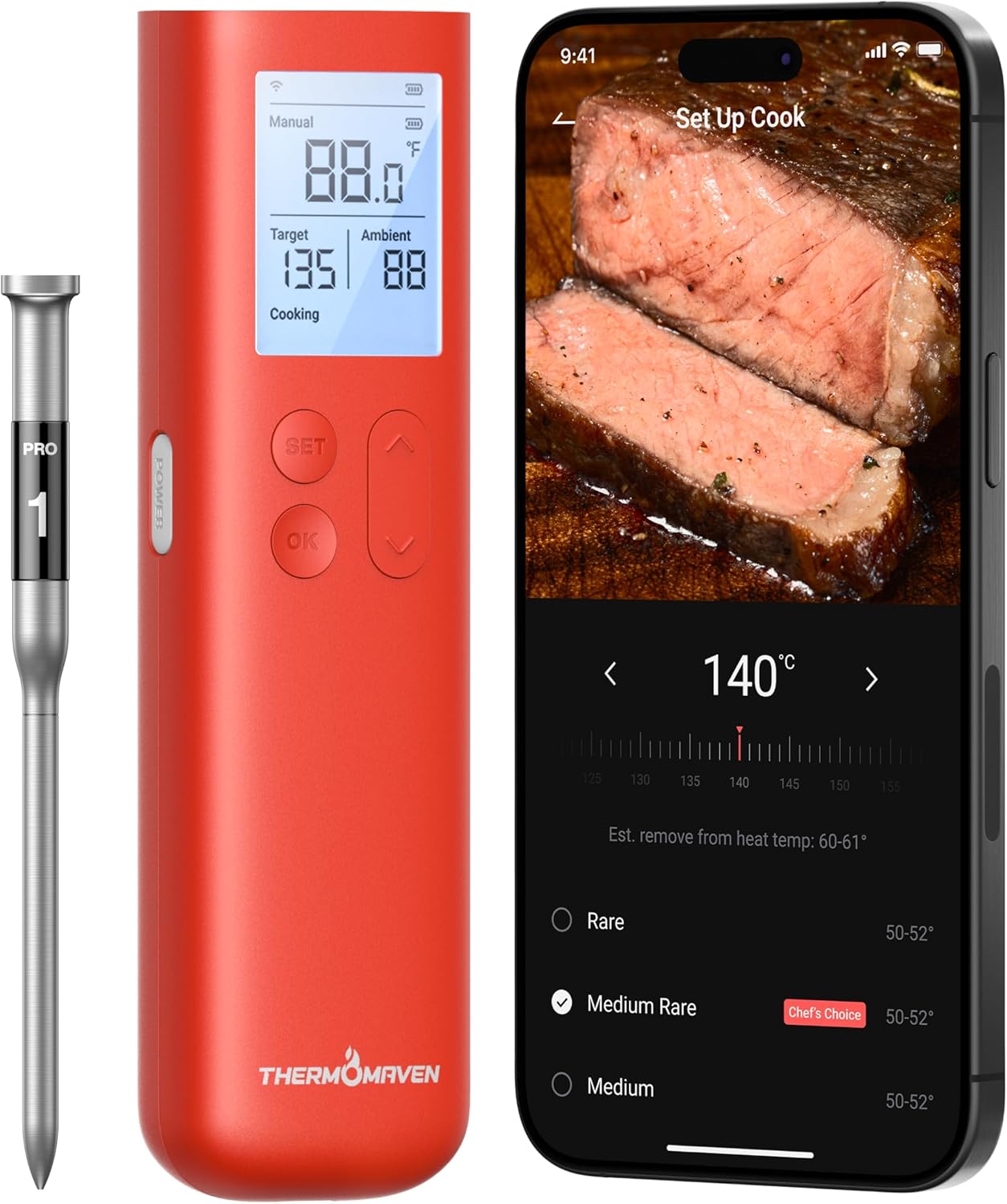
I mentioned that trusting the thickness over the timer is the most useful thing I’ve learned, but how do you really know when it’s perfect? For years, I went by feel, but to get it right every single time, I rely on a meat thermometer. It takes all the guesswork out of the equation. With something like the ThermoMaven Smart Wireless Meat Thermometer, you can know the exact moment your salmon hits that perfect 125°F for a soft, flaky center. It’s the one tool that guarantees you’ll never serve dry, overcooked fish again.
Stop guessing and start getting perfect results every time. Check it out on Amazon.
ThermoMaven Smart Wireless Meat Thermometer
✓ prime
We earn a commission if you make a purchase, at no additional cost to you.
The single most useful thing I’ve learned over the years is to trust the thickness more than the timer. Every oven is a little different, every fillet is a different size. A thin tail piece cooks way faster than a thick center cut. Once you start paying attention to that, you stop overcooking fish.
I burnt my hand once trying to check if the foil was hot enough before I put the fish down. Don’t do that. Just preheat the oven and use the pan cold — the fish goes on a cold lined pan, into a hot oven. Works fine.
Garlic burns faster than you think when it’s sitting on top of fish in a hot oven. If you want stronger garlic flavor, mix it into the butter and oil so it’s coated and protected. Bare minced garlic sitting on top of a fillet at 400°F for 20 minutes will turn bitter.
The skin is your friend. Even if you don’t eat it, cooking salmon skin-side down keeps the bottom from drying out and gives the whole fillet something to hold onto while it cooks. Flip it off at the table if you want — but cook it skin down.
Lemon slices on top do more than look nice. The juice slowly releases as the heat builds and it bastes the fish from above. It’s not dramatic, but you can taste the difference.
Common Mistakes to Avoid
Cooking it straight from frozen without adjusting the time. Frozen salmon can work in a pinch but you need to add at least 10 extra minutes and the texture usually suffers. If you can plan ahead and thaw it overnight in the fridge, do that.
Using too much heat chasing a faster dinner. I’ve cranked the oven to 450°F thinking I’d save a few minutes. What I got was a dry, chalky top and an undercooked center. 400°F is the sweet spot for home ovens. Steady and even.
Skipping the dry-off step. I mentioned it in the instructions but I’ll say it again here because I skipped it for years. Wet fish steams. Dry fish roasts. Those are two very different textures and only one of them is what you’re going for.
Opening the oven every few minutes to check. Every time you open that door you lose heat and the cooking time shifts. Set a timer, walk away, check once near the end. That’s it.
Variations and Serving Ideas
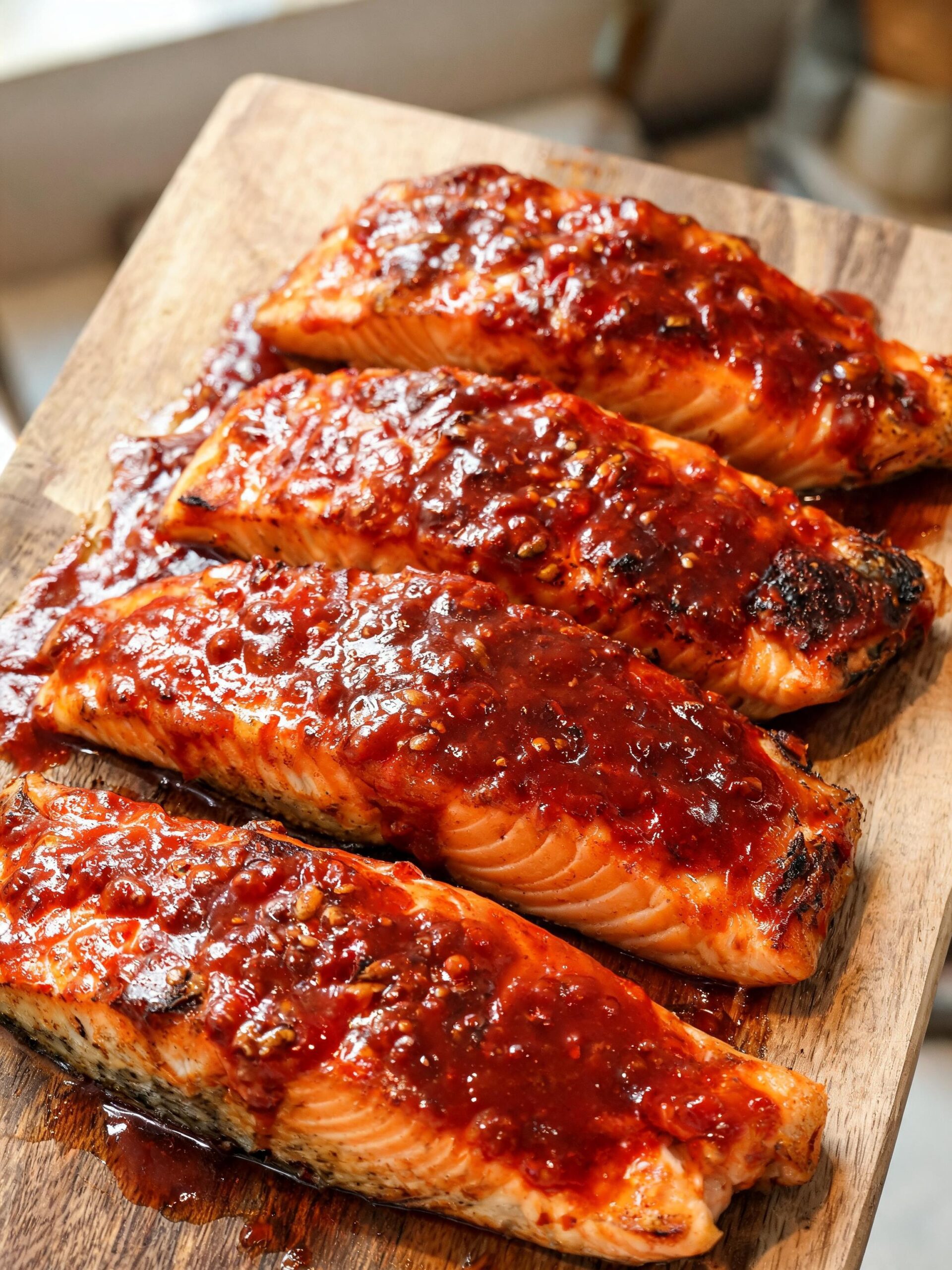
If you want heat: Add ½ teaspoon of cayenne to the butter mix and a pinch of red pepper flakes on top before it goes in. You can also do a sriracha-honey glaze — equal parts, brushed on in the last 5 minutes of cooking so it doesn’t burn.
If you want something milder: Skip the paprika and swap the thyme for fresh dill. Add a tablespoon of plain Greek yogurt mixed with lemon zest as a topping after it comes out of the oven. It cools the whole thing down and feels lighter.
Coastal twist: Rub the fillets with a little Old Bay before the butter goes on. Lay thin slices of tomato on top alongside the lemon. It tastes like something you’d eat at a picnic table near the water, which is honestly where I’d eat it if I could every time.
What to Serve With
I usually go with something that has a little crunch alongside it because the salmon is soft and rich. Roasted asparagus or green beans with a little char on them work well. A simple green salad with something acidic in the dressing cuts through the butter nicely. For a more substantial, heartier meal, you could even pair it with something like a flavorful shrimp and sausage dirty rice.
For something more filling, rice is the easiest call. Plain white rice soaks up any of the pan juices and doesn’t compete with the fish. If I’m making this for people and want it to feel like more of a meal, I’ll do roasted baby potatoes on the same pan — just add them 10 minutes before the salmon goes in.
Crusty bread on the side is never wrong. Especially if there’s any of that garlic butter left in the pan.
Storage and Reheating
Leftover salmon keeps in the fridge for up to 2 days in a sealed container. After that it starts to smell like a decision you’ll regret.
DO NOT microwave it. I know it’s tempting. The microwave turns salmon rubbery and fills your kitchen with a smell that lingers for hours. Just don’t.
The best way to reheat it is low and slow — a covered pan on the stovetop over low heat with a splash of water, or back in the oven at 275°F for about 10 minutes. It won’t be exactly like fresh but it’ll be close enough.
DO NOT refreeze salmon that’s already been cooked. The texture breaks down and it turns watery when it thaws again. If you know you won’t eat it within two days, freeze it raw before cooking.
FAQs (People Also Ask)
Can I use frozen salmon for this recipe?
Yes, but thaw it first if you can. Put it in the fridge the night before. If you’re cooking from frozen, add 10 to 12 extra minutes to the cook time and check the center carefully — frozen fish cooks unevenly and the outside can look done while the middle is still cold.
How do I know when salmon is done?
Press the thickest part gently with a fork. If it flakes apart in layers and the color has shifted from deep pink to a lighter, more opaque tone, it’s ready. The internal temperature should be around 125–130°F if you want it slightly soft in the center, or 145°F if you want it fully cooked through.
Can I substitute the butter?
Absolutely. More olive oil works fine. Coconut oil gives it a slightly different flavor that’s not bad at all. If you’re dairy-free, just use a good quality olive oil and maybe add a little more lemon to compensate for what butter usually brings.
How long does this take from start to finish?
About 30 to 35 minutes total. 15 for prep, 18 to 20 in the oven, a few minutes to rest. It’s genuinely one of the faster real dinners you can make.
Is this recipe good for beginners?
It’s one of the best starting points for anyone who’s nervous about cooking fish. There’s no flipping, no hot oil splashing, no timing that requires precision. You season it, put it in the oven, and come back when the timer goes off. That’s the whole thing.
Nutrition Facts
Nutrition Facts
(Per serving. Estimates only, varies by exact ingredients used)
Conclusion
Some recipes feel like work. This one never has. It’s the kind of thing you make when you’re tired and hungry and just want something honest on the table. No performance, no fuss. Just a good piece of fish, a hot oven, and a few things from the pantry that somehow always add up to more than they should.
I’ve made this after long mornings on the water, on slow Tuesday nights, for people I wanted to impress and for nobody but myself. It holds up every time. And I think once you make it a couple of times, it’ll become one of those recipes that just lives in your hands — no notes needed, no second-guessing. Just something you know how to do.
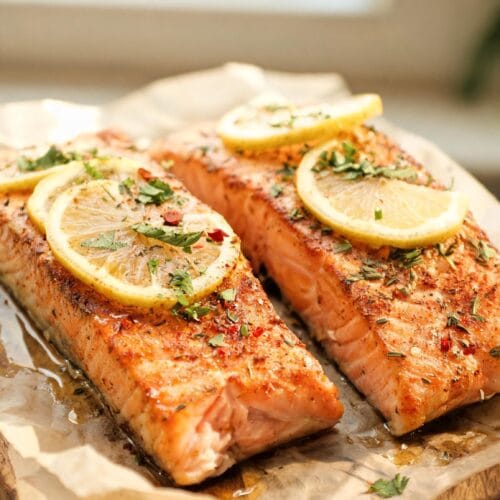
Baked Salmon That Tastes Like the Coast Came Home With You
Ingredients
- 4 salmon fillets (about 6 oz each), skin-on
- 2 tablespoons olive oil
- 2 tablespoons unsalted butter, melted
- 4 garlic cloves, minced
- 1 lemon, thinly sliced
- 1 teaspoon salt
- ½ teaspoon black pepper
- 1 teaspoon smoked paprika
- 1 teaspoon dried thyme
- 1 tablespoon honey (optional)
- Fresh parsley, chopped (optional, for serving)
- Red pepper flakes (optional)
Instructions
- Remove salmon from the fridge 10–15 minutes before cooking to take the chill off.
- Preheat your oven to 400°F. Line a baking sheet or baking dish with foil.
- In a small bowl, mix together olive oil, melted butter, minced garlic, salt, pepper, smoked paprika, and thyme.
- Pat salmon fillets dry with a paper towel on both sides.
- Place fillets skin-side down on the lined pan. Spoon the butter and oil mixture evenly over each fillet. Lay lemon slices on top. Drizzle with honey if using.
- Bake for 18–20 minutes, or until the flesh is opaque and flakes gently when pressed with a fork.
- Remove from oven and rest for 2–3 minutes before serving. Top with fresh parsley if desired.