Introduction
Some nights you come home smelling like salt water and sunscreen, and you just want something that doesn’t take forever. While a full spread like these easy seafood boil recipes is fantastic for the weekend, this mediterranean baked fish earns its place on a busy weeknight. I made it the first time on a Tuesday after a long afternoon out on the water — fish in the cooler, tomatoes going soft on the counter, half a jar of olives I kept meaning to use. Threw it all together. Didn’t expect much. Ended up eating two portions standing at the stove before I even sat down.
It’s become one of those recipes I don’t really think about anymore. I just make it. And every time, it tastes like somewhere warm and far away, even when I’m just in my kitchen with the back door open and the sound of the water in the distance.
Why You’ll Love This Recipe
- It’s genuinely fast — from fridge to table in about 35 minutes, which matters on a weeknight when you’re tired and hungry at the same time.
- The flavor goes deep without much effort. Lemon, olive oil, garlic, tomatoes — they all kind of melt together in the oven and make the fish taste like it came from somewhere special.
- You don’t need any special skills. If you can chop a tomato and turn on an oven, you can make this. That’s not an exaggeration.
Quick Recipe Snapshot
Recipe: Mediterranean Baked Fish
Serves: 4
Prep Time: 15 minutes
Cook Time: 20 minutes
Total Time: 35 minutes
Difficulty: Easy — beginner friendly
Best Fish to Use: Cod, sea bass, tilapia, snapper, or any firm white fish
Oven Temp: 400°F (200°C)
Good For: Weeknight dinner, casual lunch, meal prep
Ingredients List
For the Fish:
- 4 white fish fillets (about 6 oz each) — cod, sea bass, or snapper work great here
- 3 tablespoons olive oil — the good kind if you have it, it actually makes a difference
- 1 teaspoon salt
- ½ teaspoon black pepper
- 1 teaspoon dried oregano — this is the one herb that really ties the whole thing together
- ½ teaspoon smoked paprika
- Juice of 1 lemon — fresh, not the bottle stuff
For the Topping:
- 1 cup cherry tomatoes, halved — they burst in the oven and make a kind of loose sauce on their own
- ½ cup Kalamata olives, pitted and roughly chopped
- 3 garlic cloves, thinly sliced
- ¼ cup capers, drained
- ¼ red onion, thinly sliced
- 2 tablespoons fresh parsley, chopped — for the end, not the oven
- 1 lemon, sliced into thin rounds for baking on top
Step-by-Step Instructions
- Pull your fish out of the fridge about 10 minutes before you cook it. Cold fish straight into a hot oven tends to cook unevenly — the outside gets ahead of the inside. Just let it sit on the counter while you get everything else ready.
- Preheat your oven to 400°F. Get a baking dish — something big enough that the fillets aren’t crowded. I use a 9×13 ceramic dish. Drizzle a little olive oil on the bottom so nothing sticks.
- In a small bowl, mix together the olive oil, salt, pepper, oregano, smoked paprika, and lemon juice. Stir it around until it looks like a loose paste. This is your flavor base.
- Lay the fish fillets in the baking dish. Spoon the olive oil mixture over each one and use your fingers or the back of a spoon to spread it around. Don’t skip getting the sides — that’s where it can go bland.
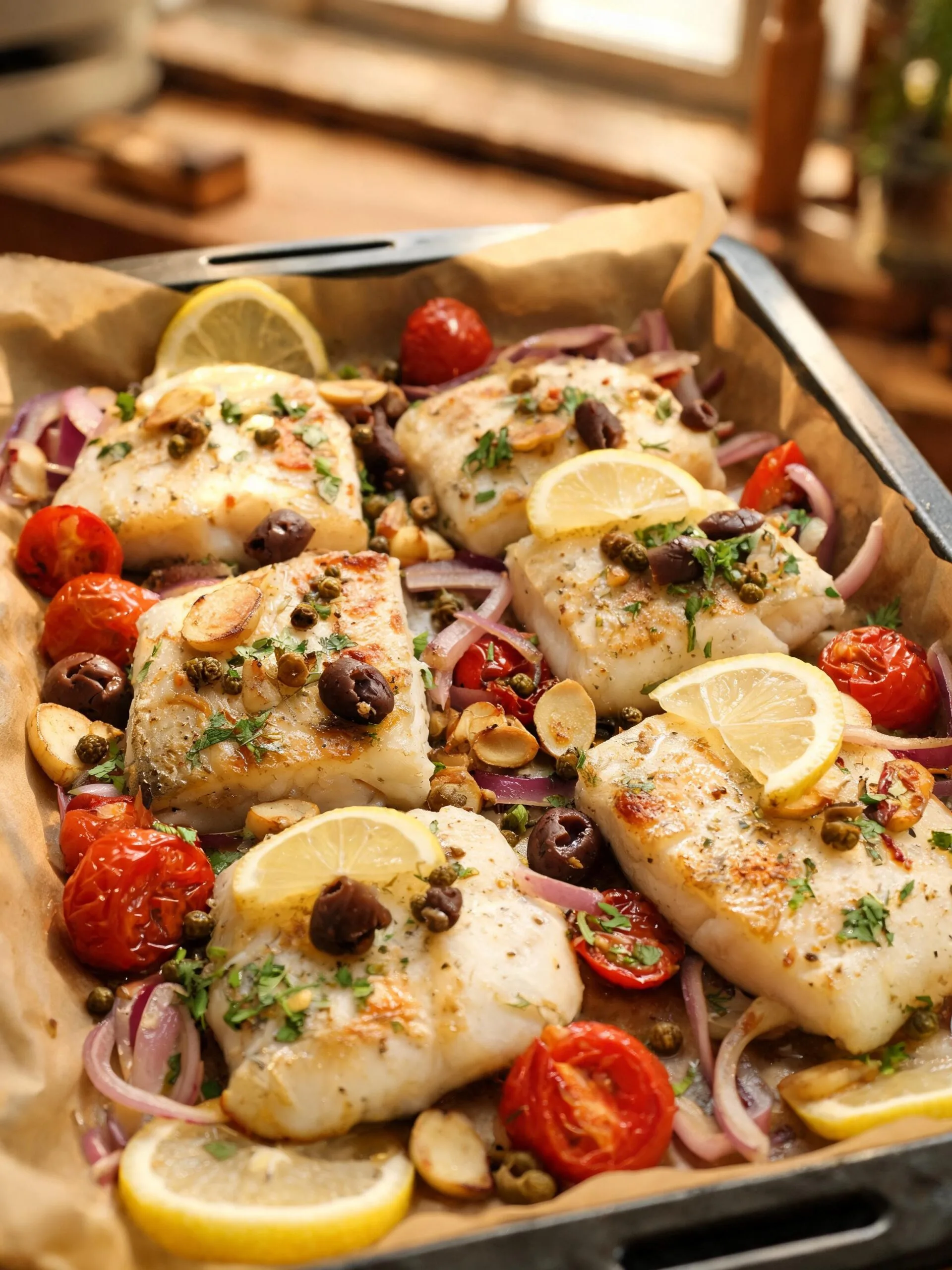
- Scatter the cherry tomatoes, olives, capers, garlic slices, and red onion all around and on top of the fish. Lay a few lemon rounds over the fillets. It looks almost too pretty to put in the oven. Almost.
- Bake uncovered for 18 to 22 minutes depending on how thick your fillets are. You’re looking for the fish to flake easily when you press it gently with a fork. If it resists, give it another 2 minutes.
- Take it out, scatter the fresh parsley over everything, and let it sit for about 2 minutes before you serve it. That short rest actually helps the fish hold together when you plate it.
That’s really it. Simpler than it looks on the plate.
Small Tricks From Cooking Fish at Home
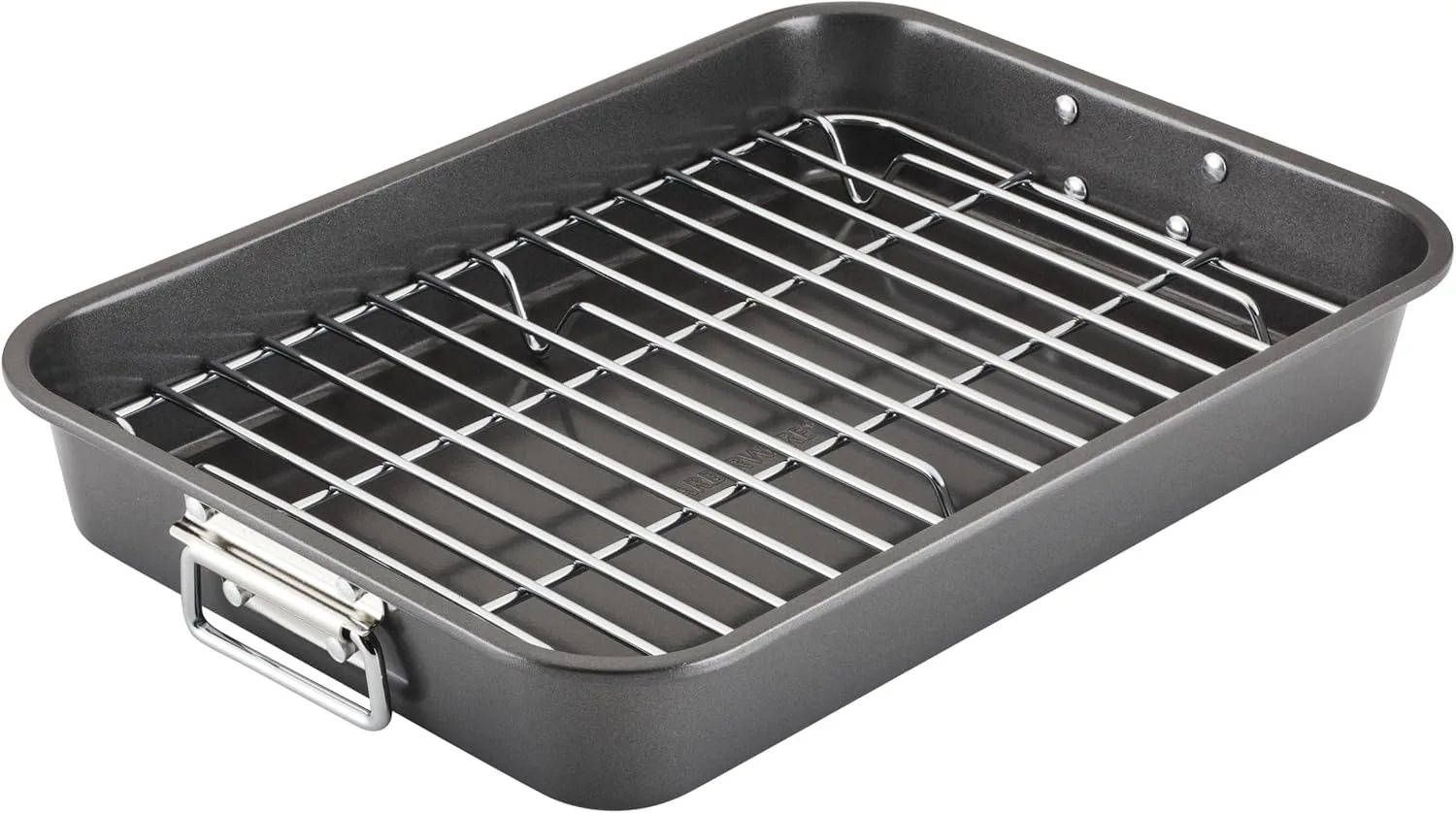
One of the key lessons I talk about here is not overcrowding the pan. For years, I used whatever dish was clean, but switching to a dedicated roaster like this Farberware one made a huge difference. It’s a bit larger than a standard 9×13, which gives the tomatoes and fish fillets the space they need to actually roast instead of just steaming. You get those delicious, slightly caramelized edges on everything, and the nonstick surface means the delicious pan juices and bits of garlic don’t get welded to the bottom. It’s the perfect vessel for this kind of one-pan meal.
Take the guesswork out of one-pan dinners and get the roaster that delivers those perfectly roasted results every time.
Farberware Nonstick Bakeware 11-Inch x 15-Inch Roaster with Flat Rack
✓ prime
We earn a commission if you make a purchase, at no additional cost to you.
The biggest thing I learned the hard way — don’t cover the dish with foil. I used to do it thinking it would keep the fish moist, but it just steams everything and you lose that slightly roasted edge on the tomatoes and garlic. Leave it open. The oven does the work.
Garlic burns faster than you think. Slice it thin, not minced. Minced garlic at high heat in a dry dish will turn bitter by the time the fish is done. Thin slices soften and almost melt into the oil instead.
If your fish fillets are different thicknesses — like one end is thin and the other is thick — fold the thin end under slightly before baking. It sounds fussy but it takes two seconds and keeps everything cooking at the same pace.
Cherry tomatoes are better than big tomatoes here. Big tomatoes release too much water and the whole dish gets watery and sad. Cherry tomatoes burst and concentrate. That’s what you want.
I always add the fresh parsley after, never before. Parsley in the oven just turns dark and loses everything that makes it worth using. It’s a finisher, not a baker.
Common Mistakes to Avoid
Using fish straight from the freezer without fully thawing it. I know it’s tempting when you’re in a hurry, but partially frozen fish releases a lot of water in the oven and you end up with something closer to poached fish sitting in a puddle. Thaw it overnight in the fridge or under cold running water if you’re in a rush.
Overcrowding the baking dish. When the fillets are touching and the vegetables are piled on top of each other, nothing roasts — it all just steams. Give things a little room. If you’re cooking for a crowd, use two dishes.
Overbaking. This is the one that gets people the most. Fish cooks fast. At 400°F, a 1-inch thick fillet is usually done in about 18 to 20 minutes. If you walk away and forget about it, you’ll come back to something dry and a little rubbery. Set a timer. Check it early.
Skipping the lemon. I’ve made this when I was out of lemons and it’s just not the same. The acid lifts everything — the olives, the tomatoes, the fish itself. It’s not optional, even if it feels like it is.
Variations and Serving Ideas
Spicy version: Add ½ teaspoon of red pepper flakes to the olive oil mixture and throw in a few sliced pepperoncini with the tomatoes. It adds a gentle heat that works really well with the briny olives.
Mild version: Skip the capers and olives if you’re cooking for people who don’t love strong flavors. Replace them with sliced zucchini and a handful of fresh basil leaves added at the end. Still tastes coastal, just softer.
Coastal twist: If you caught something yourself — a nice piece of fresh snapper or grouper — this recipe is where it shines. Fresh-caught fish has a sweetness that pairs beautifully with the tomatoes and lemon, making it as rewarding as our favorite seafood appetizers. Don’t overthink it. Just use what you have.
What to Serve With
Crusty bread is the obvious answer and also the correct one. You want something to drag through the tomato-olive oil situation that collects at the bottom of the dish. A simple baguette or even thick slices of sourdough, toasted a little, does exactly what you need.
For something more filling, a bowl of plain couscous or orzo on the side soaks up the juices nicely without competing with the fish. Rice works too, but couscous is faster and somehow feels more right with these flavors.
A simple green salad — arugula, a squeeze of lemon, a little olive oil — balances out the richness of the olives and oil in the dish. Nothing complicated. Just something fresh and slightly bitter to cut through.
Storage and Reheating
Leftover fish keeps in the fridge for up to 2 days in a sealed container. After that, the texture starts going in a direction you don’t want.
To reheat, use a low oven — around 275°F — covered loosely with foil, for about 10 minutes. This is gentle enough to warm it through without drying it out completely.
DO NOT microwave it. I know everyone does this anyway, but fish in the microwave gets rubbery and starts to smell in a way that will clear a room. Just use the oven. It takes a few extra minutes but it’s worth it.
DO NOT freeze it after cooking. Baked fish doesn’t come back from the freezer well. The texture falls apart and the vegetables turn to mush. If you want to freeze something, freeze the raw fish before cooking.
FAQs (People Also Ask)
What kind of fish works best for this?
Any firm white fish does well here. Cod is the most forgiving because it’s thick and holds together. Sea bass, snapper, tilapia, and halibut all work. Avoid delicate fish like sole or flounder — they tend to fall apart before they’re done.
Can I use frozen fish?
Yes, but thaw it completely first. Pat it very dry before seasoning — frozen fish holds extra moisture and if you don’t dry it, the dish gets watery. Fresh fish is better if you can get it, but fully thawed frozen fish is perfectly fine.
How do I know when the fish is done?
Press the thickest part gently with a fork. If it flakes apart easily and looks opaque all the way through, it’s done. If it still feels firm and resists the fork, give it another 2 to 3 minutes. The internal temperature should be around 145°F if you want to be precise.
Can I substitute the olives or capers?
Absolutely. If you don’t like olives, leave them out or replace with sun-dried tomatoes. Capers can be swapped for a little extra lemon zest if you want that briny note without the actual caper flavor. The dish is flexible.
Is this hard to make?
Honestly, no. It’s one of the easier things I make. If you can chop vegetables and set an oven timer, you can make this. The hardest part is not overbaking it, and once you’ve made it once, you’ll know exactly when to pull it out.
Nutrition Facts
(Per serving. Estimates only, varies by exact ingredients used)
Conclusion
There’s something about this dish that always takes me back to that first Tuesday I made it — tired, sunburned, not expecting much. The way the kitchen smelled when it came out of the oven. Lemon and garlic and something warm and good. I stood there eating it straight from the dish and thought, yeah, this is the one.
It’s not fancy. It doesn’t need to be. Some of the best things you’ll ever eat come from a half-empty fridge and a hot oven and not overthinking it.
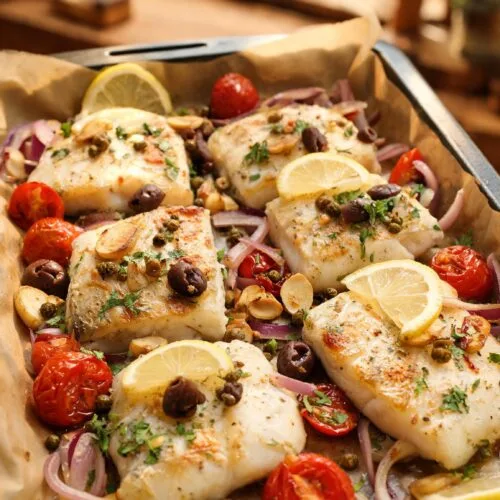
Mediterranean Baked Fish
Ingredients
- 4 white fish fillets (about 6 oz each), such as cod, sea bass, or snapper
- 3 tablespoons olive oil
- 1 teaspoon salt
- 1/2 teaspoon black pepper
- 1 teaspoon dried oregano
- 1/2 teaspoon smoked paprika
- Juice of 1 lemon (fresh)
- 1 cup cherry tomatoes, halved
- 1/2 cup Kalamata olives, pitted and roughly chopped
- 3 garlic cloves, thinly sliced
- 1/4 cup capers, drained
- 1/4 red onion, thinly sliced
- 2 tablespoons fresh parsley, chopped
- 1 lemon, sliced into thin rounds
Instructions
- Remove fish fillets from the fridge 10 minutes before cooking and let them come closer to room temperature. Pat them completely dry with paper towels.
- Preheat oven to 400°F (200°C). Drizzle a little olive oil in the bottom of a 9x13 baking dish.
- In a small bowl, mix together the olive oil, salt, pepper, dried oregano, smoked paprika, and fresh lemon juice until combined.
- Lay the fish fillets in the baking dish. Spoon the olive oil mixture over each fillet and spread it evenly, including the sides.
- Scatter the cherry tomatoes, Kalamata olives, capers, sliced garlic, and red onion around and over the fish. Lay lemon rounds on top of the fillets.
- Bake uncovered for 18 to 22 minutes, until the fish flakes easily when pressed gently with a fork and is opaque throughout.
- Remove from oven, scatter fresh parsley over everything, and let rest for 2 minutes before serving.