Introduction
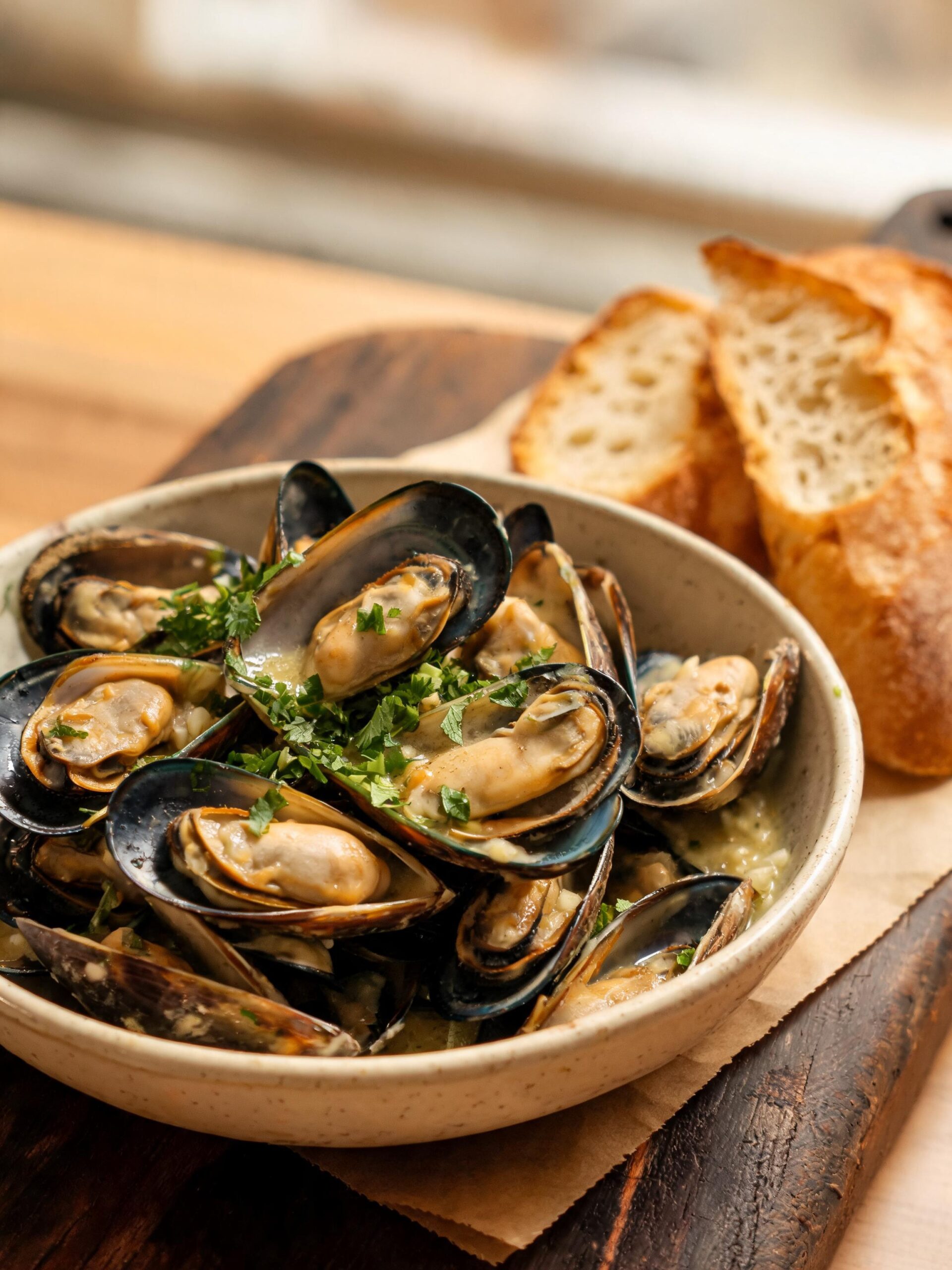
For twenty years, I’ve stood behind professional kitchen lines, and if there’s one dish that never fails to impress, it’s classic Mussels in White Wine. While some seafood dishes, like our popular crispy salt and pepper fried calamari, might seem complex, this dish is the definition of rustic elegance. It relies on a handful of quality ingredients to create something truly special. It’s about the sweet, oceanic flavor of perfectly steamed mussels swimming in a broth so good you’ll want to drink it straight from the bowl. This recipe isn’t just a set of instructions; it’s the exact method we use in a high-end seafood restaurant, broken down so you can nail it at home. We’re talking plump, tender mussels, a fragrant garlic and shallot-infused broth, and the bright acidity of a good white wine, all finished with fresh parsley and a knob of butter to create a silky, unforgettable sauce. This is the real deal—a timeless dish that respects the main ingredient and delivers restaurant-quality results every single time.
Why You’ll Love This Recipe
- Incredibly Fast: From prepping your aromatics to serving the final dish, this entire meal comes together in about 30 minutes. It’s the perfect solution for a sophisticated weeknight dinner or an impressive last-minute meal for guests.
- Packed with Flavor: The combination of briny mussels, acidic white wine, sharp garlic, sweet shallots, and rich butter creates a multi-layered broth that is complex yet perfectly balanced. It’s a masterclass in simple, powerful flavor pairings.
- Surprisingly Easy: Don’t let the fancy French name intimidate you. If you can chop a shallot and open a bottle of wine, you can make this dish. The process is straightforward, and the mussels do most of the work themselves.
Ingredients List
The quality of your ingredients is non-negotiable here. With so few components, each one has to be excellent. This recipe serves 4 people as a main course.
For the Mussels:
- Mussels: 4 lbs fresh, live mussels (like PEI or Mediterranean), scrubbed and debearded
For the White Wine Broth:
- Unsalted Butter: 4 tablespoons, divided
- Extra Virgin Olive Oil: 2 tablespoons
- Shallots: 2 large, finely minced (about 1/2 cup)
- Garlic: 5 cloves, thinly sliced
- Dry White Wine: 1 1/2 cups (use a good quality Sauvignon Blanc, Pinot Grigio, or Muscadet)
- Chicken or Vegetable Broth: 1/2 cup, low-sodium
- Red Pepper Flakes: 1/4 teaspoon (optional, for a little heat)
For Finishing:
- Fresh Parsley: 1/2 cup, roughly chopped
- Black Pepper: Freshly cracked, to taste
- Crusty Bread: 1 large baguette, for serving
Step-by-Step Instructions
Follow these steps precisely for perfect results. The key is to have all your ingredients prepped and ready to go before you start cooking—a technique we call ‘mise en place’ in the kitchen.
- Clean the Mussels: This is the most crucial prep step. Place mussels in a colander in the sink and run cold water over them. Use a stiff brush to scrub any grit or barnacles off the shells. If you see any stringy ‘beards’ (called byssal threads) hanging from the shell, grip them firmly and pull towards the hinge of the mussel to remove. Discard any mussels with cracked shells or any that are wide open and don’t close when you tap them firmly on the counter. Keep the cleaned mussels chilled until ready to use.
- Sauté the Aromatics: In a large, heavy-bottomed pot or Dutch oven with a tight-fitting lid, melt 2 tablespoons of butter with 2 tablespoons of olive oil over medium heat. Once the butter is foaming, add the minced shallots and a pinch of salt. Cook, stirring occasionally, for 3-4 minutes until they have softened and become translucent. Add the sliced garlic and red pepper flakes (if using) and cook for another 60 seconds until fragrant. Do not let the garlic brown, or it will become bitter.
- Deglaze and Build the Broth: Pour in the white wine. Increase the heat to medium-high and bring it to a rapid simmer, scraping up any browned bits from the bottom of the pot with a wooden spoon. Let the wine reduce by about one-third, which should take 3-4 minutes. This cooks off the harsh alcohol flavor and concentrates the taste. Pour in the chicken or vegetable broth and bring back to a simmer.
- Steam the Mussels: Carefully add the cleaned mussels to the pot. Give them a gentle stir to coat them in the broth, then immediately cover the pot with the lid. Let the mussels steam for 5-7 minutes. You can give the pot a good shake once or twice during cooking to help them cook evenly.
- Finish the Sauce: After 5 minutes, check the mussels. Most of them should be open. If not, give them another minute or two. Do not overcook them, or they will become tough and rubbery. Remove the pot from the heat. Using a slotted spoon, transfer the cooked mussels to large serving bowls, discarding any that did not open.
- Emulsify and Serve: Return the pot with the broth to low heat. Add the remaining 2 tablespoons of butter and the chopped fresh parsley. Whisk vigorously until the butter is fully melted and incorporated, creating a slightly creamy, glossy sauce. Taste the broth and season with freshly cracked black pepper. Pour this incredible sauce over the mussels in the bowls. Serve immediately with plenty of crusty bread for dipping.
Chef’s Pro Tips for Success
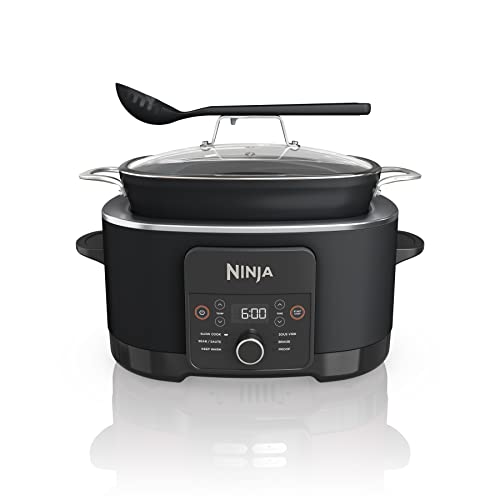
One of the biggest mistakes home cooks make is overcrowding the pot, which I talk about below. You need a large pot with a heavy bottom for even heat distribution and enough room for steam to circulate. For years, I’ve relied on my Ninja Foodi PossibleCooker. Its 8.5-quart capacity gives the mussels plenty of space to open, and the nonstick surface is perfect for sautéing the shallots and garlic without a single bit scorching. It’s the modern Dutch oven that guarantees success for this recipe.
Get the same perfect results I do by using the right tool for the job.
Ninja MC1001 Foodi PossibleCooker PRO 8.5 Quart Multi-Cooker
✓ prime
We earn a commission if you make a purchase, at no additional cost to you.
After cooking thousands of pounds of mussels, I’ve learned a few things. These are the details that separate good mussels from great ones.
- The ‘Wine’ in Mussels in White Wine Matters: Do not use ‘cooking wine.’ Ever. It’s loaded with salt and preservatives and tastes terrible. The rule is simple: if you wouldn’t drink a glass of it, don’t put it in your food. You need a dry, crisp white wine with good acidity. A Sauvignon Blanc from the Loire Valley, a Pinot Grigio from Italy, or a Muscadet are perfect. The acidity cuts through the richness of the butter and complements the brininess of the mussels.
- Master the Deglaze: When you add the wine to the hot pan with the cooked shallots and garlic, you’re doing more than just adding liquid. This is called deglazing. The alcohol and acid in the wine lift all the caramelized sugars and flavorful browned bits (the ‘fond’) from the bottom of the pot. Scrape vigorously with a wooden spoon. This is where a huge layer of flavor for your broth comes from. Reducing the wine afterwards is equally important to burn off the raw alcohol taste.
- Don’t Drown Your Mussels: It might seem tempting to add more liquid, but you are steaming the mussels, not boiling them. You only need enough liquid in the bottom of the pot—about an inch or so—to create a significant amount of steam. Too much liquid will dilute the final sauce and boil the bottom layer of mussels before the top layer has a chance to steam open.
- The Final Butter Mount (‘Monter au Beurre’): The final step of whisking in cold butter off the heat is a classic French technique called *monter au beurre*. This does two things: it adds richness and it emulsifies the sauce, giving it a velvety texture and a beautiful sheen. For this to work best, your butter should be cold and your sauce should not be boiling. Whisking it in off the heat prevents the sauce from breaking or becoming greasy.
- Respect the Mussel: The most important part of making fantastic Mussels in White Wine is the mussels themselves. Buy from a reputable fishmonger. They should smell like the fresh ocean, not fishy. When you get them home, take them out of the plastic bag, put them in a bowl, and cover them with a damp towel in the fridge. This lets them breathe. Never store them in a sealed container or submerged in tap water; this will kill them.
Common Mistakes to Avoid
This dish is simple, but a few small errors can have a big impact. Here’s what to watch out for.
- Improperly Cleaning the Mussels: Rushing the cleaning process is a cardinal sin. If you don’t scrub the shells well, you’ll get grit in your beautiful broth. If you don’t debeard them, you’ll have unpleasant, chewy threads in your final dish. Most importantly, failing to discard dead mussels (the ones that are cracked or won’t close) is a food safety risk and can ruin the entire pot with a foul taste. Take the 10 minutes to do this right.
- Overcrowding the Pot: You need a pot that is large enough to comfortably hold all the mussels with at least a third of its volume left for steam to circulate. If you pack them in too tightly, the mussels on the bottom will overcook and turn to rubber while you wait for the ones on top to open. If you have too many mussels for your pot, cook them in two separate batches. It’s better than ruining the whole meal.
- Cooking with Bad Wine: I mentioned this in the tips, but it’s the most common mistake I see. Using a cheap, sweet, or oaky (like Chardonnay) wine will completely throw off the balance of your dish. The final sauce for your Mussels in White Wine will taste either cloyingly sweet or bitter from the oak. Stick to a dry, crisp, unoaked white wine. It costs a few extra dollars but makes all the difference.
- Overcooking the Mussels: Mussels cook incredibly fast. The moment their shells pop open, they are done. Cooking them for even a minute or two longer will result in small, tough, and chewy meat. Start checking at the 5-minute mark. As soon as 90% of them are open, they’re ready. Pull them off the heat immediately. It’s always better to have a few unopened mussels (which you should discard anyway) than a whole pot of overcooked ones.
Variations and Serving Ideas
While the classic recipe is a masterpiece, it’s also a fantastic canvas for variations.
- Creamy Mussels (Moules à la Crème): After you remove the cooked mussels from the pot, add 1/2 cup of heavy cream to the broth. Bring it to a gentle simmer and let it reduce for 2-3 minutes until it has thickened slightly before adding the parsley and pouring it over the mussels.
- Spicy Tomato Mussels: Add a 14.5-ounce can of diced tomatoes (drained) to the broth along with the wine. Increase the red pepper flakes to 1/2 teaspoon, or add a minced chili pepper with the garlic for a more pronounced heat. A bit of fresh basil at the end instead of parsley works beautifully here.
- Saffron and Fennel Mussels: Add a large pinch of saffron threads to the white wine before you add it to the pot to let it bloom. Substitute the shallots with thinly sliced fennel bulb for a subtle, aromatic anise flavor that pairs wonderfully with seafood.
- Add Chorizo or Bacon: For a smoky, savory twist, sauté 4 ounces of diced Spanish chorizo or bacon lardons in the pot before you add the shallots. This Spanish influence creates a flavor profile reminiscent of our authentic seafood paella. Remove the cooked meat with a slotted spoon and set it aside, then cook the aromatics in the rendered fat. Sprinkle the cooked chorizo or bacon over the finished dish before serving.
What to Serve With
To make this a complete meal, you need the right accompaniments. The goal is to complement the mussels and, most importantly, to have a vehicle for the broth.
- Crusty Bread: This is non-negotiable. A fresh French baguette with a crispy crust and soft interior is the classic choice. Sourdough or ciabatta also work well. Slice it thick and serve it alongside for dipping. For an extra touch, grill or toast the bread slices and rub them with a raw garlic clove.
- French Fries (‘Moules Frites’): This is the iconic Belgian and French bistro pairing. The salty, crispy fries are the perfect contrast to the tender mussels and are incredible when dipped into the white wine broth.
- A Simple Green Salad: To cut through the richness, serve a simple salad of mixed greens, arugula, or butter lettuce with a sharp lemon-dijon vinaigrette. This provides a fresh, acidic counterpoint to the meal.
Storage and Reheating
Leftover mussels can be tricky, but if you do it right, they can still be delicious.
- Storage: Do not store leftover mussels in their shells. They will continue to lose moisture and become tough. The best way is to remove the meat from any leftover mussels and store it in an airtight container. Strain the leftover broth through a fine-mesh sieve to remove any grit and store it in a separate airtight container in the refrigerator. Both will keep for up to 2 days.
- Reheating: Do not microwave the mussels; they will become explosive and rubbery. The best method is to gently reheat the broth in a small saucepan over low heat until it is warm but not boiling. Once the broth is warm, add the cold, cooked mussel meat and let it sit for just 30-60 seconds until it’s just heated through. Serve immediately.
FAQs (People Also Ask)
- How do I know if a mussel is bad before cooking?
- A live, healthy mussel will have a tightly closed shell. If it’s slightly open, give it a sharp tap on the counter. If it’s alive, it will close up within a minute. If it stays open, it’s dead and must be discarded. Also, discard any mussels with broken or cracked shells. Finally, trust your nose. They should smell like a fresh, salty ocean breeze, not overtly ‘fishy’ or like ammonia.
- Can I use frozen mussels for this recipe?
- You can, but the texture and flavor will be inferior to fresh mussels. If you must use frozen, look for vacuum-sealed, pre-cooked mussels on the half shell. Thaw them completely in the refrigerator first. You will only need to gently warm them in the finished sauce for a minute or two at the very end of cooking, as they are already cooked. Do not steam them from raw as the recipe directs, or they will be extremely overcooked.
- What is a good non-alcoholic substitute for white wine?
- The wine provides crucial acidity. The best non-alcoholic substitute is to use an equal amount of high-quality chicken or vegetable broth mixed with 2 tablespoons of fresh lemon juice or white wine vinegar. This will mimic the acidic note that is so important for balancing the sauce in a dish of Mussels in White Wine.
- Why didn’t all of my mussels open?
- There are two main reasons. First, some mussels may have been dead before cooking and should have been discarded. Second, and more commonly, the mussel’s adductor muscle is simply too strong or was damaged, preventing it from opening even though it is cooked. The old rule to ‘never eat a closed mussel’ is a bit of a myth. If it was closed tightly before cooking, it’s likely safe. However, to be cautious and avoid a potentially bad one, the standard restaurant practice is to discard any that remain stubbornly shut after their peers have all opened.
- Can I make this dish ahead of time?
- No, this is a dish that must be cooked and served immediately. The mussels will overcook and become rubbery upon reheating, and the delicate broth is at its peak right after it’s made. You can, however, do all your prep work (the ‘mise en place’) ahead of time. Clean the mussels, chop the shallots, slice the garlic, and measure out your liquids. With everything ready, the actual cooking process takes less than 15 minutes.
Nutrition Facts
(Per serving. Estimates only, varies by exact ingredients used)
Conclusion
There you have it—the definitive guide to making perfect, restaurant-quality Mussels in White Wine. It’s a dish that feels luxurious and special, yet it’s one of the most accessible and quickest seafood meals you can make. The magic is in the technique and the quality of your ingredients. Grab a good bottle of wine, some fresh mussels, and a loaf of crusty bread, and bring a taste of a classic French bistro into your own kitchen. I hope you make it and love it.
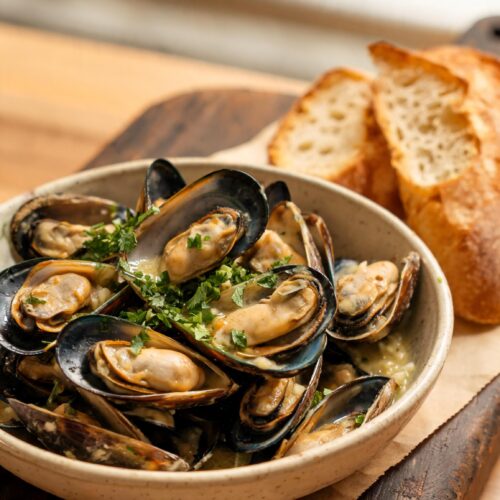
Classic French Mussels in White Wine Garlic Sauce
Ingredients
- 4 lbs fresh, live mussels, scrubbed and debearded
- 4 tablespoons unsalted butter, divided
- 2 tablespoons extra virgin olive oil
- 2 large shallots, finely minced (about 1/2 cup)
- 5 cloves garlic, thinly sliced
- 1 1/2 cups dry white wine (like Sauvignon Blanc or Pinot Grigio)
- 1/2 cup low-sodium chicken or vegetable broth
- 1/4 teaspoon red pepper flakes (optional)
- 1/2 cup fresh parsley, roughly chopped
- Freshly cracked black pepper, to taste
- 1 large baguette, for serving
Instructions
- Clean the mussels by scrubbing under cold water and removing the 'beard'. Discard any cracked or open mussels that don't close when tapped.
- In a large pot or Dutch oven, melt 2 tbsp butter with olive oil over medium heat. Add shallots and cook for 3-4 minutes until soft. Add garlic and red pepper flakes and cook for 1 minute more until fragrant.
- Pour in the white wine, increase heat to medium-high, and simmer to reduce by one-third, about 3-4 minutes. Add the broth and bring back to a simmer.
- Add the cleaned mussels to the pot, stir gently, and cover with a tight-fitting lid. Steam for 5-7 minutes, shaking the pot once or twice, until most mussels have opened.
- Using a slotted spoon, transfer the opened mussels to serving bowls. Discard any that remained closed.
- Return the pot of broth to low heat. Whisk in the remaining 2 tbsp of butter and the chopped parsley until the sauce is glossy and slightly thickened.
- Pour the sauce over the mussels. Season with black pepper and serve immediately with crusty bread.