Introduction
I came home one evening with a piece of salmon I’d picked up from the dock market — still cold, wrapped in paper. Unlike my usual quick-fix meals, such as a creamy tuna salad sandwich, I had absolutely zero plan for what to do with it. The fridge had a lemon, some capers I’d forgotten about, and half a stick of butter. That was the night I made Salmon Piccata for the first time, not because I was trying to be fancy, but because I was hungry and those were the things sitting in front of me.
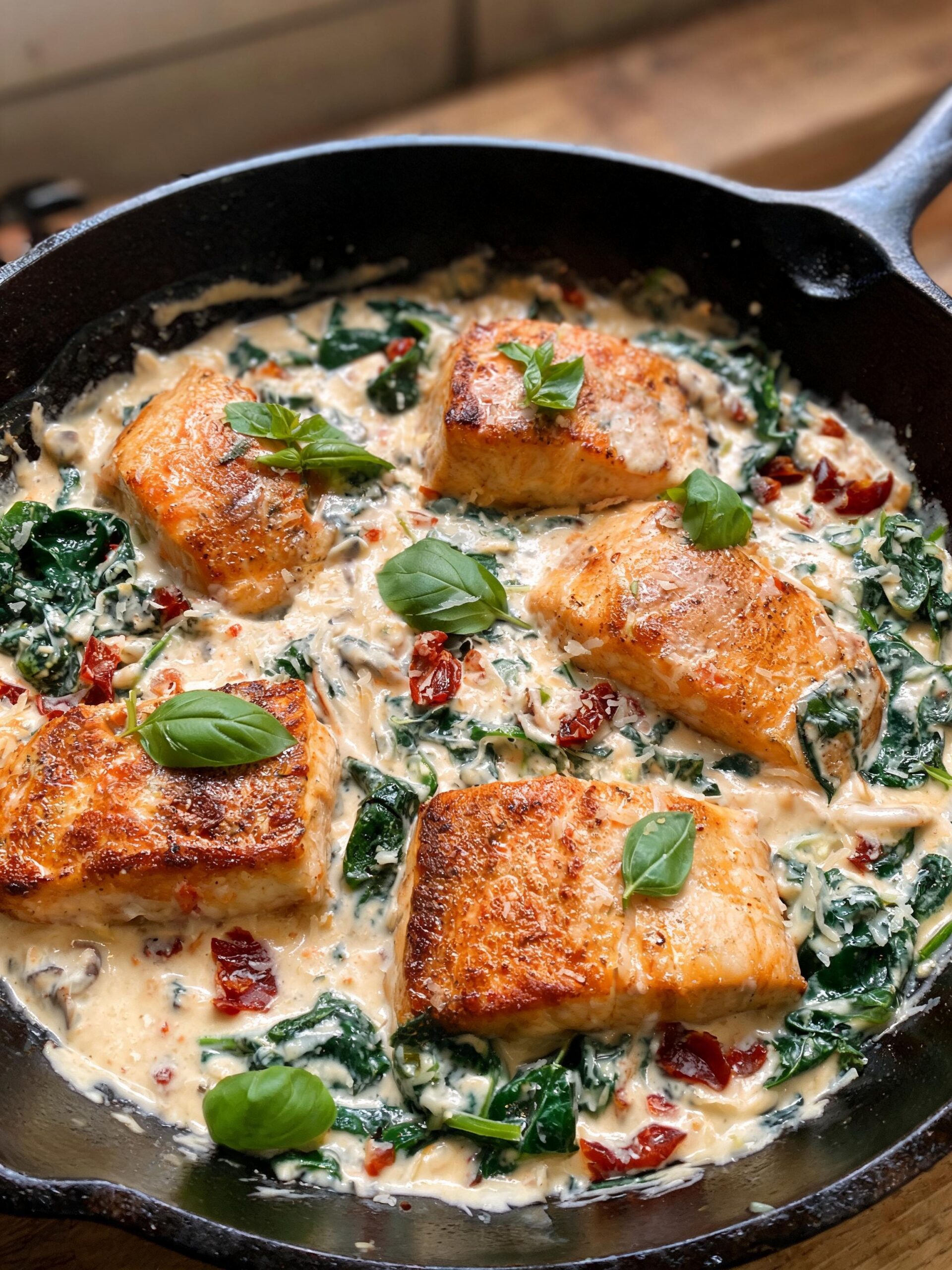
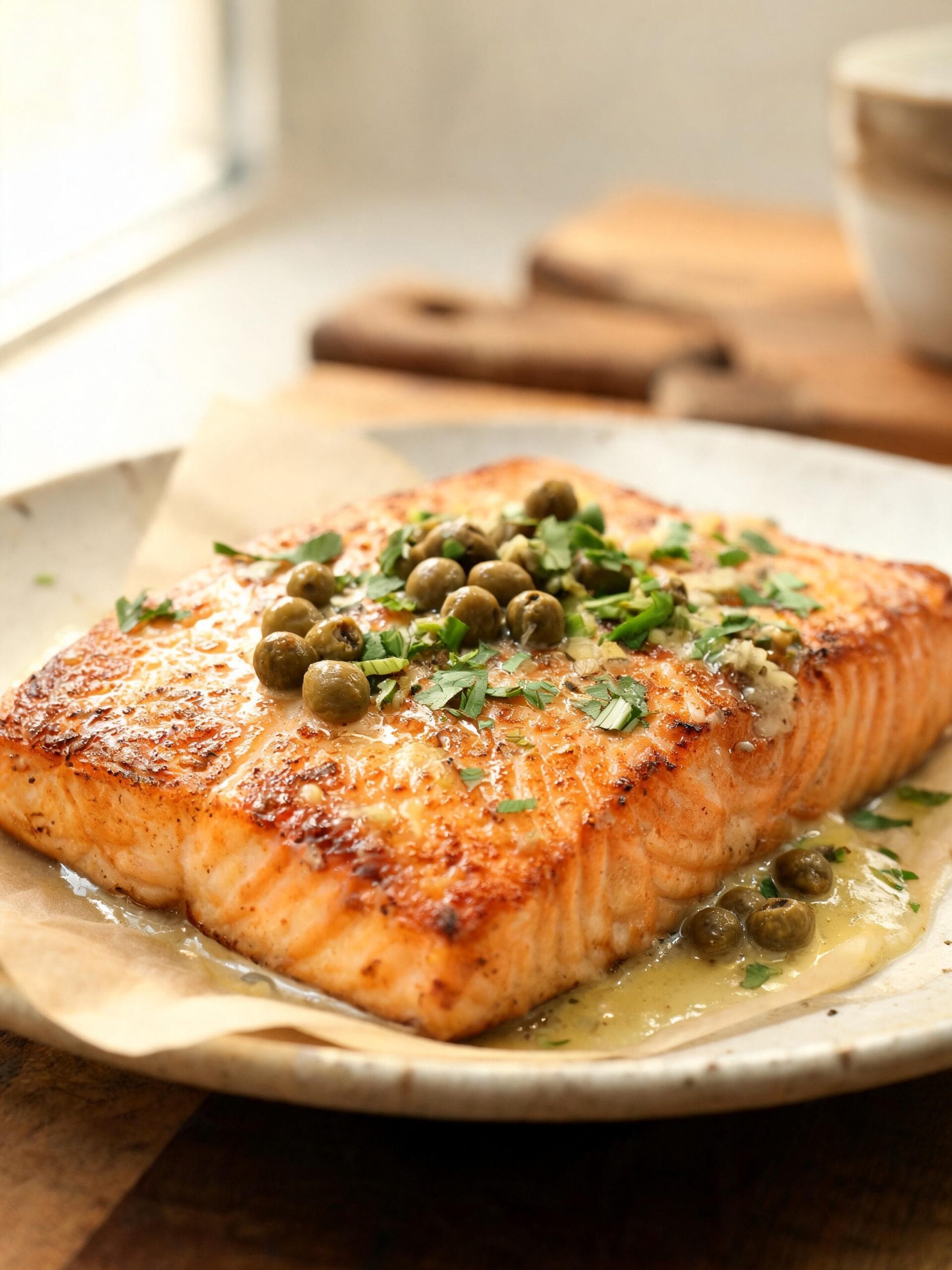
It turned out to be one of those meals that stops you mid-bite. That bright lemon and caper sauce against the richness of the salmon — it just works. And the best part? This easy Salmon Piccata came together in maybe twenty-five minutes. No complicated steps. No special equipment. Just a skillet, some heat, and a little patience.
I’ve made it probably a dozen times since that night. It’s become the thing I cook when I want something that feels a little special without actually being hard.
Why You’ll Love This Recipe
- It’s genuinely fast. From cold fish to plate, you’re looking at about half an hour. On a weeknight, that matters a lot.
- The flavor punches way above its weight. Lemon, capers, butter, a little garlic — it sounds simple because it is, but together they make the salmon taste like something you’d remember.
- You don’t need to know much about cooking fish. If you can get a sear on the salmon without panicking, you can make this. The sauce basically comes together on its own.
Quick Recipe Snapshot
Salmon Piccata at a Glance
Quick weeknight seafood dinner
| ⏱ Prep Time | 15 minutes |
| 🔥 Cook Time | 20 minutes |
| 🍽 Servings | 4 |
| 🔥 Calories | ~350 kcal per serving |
| 📊 Difficulty | Easy — beginner friendly |
Ingredients List
For the Salmon:
- 4 salmon fillets (about 6 oz each) — skin-on holds together better in the pan
- 1/2 cup all-purpose flour — just enough to give the outside something to grab onto
- 1/2 tsp salt
- 1/4 tsp black pepper
- 2 tbsp olive oil — for the sear
For the Piccata Sauce:
- 3 tbsp unsalted butter — this is what makes the sauce silky and rich
- 3 garlic cloves, minced
- 1/2 cup dry white wine — or chicken broth if you’d rather skip the wine
- 1/3 cup fresh lemon juice (about 2 lemons) — fresh really does make a difference here
- 3 tbsp capers, drained — these little things carry a lot of the flavor
- 2 tbsp fresh parsley, chopped
- Salt and pepper to taste
Step-by-Step Instructions
- Pull your salmon out of the fridge about ten minutes before you cook it. Cold fish straight into a hot pan tends to cook unevenly — the outside gets done before the center catches up.
- Mix the flour, salt, and pepper on a flat plate. Press each fillet lightly into the flour on both sides, then shake off anything extra. You want a thin coat, not a thick crust.
- Heat the olive oil in a large skillet over medium-high heat. When it shimmers, lay the salmon in skin-side up. Don’t touch it for about 3 to 4 minutes. You’ll see the color change up the sides as it cooks — that’s your cue it’s almost ready to flip.
- Flip carefully and cook another 3 minutes on the other side. The salmon should feel just barely firm when you press the thickest part. Take it out and set it on a plate. It’ll keep cooking a little from the heat already in it.
- Turn the heat down to medium. Add 1 tablespoon of the butter to the same pan and let it melt. Add the garlic and cook for about 45 seconds — just until it smells good, not until it browns.
- Pour in the white wine. It’ll bubble up pretty aggressively. Let it cook down for about 2 minutes, scraping up anything stuck to the bottom of the pan. That stuff is flavor.
- Add the lemon juice and capers. Stir and let it simmer another 2 minutes. Then pull the pan off the heat and stir in the remaining 2 tablespoons of butter until it melts into the sauce. This is what gives it that glossy, slightly thick texture.
- Taste it. Adjust salt if needed. Lay the salmon back in the pan, spoon the sauce over the top, scatter the parsley, and serve right away.
Side note — if your sauce looks a little thin, just let it bubble for another minute before you add that last butter. And if it looks too thick, a tiny splash of water loosens it right up.
Small Tricks From Cooking Fish at Home
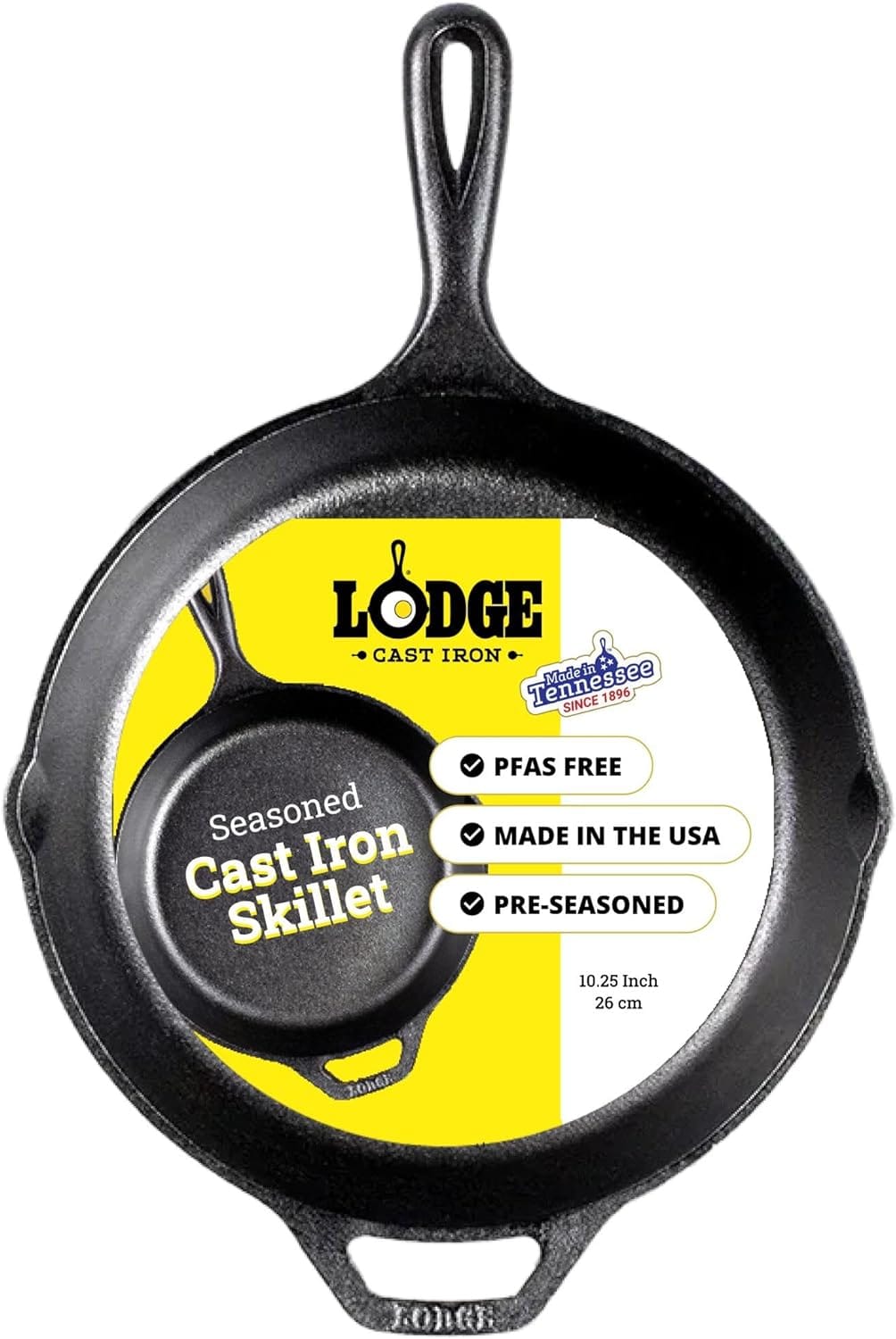
Speaking of getting the sear right, the pan you use makes all the difference. For this Salmon Piccata, I always reach for my Lodge Cast Iron Skillet. It gets incredibly hot and holds that heat evenly, which is the real secret to a crispy, golden salmon skin and perfectly cooked flesh. Plus, those little browned bits that stick to the bottom of the cast iron are pure flavor — they deglaze beautifully to become the foundation of that rich, lemony piccata sauce. It’s a workhorse that turns a simple dish into something truly special.
If you want to achieve that restaurant-quality sear at home, this is the one piece of equipment I can’t recommend enough. Take a look and see for yourself.
Lodge 10.25 Inch Cast Iron Skillet with Assist Handle
✓ prime
We earn a commission if you make a purchase, at no additional cost to you.
The flour coat is thinner than you think it needs to be. I used to press the fish in hard and end up with this thick, gummy layer that didn’t really crisp up. Now I just dust it lightly and shake off the rest. The sauce sticks better to a thin coat anyway.
Don’t walk away from the garlic. I’ve burned garlic in this sauce more than once because I turned around to do something else. Thirty seconds too long and it goes bitter. Stay close.
Fresh lemon juice changes the whole dish. I tried it once with the bottled stuff when I was out of lemons and it just tasted flat. The brightness wasn’t there. It’s worth having real lemons on hand for this one.
Let the pan do the work on the sear. I used to keep lifting the fish to check if it was ready, and every time I did that, I’d tear the flesh or pull off the crust. Now I just leave it alone and trust the timer. When it releases cleanly from the pan, it’s ready.
The butter goes in off the heat at the end. This is something I figured out by accident after the sauce broke on me twice — it got greasy and separated. Pulling the pan off the burner before adding that last butter keeps everything smooth and emulsified without any extra effort.
Common Mistakes to Avoid
Cooking salmon straight from the fridge is one of the most common reasons it cooks unevenly. The outside is done and the center is still cold. Ten minutes on the counter makes a real difference.
Overcrowding the pan. If you try to cook all four fillets in a small skillet, they steam instead of sear. You lose that golden crust and the texture gets soft in a way that doesn’t feel right. Use a large pan or cook in two batches.
Adding the butter to a still-hot pan at the end. I know I mentioned this in the tips but it’s worth saying again because it’s easy to forget in the moment. The sauce breaks and gets oily instead of glossy. Off the heat, then butter.
Skipping the caper brine. Some people drain the capers and toss the liquid without thinking about it. I started adding just a tiny splash of that brine into the sauce and it adds a little extra sharpness that rounds everything out. Not required, but worth trying.
Variations and Serving Ideas
Spicy version: Add a pinch of red pepper flakes to the garlic when it goes in the pan. It doesn’t make it hot exactly, just gives the sauce a little warmth that plays nicely against the lemon.
Mild version: Skip the capers entirely and use a little extra lemon zest instead. The sauce stays bright but softer — good if you’re cooking for people who aren’t sure about capers.
Coastal twist: Swap the white wine for a splash of clam juice. It sounds strange but it deepens the whole thing and makes it taste more like something you’d eat right next to the water. I started doing this after a trip where I had leftover clam juice in the fridge and didn’t know what else to do with it.
What to Serve With
Something that can soak up the delicious lemon-caper sauce is always a good idea. Crusty bread works perfectly. While plain white rice or orzo are great options, a flavorful shrimp and sausage dirty rice would also make a fantastic pairing. The sauce is simply too good to waste.
A simple green salad on the side keeps the meal from feeling heavy. Something with arugula or thinly sliced cucumber — something fresh and a little bitter to cut through the butter.
Roasted asparagus or broccolini are both solid choices too. They hold up next to the salmon without competing with the flavor, and the slight char from roasting gives the plate some texture contrast.
If you want to make it feel more like a real sit-down dinner, mashed potatoes underneath the salmon with the sauce poured over everything is genuinely one of the better things I’ve eaten at my own kitchen table.
Storage and Reheating
Store leftovers in an airtight container in the fridge. They’ll be fine for up to two days, though honestly the salmon is best the day you make it.
To reheat, use a skillet over low heat with a tiny splash of water or broth. Cover it loosely and warm it slowly. DO NOT microwave salmon piccata if you can help it — the fish gets rubbery and the sauce usually separates into something greasy and sad. It’s worth the extra two minutes on the stove.
DO NOT freeze this dish. The sauce doesn’t survive freezing and the salmon texture changes in a way that’s hard to come back from. Just make what you’ll eat.
FAQs (People Also Ask)
Can I use frozen salmon? Yes, but thaw it completely in the fridge overnight first. Pat it very dry before flouring it — frozen salmon releases more water and that extra moisture will prevent a good sear.
How do I know when the salmon is done? Press the thickest part gently with your finger. It should feel just barely firm, not soft and squishy, but not hard either. The flesh should flake when you nudge it with a fork. If it’s still translucent in the center, give it another minute.
Can I substitute something for the capers? Chopped green olives work surprisingly well. They give a similar briny quality without being identical. Some people use a little extra lemon zest instead, which changes the flavor but still tastes good.
Can I make this without wine? Absolutely. Chicken broth or even vegetable broth works fine. The sauce won’t have quite the same depth but it’s still really good. A tiny extra squeeze of lemon helps compensate.
How long does this take start to finish? Realistically, about 30 to 35 minutes. It’s one of those recipes that sounds like it might be complicated but really isn’t once you’ve done it once.
Nutrition Facts
(Per serving. Estimates only, varies by exact ingredients used)
Conclusion
That first night I made this, I ate it standing at the counter because I didn’t want to wait long enough to sit down. The sauce had gotten into the rice and the whole plate just smelled like lemon and the sea and something warm.
I still think about that sometimes when I’m pulling salmon out of the fridge. How the simplest meals are usually the ones that stay with you. This one has stayed with me.
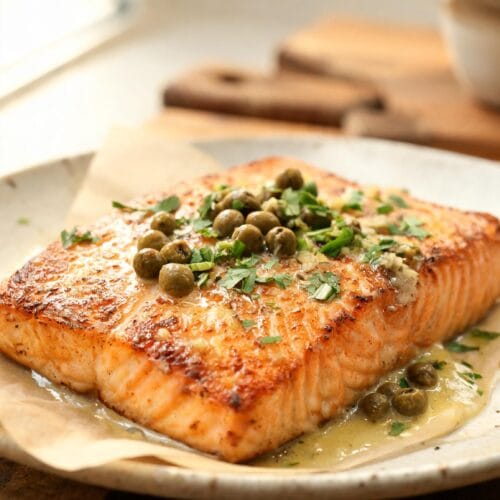
Salmon Piccata That Tastes Like the Coast on a Weeknight
Ingredients
- 4 salmon fillets (about 6 oz each), skin-on
- 1/2 cup all-purpose flour
- 1/2 tsp salt
- 1/4 tsp black pepper
- 2 tbsp olive oil
- 3 tbsp unsalted butter, divided
- 3 garlic cloves, minced
- 1/2 cup dry white wine (or chicken broth)
- 1/3 cup fresh lemon juice (about 2 lemons)
- 3 tbsp capers, drained
- 2 tbsp fresh parsley, chopped
- Salt and pepper to taste
Instructions
- Take the salmon out of the fridge about 10 minutes before cooking to take the chill off.
- Mix flour, salt, and pepper on a flat plate. Lightly coat each fillet on both sides and shake off the excess.
- Heat olive oil in a large skillet over medium-high heat until shimmering. Place salmon skin-side up and cook undisturbed for 3 to 4 minutes.
- Flip carefully and cook another 3 minutes. Remove salmon to a plate and set aside.
- Reduce heat to medium. Add 1 tablespoon butter to the same pan and melt. Add garlic and cook for 45 seconds until fragrant.
- Pour in white wine and let it bubble, scraping up any bits from the bottom of the pan. Cook for 2 minutes.
- Add lemon juice and capers. Stir and simmer for 2 more minutes.
- Remove pan from heat. Stir in remaining 2 tablespoons of butter until melted and sauce is smooth.
- Taste and adjust salt. Return salmon to the pan, spoon sauce over the top, scatter parsley, and serve immediately.