Introduction
The first time I made Halibut with Mango Salsa, it wasn’t planned at all. I had two halibut fillets sitting in the fridge from a trip out on the water two days before, and a mango on the counter that was about one day away from being too soft to eat. I figured I’d just throw something together, much like how a simple creamy tuna salad sandwich can save the day when you need a quick meal before ingredients go to waste.
That accidental dinner turned into the recipe I make more than almost anything else in the summer. There’s something about the way the sweet mango and the lime juice kind of melt into each other and then land on top of that flaky white fish — it just works. It’s the kind of meal that feels like more effort than it actually is.
If you’ve been looking for a simple halibut with mango salsa recipe that doesn’t require a bunch of fancy ingredients or techniques, this is it. I’m not a chef. I just cook fish at home after I catch it, or when I find something good at the market. And this one has never let me down.
Why You’ll Love This Recipe
- It comes together in about 30 minutes, start to finish — which matters a lot on nights when you’re tired and hungry and just want something real on the table.
- The mango salsa does most of the flavor work. You barely have to season the fish because the salsa brings brightness, sweetness, and a little heat all on its own.
- It’s genuinely beginner-friendly. If you can dice a mango and cook a piece of fish without burning it, you can make this. That’s honestly all it takes.
Quick Recipe Snapshot
Prep Time: 15 minutes
Cook Time: 10–12 minutes
Total Time: About 25–30 minutes
Servings: 4
Difficulty: Easy
Best For: Weeknight dinner, summer lunch, casual coastal eating
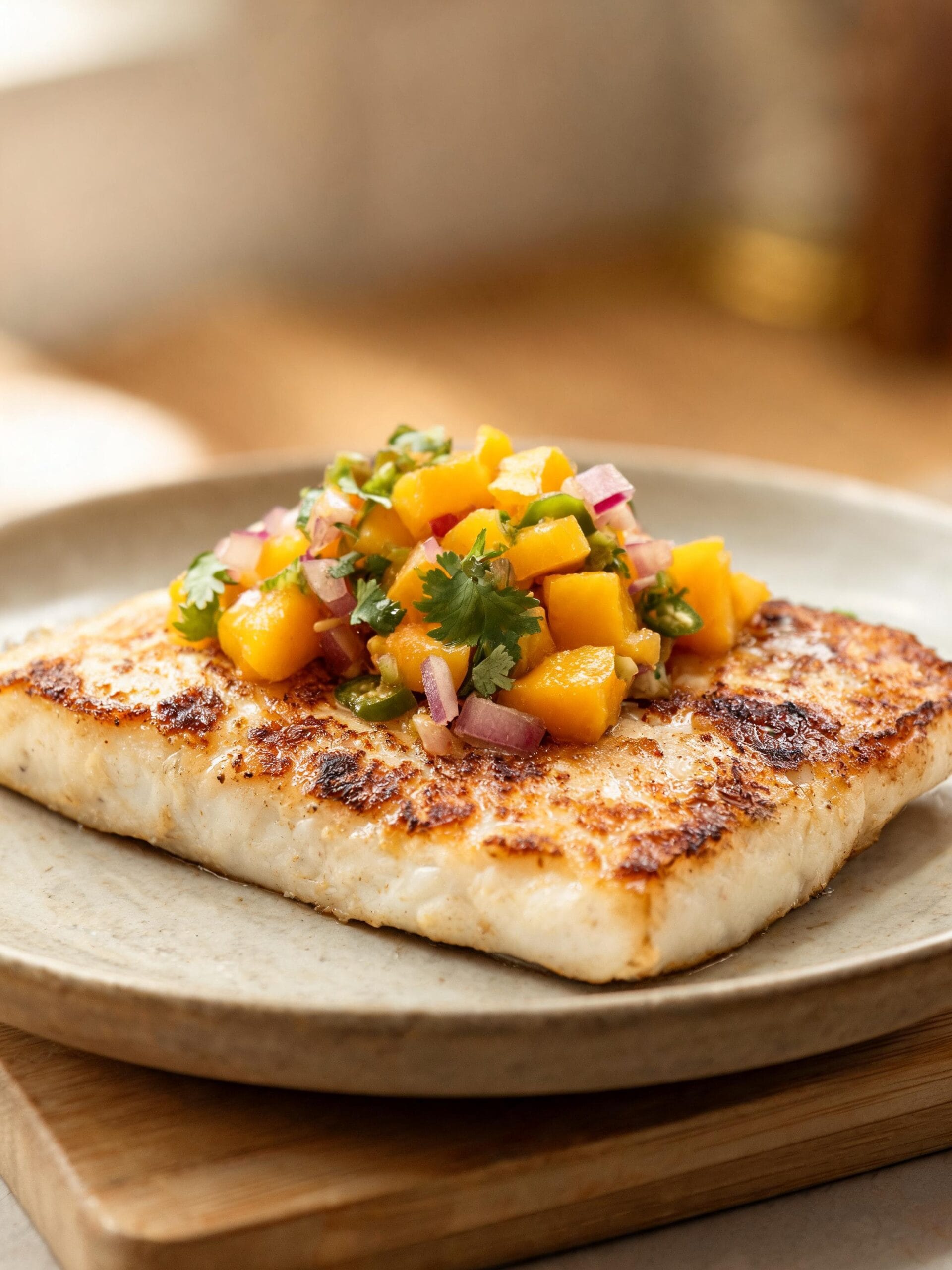
You’ll pan-sear the halibut in a hot skillet until it’s golden and just cooked through, then spoon a fresh mango salsa right over the top. No oven needed. No complicated steps. Just good fish and a bright, citrusy topping that makes the whole plate feel alive.
Ingredients List
For the Halibut:
- 4 halibut fillets (about 6 oz each) — fresh is best, but thawed frozen works fine
- 2 tablespoons olive oil — just enough to get a good sear going
- 1 teaspoon kosher salt
- ½ teaspoon black pepper
- ½ teaspoon garlic powder
- ¼ teaspoon smoked paprika — this adds a tiny bit of warmth without overpowering the fish
For the Mango Salsa:
- 2 ripe mangoes, peeled and diced small — ripe but still firm enough to hold their shape
- ½ red onion, finely diced — the sharpness cuts through the sweetness in a really good way
- 1 jalapeño, seeded and minced (leave some seeds if you want heat)
- ¼ cup fresh cilantro, roughly chopped
- Juice of 2 limes — fresh only, please, the bottled stuff just doesn’t taste the same
- ½ teaspoon salt
- 1 tablespoon honey — optional, but if your mango isn’t super sweet, this helps
Step-by-Step Instructions
- Make the salsa first. Combine the diced mango, red onion, jalapeño, cilantro, lime juice, salt, and honey (if using) in a bowl. Stir it together and let it sit while you cook the fish. Giving it even 10 minutes to rest makes a real difference — the lime juice softens the onion a little and everything kind of comes together.
- Pat the fish dry. This step matters more than people think. If the fillets are wet, they’ll steam instead of sear, and you’ll miss that golden crust. Use paper towels and press gently on both sides.
- Season the halibut. Sprinkle the salt, pepper, garlic powder, and smoked paprika evenly over both sides of each fillet. Nothing complicated here.
- Heat the skillet. Get a heavy pan — cast iron if you have it — over medium-high heat. Add the olive oil and let it heat until it shimmers. You want it hot before the fish goes in.
- Sear the halibut. Lay the fillets in the pan away from you so the oil doesn’t splash toward you. Don’t move them. Let them cook for about 4–5 minutes on the first side until you see the edges turning opaque and white. Then flip once and cook another 3–4 minutes. The fish is done when it flakes easily with a fork and the center is no longer translucent. (I always check the thickest part.)
- Rest and serve. Pull the fish off the heat and let it sit for just a minute or two. Then spoon the mango salsa generously over each fillet. Eat it while it’s warm.
That’s really it. Some nights I squeeze a little extra lime over the top right before serving. It just brightens everything up one more time.
Small Tricks From Cooking Fish at Home
I mentioned in my tips that cast iron is my go-to for this recipe, and for good reason. To get that perfect, golden-brown crust on the halibut without overcooking the inside, you need steady, high heat. The Lodge Cast Iron Skillet delivers that every single time. It gets screaming hot and holds its temperature, creating a non-stick surface that releases the fish beautifully once it’s seared. This is the pan I pull out when I want to do this recipe justice.
If you want to take your fish-searing game to the next level, this is the one piece of equipment I can’t recommend enough.
Lodge 10.25 Inch Cast Iron Skillet with Assist Handle
✓ prime
We earn a commission if you make a purchase, at no additional cost to you.

The biggest thing I’ve learned cooking halibut at home is that it dries out faster than you expect. It’s a lean fish, which means there’s not a lot of fat protecting it from the heat. The moment it’s done, it’s done. Pull it off the heat a little before you think it’s ready — it’ll keep cooking for another minute just from the residual warmth in the pan.
Always let the salsa sit before you serve it. I used to spoon it straight over the fish the second I mixed it and it always tasted a little sharp. Even 10 minutes of resting changes the whole thing. The lime juice does something to the onion and mango that just makes it softer and more cohesive.
Cast iron is my go-to for this. I’ve tried non-stick and it works fine, but the sear you get from cast iron is just better. That little bit of golden crust on the bottom of the fillet adds a texture contrast that makes the whole dish feel more complete.
One time I didn’t dry the fish before cooking and the whole fillet stuck to the pan and fell apart when I tried to flip it. Embarrassing. Pat it dry every single time.
If your mango is really ripe and soft, dice it a little larger so it doesn’t turn to mush when you stir the salsa. Smaller dice works better with firmer mangoes. Just adjust based on what you’ve got.
Common Mistakes to Avoid
Moving the fish too soon. I know it’s tempting to check on it, but if you try to lift the fillet before it’s ready to release, it’ll stick and tear. Leave it alone. When it’s ready, it’ll come up cleanly on its own.
Using underripe mango. The salsa won’t have the sweetness it needs to balance the fish, and the texture will be kind of waxy and unpleasant. If your mango isn’t ripe, let it sit on the counter another day or two. It’s worth waiting.
Overcooking the halibut. This is the most common mistake with white fish in general. Halibut goes from perfectly cooked to dry and rubbery in about 60 seconds. Watch it closely, especially toward the end. The second it flakes, it’s done.
Skipping the lime. I’ve made this when I was out of limes and used lemon instead — it was fine, but it wasn’t the same. The lime is part of what makes this feel coastal and bright. If you can, use it.
Variations and Serving Ideas
Spicy version: Leave the jalapeño seeds in and add a pinch of cayenne to the fish seasoning. The heat plays really well against the sweet mango.
Mild version: Skip the jalapeño entirely and add a little extra honey to the salsa. It becomes almost tropical and gentle — great if you’re cooking for kids or people who don’t like spice.
Coastal twist: Serve it as a taco. Warm some corn tortillas, break the halibut into chunks, and pile the mango salsa on top with a little shredded cabbage and a drizzle of sour cream. It’s a completely different meal but uses the exact same recipe.
What to Serve With
Coconut rice is probably my favorite pairing. The creaminess and slight sweetness of coconut rice underneath this easy halibut with mango salsa dinner is just really satisfying. It soaks up the lime juice from the salsa too, which is a good thing. For a more savory and hearty option, a flavorful shrimp sausage dirty rice would also make an excellent side dish.
A simple green salad with avocado and a light vinaigrette works well on the side — something fresh and crisp to balance the richness of the fish. Nothing heavy.
If you want something with a little more texture, roasted corn or black beans on the side fit the whole flavor profile without competing with the salsa. I’ve also just served it with warm crusty bread and called it a night. That works too.
Storage and Reheating
Store the fish and the salsa separately. This is important. If you mix them together and refrigerate, the salsa will make the fish soggy and the whole thing loses its texture by the next day.
The cooked halibut will keep in an airtight container in the fridge for up to 2 days. The mango salsa is best the day it’s made but will hold for about 24 hours before it starts to get watery.
DO NOT microwave the halibut if you can help it. It dries out almost instantly and gets rubbery. If you need to reheat it, use a low oven — about 275°F — for 8–10 minutes, loosely covered with foil. Or honestly, just eat it cold over a salad. It’s actually really good that way.
DO NOT freeze the mango salsa. It turns to mush when it thaws. Make it fresh every time — it only takes 5 minutes anyway.
FAQs (People Also Ask)
Can I use frozen halibut for this recipe?
Yes, absolutely. Just make sure it’s fully thawed before you cook it. Pat it extra dry because frozen fish tends to release more moisture. The result is nearly the same as fresh.
How do I know when the halibut is done cooking?
The easiest way is to press gently on the thickest part with a fork. If it flakes apart easily and the center is no longer translucent, it’s done. For reference, you’re looking for an internal temperature of about 130–135°F if you use a thermometer.
Can I substitute another fish if I don’t have halibut?
Yes. Mahi-mahi works really well with this salsa. So does cod or tilapia. The cooking time might vary slightly depending on thickness, but the method stays the same.
How long does the mango salsa last in the fridge?
About 24 hours, maybe a little more. After that it gets watery and the mango starts to break down. It’s best eaten the same day you make it.
Is this recipe difficult for beginners?
Not at all. If you can dice fruit and cook something in a skillet, you can make this. The whole thing takes about 30 minutes and there are really only two components. It’s one of the more forgiving fish recipes I make at home.
Nutrition
Nutrition Facts
(Per serving. Estimates only, varies by exact ingredients used)
Conclusion
I still think about that first time — the mango that was almost too ripe, the fish from two days out on the water, the whole thing thrown together kind of by accident. Some of the best meals come from those moments. No plan, no recipe, just working with what’s there.
This homemade halibut with mango salsa has become one of those dishes I reach for when I want something that feels like summer, even when it’s not. It’s simple. It’s honest. And it tastes like the coast, which is really all I ever want from a meal.
I hope it becomes something you come back to too.
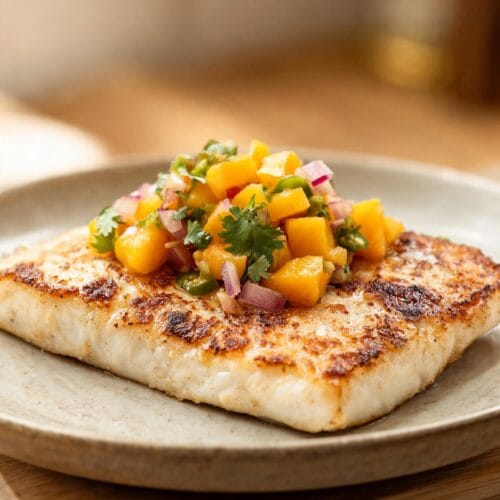
Halibut with Mango Salsa
Ingredients
- 4 halibut fillets (about 6 oz each)
- 2 tablespoons olive oil
- 1 teaspoon kosher salt
- 1/2 teaspoon black pepper
- 1/2 teaspoon garlic powder
- 1/4 teaspoon smoked paprika
- 2 ripe mangoes, peeled and diced small
- 1/2 red onion, finely diced
- 1 jalapeño, seeded and minced
- 1/4 cup fresh cilantro, roughly chopped
- Juice of 2 limes
- 1/2 teaspoon salt
- 1 tablespoon honey (optional)
Instructions
- Combine the diced mango, red onion, jalapeño, cilantro, lime juice, salt, and honey in a bowl. Stir and let sit for at least 10 minutes while you prepare the fish.
- Pat the halibut fillets dry on both sides using paper towels. This helps achieve a proper sear.
- Season both sides of each fillet with salt, pepper, garlic powder, and smoked paprika.
- Heat a heavy skillet (cast iron preferred) over medium-high heat. Add the olive oil and heat until shimmering.
- Place the fillets in the pan away from you. Cook undisturbed for 4–5 minutes until the edges turn opaque and white.
- Flip the fillets once and cook for another 3–4 minutes until the fish flakes easily with a fork and the center is no longer translucent.
- Remove from heat and let rest for 1–2 minutes. Spoon the mango salsa generously over each fillet and serve immediately.