Introduction
I came home one evening with a bag of fresh cod and absolutely nothing planned for dinner. The kids were already asking what was cooking, and I was standing in the kitchen just staring at the fish like it owed me answers. That’s honestly how most of my best meals start — not from planning, but from necessity, much like the time I created our favorite shrimp alfredo recipe on a whim.
I’d been trying to eat lower carb for a few weeks, mostly because my jeans were having opinions about my life choices, and I remembered reading something about keto fish recipes being one of the easiest ways to stay on track without feeling like you’re eating sad food. Fish is already naturally low in carbs. You don’t have to fight it into a diet. It kind of just belongs there.
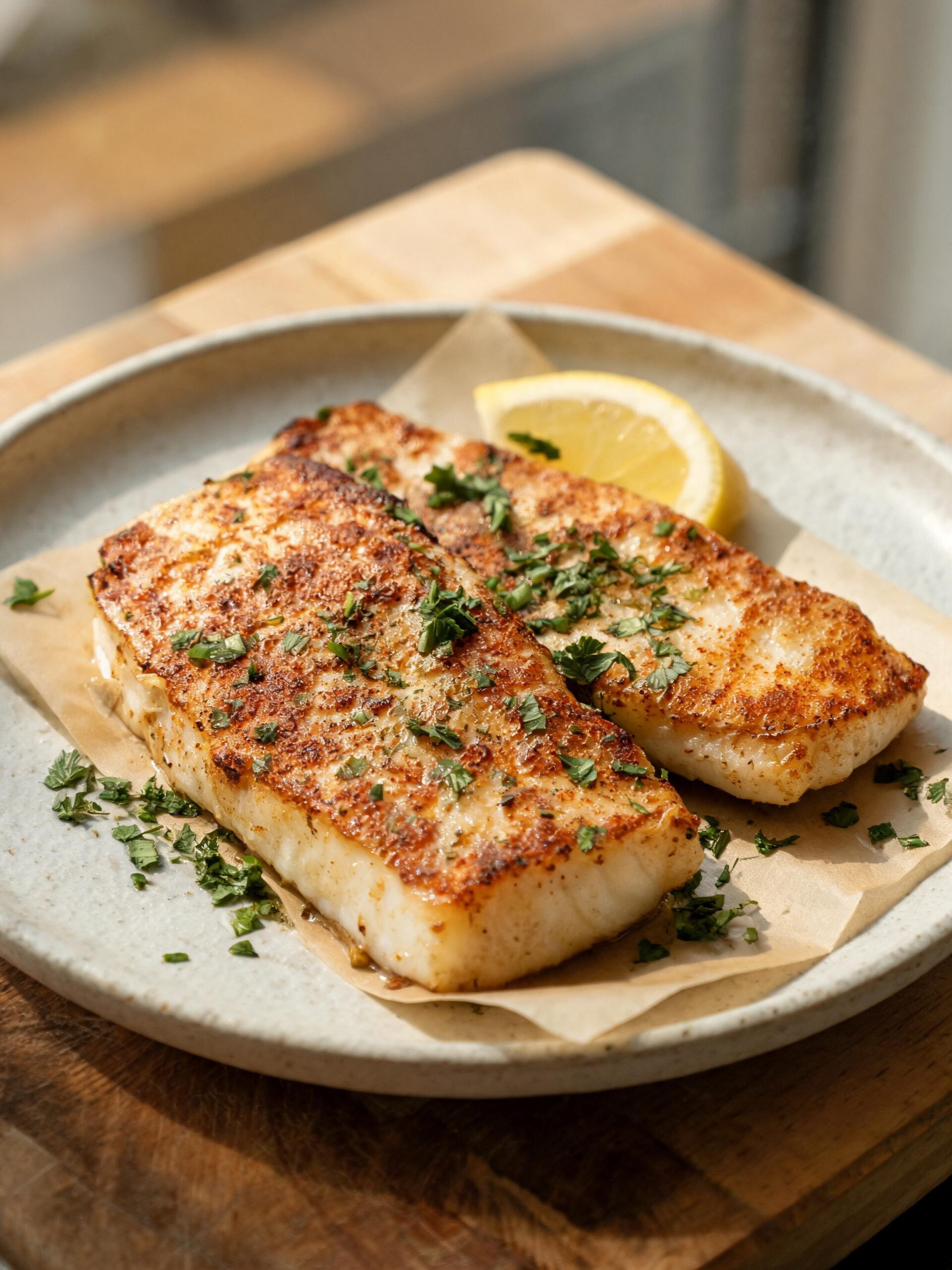
So I threw together what I had — butter, garlic, lemon, a little paprika — and pan-seared that cod until it had a golden crust and flaked apart like it was ready to give up. My daughter said it tasted like vacation. That’s all I needed to hear.
These easy keto fish recipes aren’t about restriction. They’re about cooking something real, something that smells like the coast and tastes like you actually tried, even when you didn’t try that hard.
Why You’ll Love This Recipe
- It comes together in under 30 minutes, which on a Tuesday night is basically a miracle.
- The butter-garlic crust gives you that rich, satisfying flavor without any breading or carbs sneaking in.
- It works with almost any white fish you have on hand — cod, tilapia, halibut, whatever the market had that day.
Quick Recipe Snapshot
Recipe: Garlic Butter Pan-Seared Cod
Prep Time: 15 minutes
Cook Time: 20 minutes
Total Time: 35 minutes
Servings: 4
Calories: ~350 kcal per serving
Diet: Keto, Low Carb, Gluten-Free
Best For: Weeknight dinner, quick lunch, meal prep
Skill Level: Beginner-friendly
Ingredients List
For the Fish:
- 4 cod fillets (about 6 oz each) — fresh is best, but thawed frozen works fine
- 2 tablespoons olive oil — helps get that golden sear without burning
- 3 tablespoons unsalted butter — this is where most of the flavor lives
- 4 cloves garlic, minced — fresh garlic makes a real difference here
- 1 teaspoon smoked paprika — adds color and a gentle warmth
- 1 teaspoon onion powder
- ½ teaspoon salt
- ½ teaspoon black pepper
- ¼ teaspoon cayenne pepper (optional, but I usually add it)
For Finishing:
- Juice of 1 lemon — brightens everything up at the end
- 2 tablespoons fresh parsley, chopped — mostly for color, but it does add something fresh
- Lemon slices for serving
Step-by-Step Instructions
- Pat the cod fillets completely dry with paper towels. I know it sounds fussy, but wet fish just steams in the pan instead of searing. Dry fish gets that golden crust. It matters.
- Mix the smoked paprika, onion powder, salt, pepper, and cayenne in a small bowl. Rub it evenly over both sides of each fillet. Let them sit for about 5 minutes while the pan heats up.
- Heat the olive oil in a large skillet over medium-high heat. You want it hot but not smoking. When you flick a drop of water in and it sizzles immediately, you’re ready.
- Lay the fillets in the pan gently, away from you so the oil doesn’t splash back. Don’t touch them. Seriously, just leave them alone for 3 to 4 minutes. Moving them too early is how they fall apart.
- Flip them once. They should release cleanly from the pan when they’re ready. If they’re sticking, give them another 30 seconds.
- Reduce the heat to medium. Add the butter and garlic to the pan. As the butter melts, tilt the pan slightly and use a spoon to baste the fish with that garlic butter. Do this for about 2 minutes. This is the part that makes the whole kitchen smell incredible.
- Squeeze the lemon juice over everything, scatter the parsley on top, and take the pan off the heat. Let it rest for a minute before plating.
That’s really it. Some nights I add a handful of capers or a spoonful of Dijon at the end, but the base recipe is exactly this simple.
Small Tricks From Cooking Fish at Home
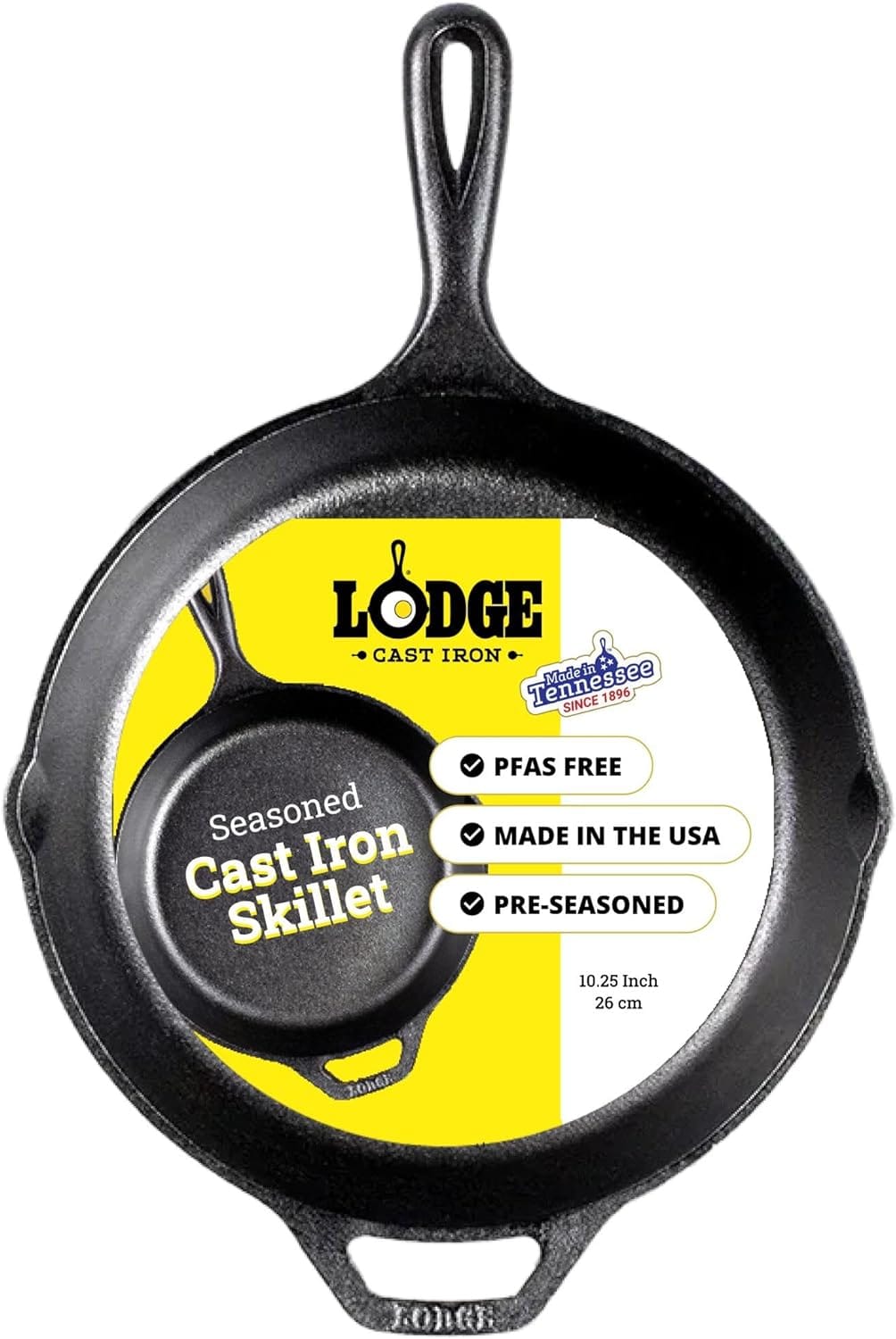
Speaking of the right pan, I mentioned my preference for cast iron, and it’s no exaggeration. To get that perfect, golden-brown crust without overcooking the delicate cod, you need a skillet that holds heat intensely and evenly. My 10.25-inch Lodge Cast Iron Skillet is the workhorse of my kitchen for this exact reason. It gets screaming hot and stays that way, creating an unbeatable sear that nonstick pans just can’t replicate. It’s the secret to that restaurant-quality finish every single time.
If you’re ready to stop steaming your fish and start searing it like a pro, this is the skillet that will get you there. Check it out on Amazon and see why it’s a kitchen legend.
Lodge 10.25 Inch Cast Iron Skillet with Assist Handle
✓ prime
We earn a commission if you make a purchase, at no additional cost to you.
The biggest thing I learned the hard way is that fish tells you when it’s done. You don’t need a thermometer every time. When the flesh starts to turn opaque from the bottom up and flakes easily when you press it lightly with a fork, it’s done. Overcooked fish gets rubbery and sad, and it’s hard to come back from that.
Room temperature fish sears better. I take mine out of the fridge about 10 minutes before cooking. Cold fish straight into a hot pan drops the temperature too fast and you end up with uneven cooking — raw in the middle, overdone on the outside.
Cast iron is my favorite pan for this. It holds heat evenly and gives you a better crust than a nonstick. But if nonstick is what you have, use it. Don’t let the pan stop you from making dinner.
My grandmother used to say you could tell good fish by the smell — it should smell like the ocean, not like fish. That sounds obvious but it’s true. If the fish smells strongly before it’s even cooked, it’s past its prime. Fresh fish is almost neutral in smell.
Don’t crowd the pan. If you’re cooking for four people, do it in two batches if your skillet isn’t big enough. Crowding drops the heat and you lose the sear. The fish ends up soft instead of golden, and the whole texture changes.
Common Mistakes to Avoid
Skipping the drying step. I did this for years and wondered why my fish never had a proper crust. The moisture on the surface of the fish creates steam, and steam is the enemy of browning. Two minutes with a paper towel changes everything.
Using butter alone from the start. Butter burns at high heat. That’s why you start with olive oil to get the sear, then add butter at the end for flavor. If you throw butter in at the beginning on high heat, it goes brown and bitter before the fish is even halfway cooked.
Flipping more than once. I know it’s tempting to check underneath, to peek, to nudge it. But every time you move the fish, you risk breaking it apart. One flip. That’s the rule I follow now.
Forgetting the acid. The lemon at the end isn’t just garnish. It cuts through the richness of the butter and lifts the whole dish. I once skipped it because I was out of lemons and the recipe tasted flat. A splash of white wine vinegar works in a pinch, but lemon is better.
Variations and Serving Ideas
Spicy version: Double the cayenne and add a teaspoon of chili flakes to the butter when you’re basting. Finish with a drizzle of hot sauce. It gets intense in the best way.
Mild version: Skip the cayenne entirely and add a teaspoon of dried dill instead. It’s gentler and works really well if you’re cooking for kids or anyone who doesn’t love heat.
Coastal twist: Add a handful of cherry tomatoes and some sliced olives to the pan after you flip the fish. Let them blister in the garlic butter while you baste. It tastes like something you’d eat at a table near the water with a glass of white wine.
What to Serve With
I usually go for something that gives the meal a little contrast. The fish is rich and buttery, so I want something fresh or slightly crisp alongside it.
Roasted asparagus or broccolini works really well. The slight char and crunch balance the softness of the fish. A simple cucumber and tomato salad with olive oil and a little red onion is another one I come back to often — it’s cool and acidic against the warm fish, much like the slaw we pair with our crispy fish tacos.
Cauliflower rice is the obvious keto side, and it genuinely works here. I sauté mine with a little garlic and lemon zest so it doesn’t taste like a compromise. Zucchini noodles tossed in olive oil are another easy option that doesn’t feel like diet food once it’s on the plate.
If I’m not being strict about carbs that day, a piece of crusty bread to drag through the leftover garlic butter in the pan is honestly one of life’s quiet pleasures.
Storage and Reheating
Cooked fish keeps in the fridge for up to 2 days in a sealed container. After that, the texture starts to go and it’s not worth eating.
DO NOT reheat fish in the microwave if you can help it. It dries out and the smell fills the whole house. Reheat it gently in a covered skillet over low heat with a tiny splash of water or a small knob of butter. It takes about 3 to 4 minutes and keeps the texture much closer to what it was originally.
DO NOT freeze cooked fish. The texture when it thaws is soft and watery and it’s just not good. If you want to freeze fish, freeze it raw and cook it fresh.
Leftover fish is actually really good flaked cold over a salad the next day. I do this more than I reheat it, honestly.
FAQs (People Also Ask)
Can I use frozen fish for this recipe?
Yes, absolutely. Just make sure it’s fully thawed and patted very dry before cooking. Frozen fish releases more water than fresh, so the drying step is even more important. I thaw mine overnight in the fridge or under cold running water for about 20 minutes.
How do I know when the fish is fully cooked?
The flesh should be opaque all the way through and flake easily when you press it gently with a fork. If it still looks translucent in the center, give it another minute or two. Internal temperature should reach 145°F if you want to be precise about it.
Can I substitute a different fish?
Definitely. Tilapia, halibut, mahi-mahi, or even salmon all work with this same method and seasoning. Thinner fillets like tilapia will cook faster — maybe 2 to 3 minutes per side instead of 4. Thicker cuts like halibut might need a minute or two longer.
Is this recipe difficult for beginners?
Not at all. If you can heat a pan and flip something without panicking, you can make this. The whole thing takes about 35 minutes and the steps are straightforward. The only thing that trips people up is moving the fish too early — just be patient and let it cook.
How long does this take from start to finish?
About 35 minutes total — 15 minutes of prep and 20 minutes of cooking. On busy nights I’ve done it in closer to 25 minutes by prepping while the pan heats up.
Nutrition
Nutrition Facts
(Per serving. Estimates only, varies by exact ingredients used)
Conclusion
There’s something about a pan of fish sizzling in garlic butter that just feels like the right kind of evening. Nothing complicated. Nothing that requires a plan or a grocery list you thought about for three days.
My daughter still calls it vacation fish. I don’t correct her. Some recipes earn their nickname, and this one did it in a single Tuesday night.
If you’ve been looking for something simple that fits the way you’re eating right now without making you feel like you’re missing out — this is a good place to start.
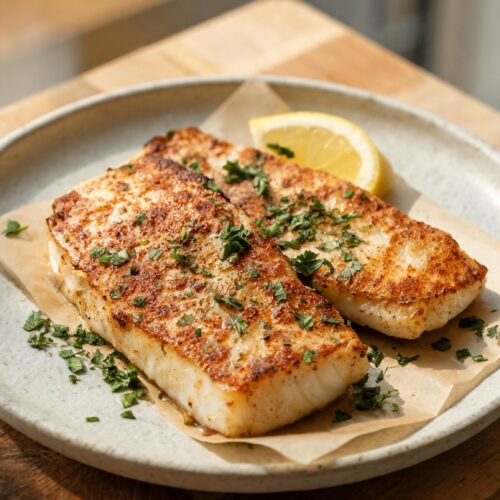
Garlic Butter Pan-Seared Cod
Ingredients
- 4 cod fillets (about 6 oz each)
- 2 tablespoons olive oil
- 3 tablespoons unsalted butter
- 4 cloves garlic, minced
- 1 teaspoon smoked paprika
- 1 teaspoon onion powder
- ½ teaspoon salt
- ½ teaspoon black pepper
- ¼ teaspoon cayenne pepper (optional)
- Juice of 1 lemon
- 2 tablespoons fresh parsley, chopped
- Lemon slices for serving
Instructions
- Pat the cod fillets completely dry with paper towels on both sides.
- Mix smoked paprika, onion powder, salt, pepper, and cayenne in a small bowl. Rub the seasoning evenly over both sides of each fillet. Let rest 5 minutes.
- Heat olive oil in a large skillet over medium-high heat until hot but not smoking.
- Place fillets gently in the pan. Cook undisturbed for 3 to 4 minutes until golden on the bottom.
- Flip each fillet once. Reduce heat to medium.
- Add butter and minced garlic to the pan. As butter melts, tilt the pan and baste the fish with the garlic butter using a spoon for about 2 minutes.
- Squeeze lemon juice over the fish, scatter fresh parsley on top, and remove from heat.
- Rest for 1 minute before plating. Serve with lemon slices.