Introduction
Some of the best meals I’ve ever eaten started with a cooler full of fish and absolutely no plan. That’s honestly how this whole thing came together. I’d been out on the water most of the day, came home sunburned and hungry, and realized I had a beautiful piece of flounder and nothing in the fridge that felt right next to it. No rice. No pasta, though sometimes a creamy shrimp alfredo recipe is exactly what a seafood craving calls for. Just vegetables, a lemon, and a half-used block of parmesan. That evening I threw together what turned out to be my favorite go-to spread of low carb sides for fish — and I’ve been making versions of it ever since.
It’s not complicated. It doesn’t need to be. When you’re cooking fish at home after a long day near the water, you want something that comes together fast and doesn’t fight the fish for attention. These easy low carb sides for fish do exactly that. They sit beside your main without stealing the show, they’re light enough not to weigh you down, and they feel like real food — not diet food.
If you’re tired of the same old soggy vegetable situation or you’re just trying to eat a little cleaner without giving up flavor, this is the kind of meal that changes things quietly. No drama. Just good food on a weeknight.
Why You’ll Love This Recipe
- Everything comes together in under 30 minutes — which matters a lot when you’re hungry and the fish is already thawed
- The flavors are clean and coastal, nothing heavy, nothing that overpowers a delicate piece of fish
- You don’t need any special equipment or hard-to-find ingredients — just a sheet pan, a skillet, and what’s already in your kitchen
Quick Recipe Snapshot
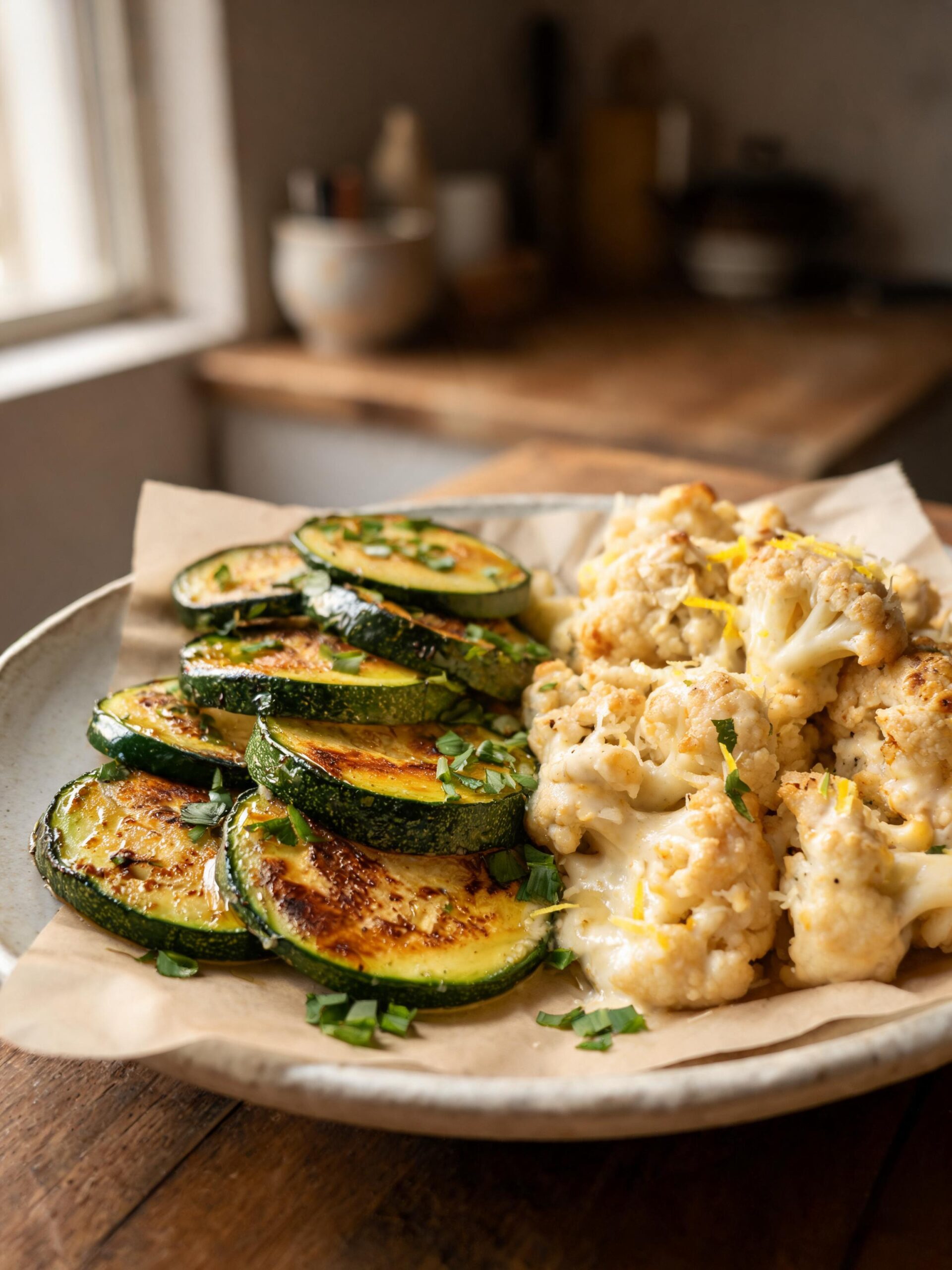
Recipe: Coastal Low Carb Sides for Fish (Garlic Roasted Zucchini + Lemon Cauliflower Mash)
Prep Time: 15 minutes
Cook Time: 20 minutes
Total Time: 35 minutes
Servings: 4
Calories: ~350 kcal per serving
Difficulty: Easy — beginner friendly
Best For: Weeknight fish dinners, keto meals, low carb coastal cooking
Ingredients List
For the Garlic Roasted Zucchini:
- 3 medium zucchini, sliced into half-moons — zucchini gets a little caramelized at the edges when roasted and that’s the whole point
- 3 tablespoons olive oil
- 4 cloves garlic, minced
- 1/2 teaspoon salt
- 1/4 teaspoon black pepper
- 1/4 teaspoon red pepper flakes (optional but I almost always add them)
- 2 tablespoons fresh parsley, chopped
For the Lemon Cauliflower Mash:
- 1 large head of cauliflower, cut into florets — this is the base of everything, so don’t rush the cooking
- 3 tablespoons butter
- 1/4 cup heavy cream
- 1/2 cup grated parmesan cheese — this is what gives it that savory depth that makes it feel like more than just mashed vegetables
- Zest and juice of 1 lemon
- Salt and white pepper to taste
Step-by-Step Instructions
- Preheat your oven to 425°F. While it heats up, slice your zucchini and toss it in a bowl with the olive oil, garlic, salt, pepper, and red pepper flakes. Spread it out on a sheet pan in a single layer — don’t pile it up or it’ll steam instead of roast and you’ll lose that golden edge.
- Slide the zucchini into the oven and set a timer for 18 to 20 minutes. You want the edges to go a little brown and the centers to soften. Check at 15 minutes just in case your oven runs hot.
- While the zucchini is roasting, bring a large pot of salted water to a boil. Add your cauliflower florets and cook for about 10 to 12 minutes until they’re completely tender — you want them soft enough that a fork goes through without any resistance.
- Drain the cauliflower really well. This part matters more than people think. If there’s water left in the florets, your mash will turn out runny and sad. Let it sit in the colander for a couple minutes, or even press it gently with a clean towel.
- Transfer the drained cauliflower to a pot or a large bowl. Add the butter, heavy cream, and parmesan. Mash it with a potato masher or use a hand blender if you want it smoother. I usually go somewhere in between — a little texture is nice. Add the lemon zest and juice, then taste and season with salt and white pepper.
- Pull the zucchini out of the oven, scatter the fresh parsley over the top, and serve everything together. That’s it. Honestly that’s the whole thing. (I always end up eating a piece of zucchini straight off the pan before it even hits the table.)
Small Tricks From Cooking Fish at Home
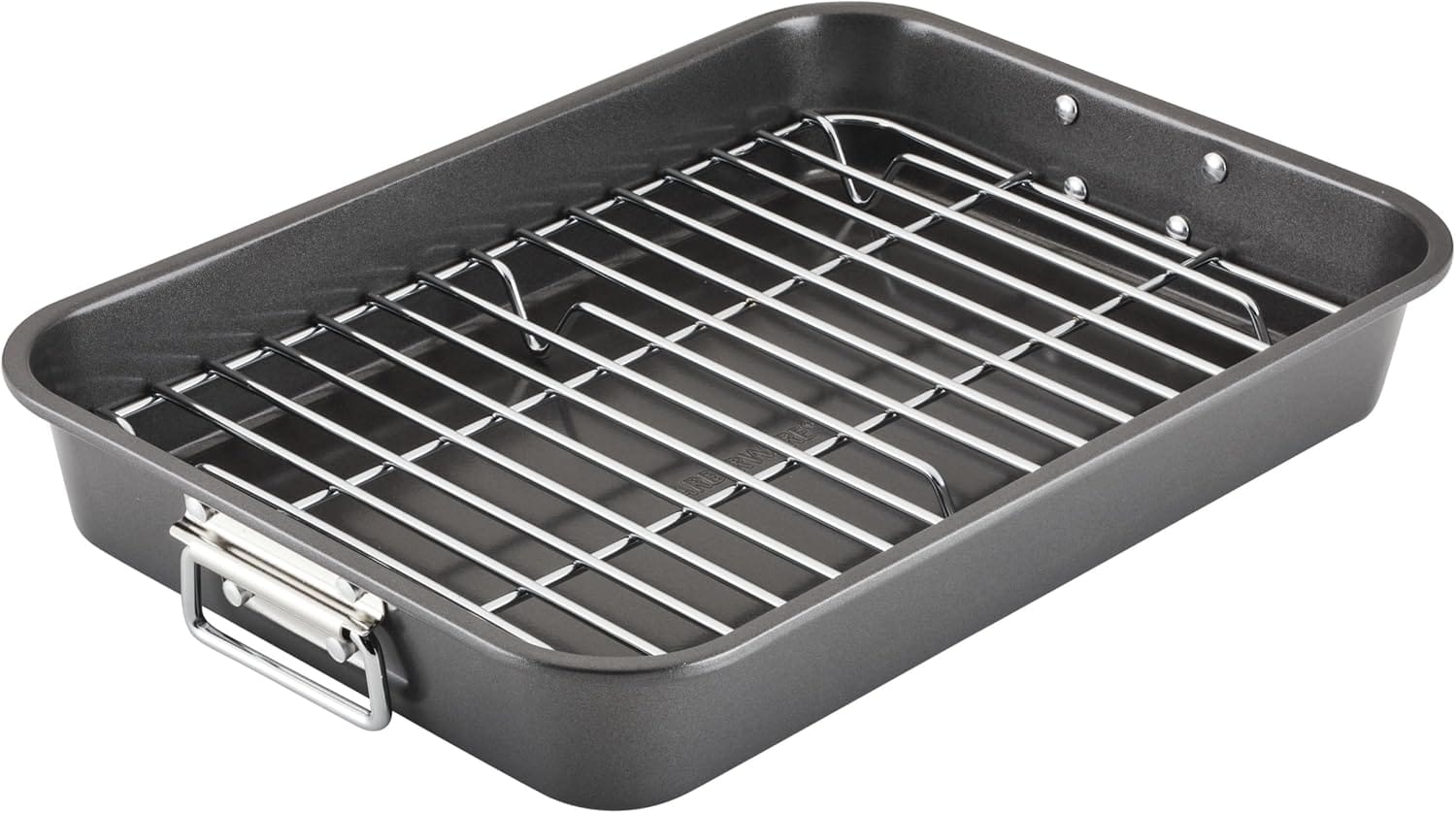
I can’t stress this enough: giving your vegetables space to roast is the secret to getting that perfect golden-brown color. That’s why a large, reliable roasting pan is one of the most-used tools in my kitchen. For this zucchini, I always grab my Farberware roaster. It’s got a great nonstick surface and is big enough to spread everything out in a single layer, which is the only way to avoid the dreaded steaming effect and get those crispy, flavorful edges we’re after.
This is the kind of simple, bulletproof gear that makes weeknight cooking so much easier. Check it out and see the difference it makes.
Farberware Nonstick Bakeware 11-Inch x 15-Inch Roaster with Flat Rack
✓ prime
We earn a commission if you make a purchase, at no additional cost to you.
The first thing I learned the hard way — don’t crowd your pan. Whether it’s the zucchini or the fish itself, give everything space. When things are piled on top of each other they steam, not roast, and you lose all that texture you’re going for. I ruined a whole batch of vegetables before I figured that out.
Drain your cauliflower like you mean it. I know I already said this in the instructions but it’s worth saying again because I’ve skipped this step when I was in a hurry and ended up with something closer to cauliflower soup than mash. A few extra minutes of draining changes the whole result.
Lemon does something to cauliflower that I can’t fully explain. It lifts it. Without the lemon, the mash can taste a little flat and heavy. With it, the whole dish feels lighter and more coastal somehow. My mom used to squeeze lemon on everything near the water and I think she was onto something.
If you’re making this alongside a delicate white fish like flounder or sole, keep the sides simple. The fish doesn’t need competition. The zucchini and the mash are both mild enough to let the fish be the main event without getting lost.
Don’t skip the parmesan in the mash. I’ve tried making it without when I didn’t have any and it just wasn’t the same. The parmesan adds a savory, slightly nutty flavor that makes the mash feel substantial. Without it you’re basically just eating mashed cauliflower and that’s a different thing entirely.
Common Mistakes to Avoid
Using too much cream in the cauliflower mash is an easy trap. You add a little, it looks dry, you add more, suddenly it’s soup. Start with less than you think you need and add slowly. You can always add more but you can’t take it back.
Forgetting to dry the zucchini before roasting. Zucchini holds a lot of water inside and if you don’t give it a chance to release that moisture in the oven, it ends up soft and limp instead of roasted and slightly crisp at the edges. Spreading it in a single layer and using high heat solves most of this.
Overcooking the garlic on the zucchini. Minced garlic burns fast at 425°F, especially on the pieces that are thinner. If you’ve had this happen before, you can try adding the garlic halfway through the roasting time instead of at the start. I’ve done it both ways and the halfway method is more forgiving.
Rushing the cauliflower cook time. If it’s even slightly underdone, the mash will be lumpy in a bad way — not the good rustic kind of lumpy. Give it the full 12 minutes and test it with a fork before you drain it.
Variations and Serving Ideas
Spicy version: Double the red pepper flakes on the zucchini and add a pinch of cayenne to the cauliflower mash. It gives the whole plate a slow heat that works really well with grilled fish or blackened salmon.
Mild version: Skip the pepper flakes entirely and add a little fresh dill to the mash instead of lemon zest. This is the version I make when I’m cooking for my kids or when I want something quieter and more comforting.
Coastal twist: Stir a tablespoon of capers into the cauliflower mash and finish the zucchini with a little lemon butter right before serving. It tastes like something you’d eat at a small table near the water somewhere and I mean that in the best way.
What to Serve With
These sides were built for fish, so anything from a simple pan-seared tilapia to a whole roasted branzino works. The cauliflower mash is soft and rich, so it pairs best with fish that has some texture — something with a seared crust or a little char from the grill.
If you want to add something fresh to the table, a simple green salad with a sharp vinaigrette cuts right through the richness of the mash. A crisp, tangy slaw, like the one in these crispy fish tacos with cabbage slaw, would also be a fantastic choice. A few slices of cucumber with salt and olive oil also work if you want something even simpler.
For drinks, a cold glass of sparkling water with lemon or a dry white wine if that’s your thing. Nothing complicated. The food is already doing the work.
Storage and Reheating
The cauliflower mash keeps well in the fridge for up to 3 days in a sealed container. Reheat it gently on the stovetop with a small splash of cream or butter to bring it back to life. DO NOT microwave it on high — it turns grainy and weird. Low and slow is the move here.
The roasted zucchini is best eaten the same day. It softens overnight and loses most of the texture that makes it good. You can still eat it the next day cold in a salad or folded into eggs, but DO NOT expect it to reheat back to its original state. It won’t.
DO NOT freeze the cauliflower mash. I tried it once and it separated completely when thawed. The texture was off and no amount of stirring fixed it.
FAQs (People Also Ask)
Can I substitute the cauliflower for something else?
Yes — broccoli works surprisingly well if that’s what you have. The mash will be a little earthier and greener but the method is the same. Some people use turnips too, though the flavor is stronger.
How long does the cauliflower mash last in the fridge?
About 3 days in a sealed container. After that it starts to get a little watery and the flavor fades. Make it fresh if you can — it only takes 15 minutes.
How do I know when the zucchini is done?
Look at the edges. When they start to turn golden brown and the centers look soft, it’s ready. If it’s still pale and firm after 20 minutes, your oven might need a few more minutes or your pieces might be cut too thick.
Can I use frozen cauliflower instead of fresh?
You can. Frozen cauliflower tends to hold more water so you’ll need to drain it even more carefully. The mash might be slightly less fluffy but it still works fine on a weeknight when fresh isn’t an option.
Is this recipe hard to make for beginners?
Not at all. If you can boil water and use an oven, you can make this. The hardest part is honestly just timing both sides to finish around the same time, and even that’s forgiving. Start the cauliflower first and you’ll be fine.
Nutrition Facts
(Per serving. Estimates only, varies by exact ingredients used)
Conclusion
I still think about that first evening I put this together — sunburned, tired, the smell of salt still on my hands, and a plate of food in front of me that felt exactly right. There’s something about eating simply after a day near the water that makes everything taste better than it probably should.
These sides have become part of how I eat now. Not because I’m following a plan or trying to be disciplined about anything. Just because they taste good, they’re easy, and they make a piece of fish feel like a real meal. That’s enough for me.
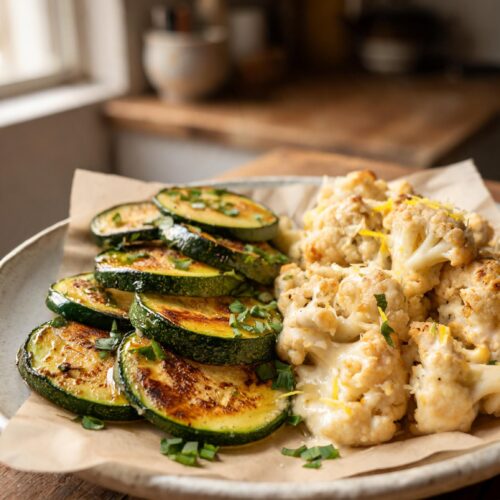
Coastal Low Carb Sides for Fish — Garlic Roasted Zucchini and Lemon Cauliflower Mash
Ingredients
- 3 medium zucchini, sliced into half-moons
- 3 tablespoons olive oil
- 4 cloves garlic, minced
- 1/2 teaspoon salt
- 1/4 teaspoon black pepper
- 1/4 teaspoon red pepper flakes (optional)
- 2 tablespoons fresh parsley, chopped
- 1 large head of cauliflower, cut into florets
- 3 tablespoons butter
- 1/4 cup heavy cream
- 1/2 cup grated parmesan cheese
- Zest and juice of 1 lemon
- Salt and white pepper to taste
Instructions
- Preheat your oven to 425°F. Toss sliced zucchini with olive oil, minced garlic, salt, pepper, and red pepper flakes. Spread in a single layer on a sheet pan.
- Roast the zucchini for 18 to 20 minutes until the edges are golden and the centers are soft. Check at 15 minutes if your oven runs hot.
- While the zucchini roasts, bring a large pot of salted water to a boil. Add cauliflower florets and cook for 10 to 12 minutes until completely tender.
- Drain the cauliflower very well. Let it sit in the colander for 2 minutes to release excess water before mashing.
- Transfer drained cauliflower to a pot or large bowl. Add butter, heavy cream, and parmesan. Mash to your preferred texture. Stir in lemon zest and juice. Season with salt and white pepper.
- Remove zucchini from the oven, scatter fresh parsley over the top, and serve both sides alongside your fish.