Introduction
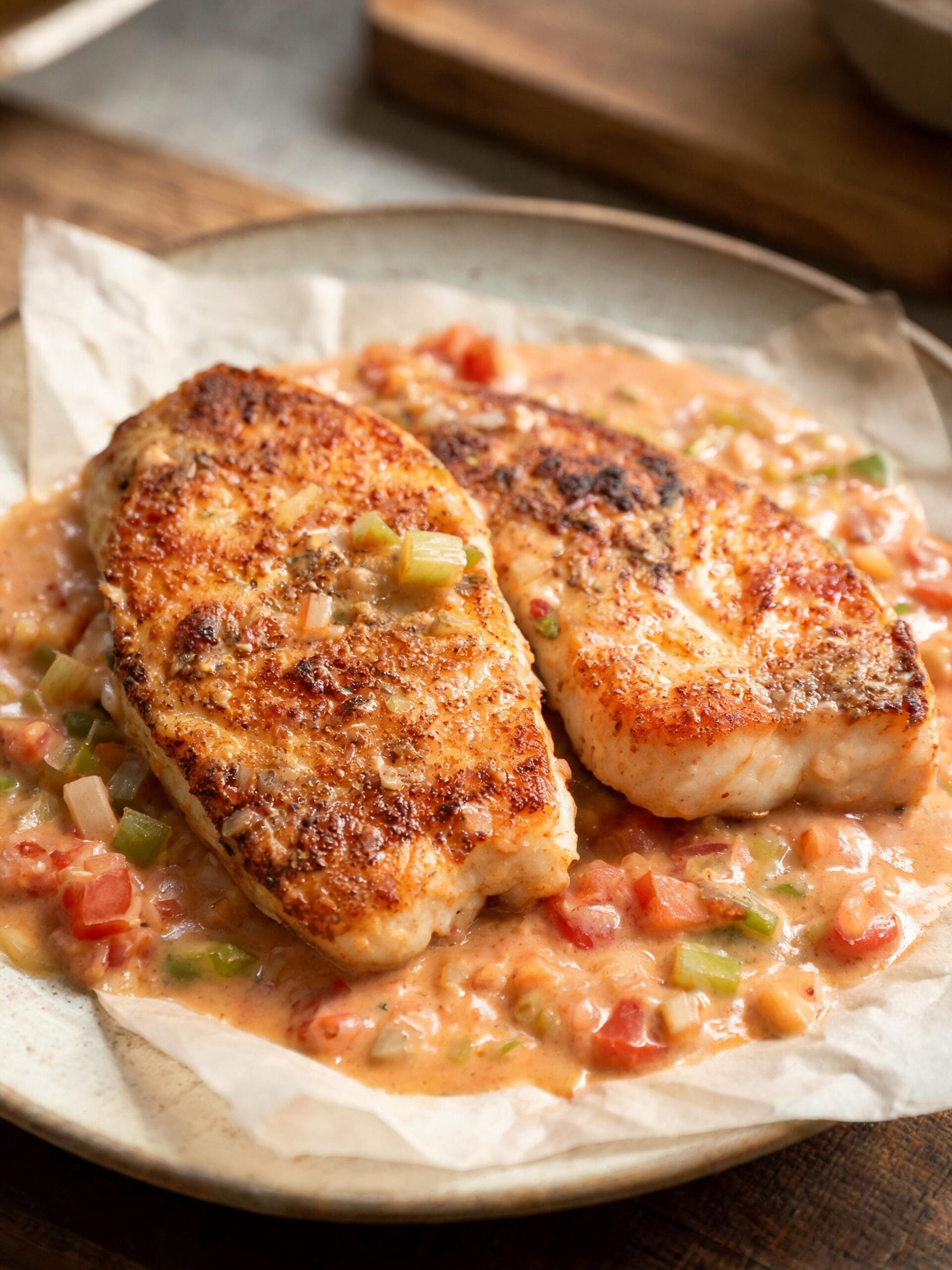
The first time I made Pan-Seared Red Snapper Creamy Creole Sauce at home, it was one of those late afternoons where the wind had picked up off the water and I’d come back from the dock with two beautiful fillets I didn’t want to waste. I wasn’t planning anything fancy. I just had a pan, some cream, and a handful of spices that had been sitting in my cabinet since the last time I cooked something worth remembering, like my Best Buttery Chilean Sea Bass.
That’s kind of how this dish started. Not with a plan. Just with a fish and a feeling.
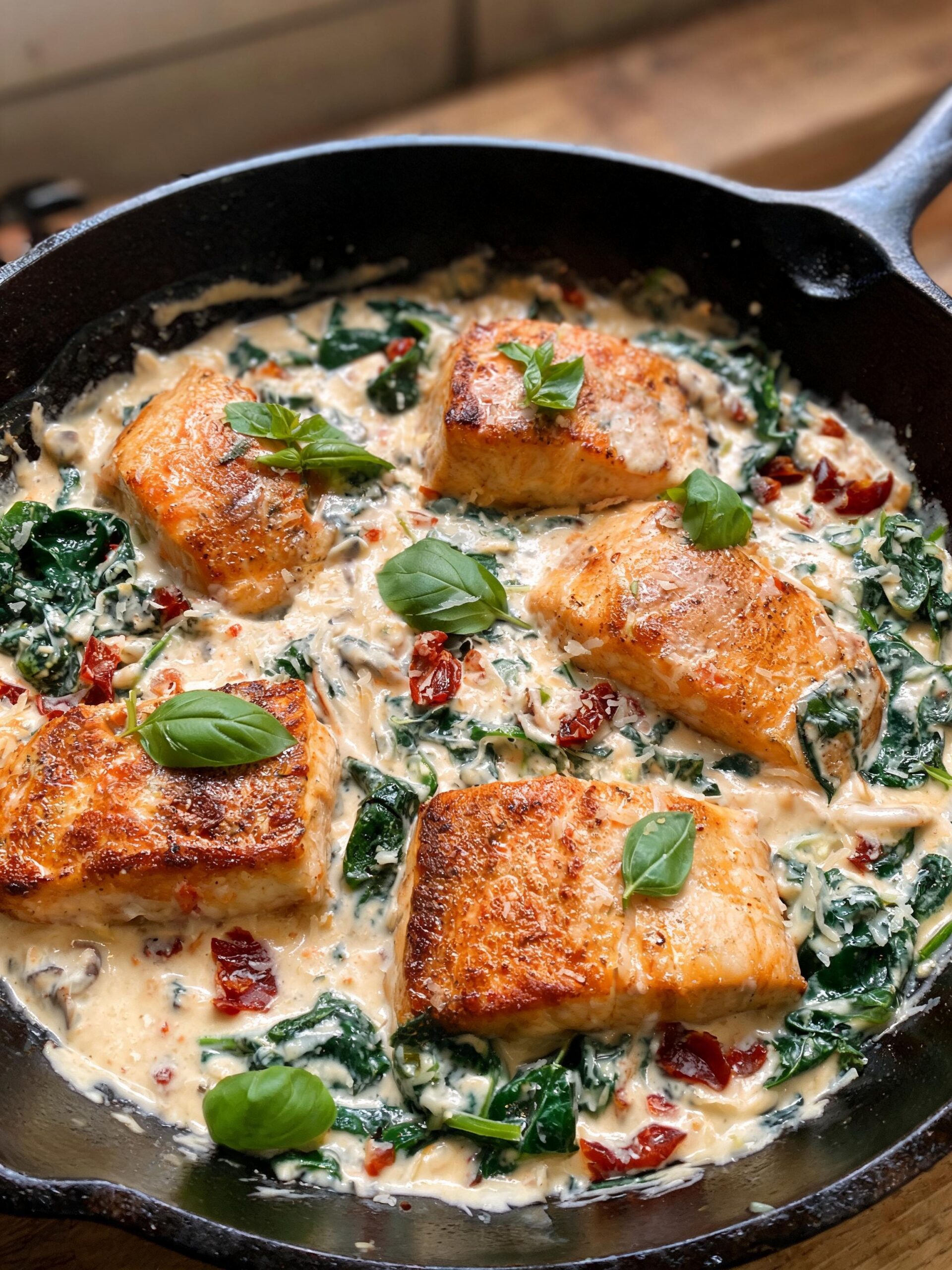
The thing about red snapper is that it holds up. It doesn’t fall apart on you the second heat touches it, not if you handle it right. And when you pair that firm, slightly sweet flesh with a rich, spiced Creole-style cream sauce, something really good happens in that pan. The kind of good that makes you stand over the stove eating bites before you even plate it.
This easy pan-seared red snapper with creamy Creole sauce has become one of those go-to meals I come back to whenever I want something that tastes like real effort but doesn’t take more than thirty minutes. It’s become a staple in my kitchen, and I think it might become one in yours too.
Why You’ll Love This Recipe
- It comes together in under 30 minutes, start to finish — real weeknight dinner territory without sacrificing anything on flavor.
- The Creole cream sauce is bold and warming but not overwhelming, and it clings to the fish in a way that makes every bite feel complete.
- You don’t need any special equipment or technique — just a good skillet, some patience with the sear, and a willingness to trust the process.
Quick Recipe Snapshot
Prep Time: 15 minutes
Cook Time: 20 minutes
Total Time: 35 minutes
Servings: 4
Difficulty: Easy
Best For: Weeknight dinner, coastal-style home cooking
Key Flavors: Smoky, creamy, slightly spicy, savory
Main Protein: Red snapper fillets
Ingredients List
For the Fish:
- 4 red snapper fillets (about 6 oz each) — fresh is best, but thawed frozen works fine
- 1 teaspoon smoked paprika — gives the crust that warm color and a little depth
- 1 teaspoon garlic powder
- ½ teaspoon onion powder
- ½ teaspoon dried thyme
- ½ teaspoon cayenne pepper — adjust to your heat comfort
- ½ teaspoon salt
- ¼ teaspoon black pepper
- 2 tablespoons olive oil — for searing
For the Creamy Creole Sauce:
- 2 tablespoons unsalted butter — this is what starts the whole sauce off right
- 3 cloves garlic, minced
- ½ cup yellow onion, finely diced
- ½ cup green bell pepper, finely diced — the classic Creole base starts here
- ½ cup celery, finely diced
- 1 can (14.5 oz) diced tomatoes, drained
- 1 cup heavy cream — this is what makes it lush and coating
- 1 teaspoon Creole seasoning (store-bought or homemade)
- ½ teaspoon hot sauce — just enough to feel it
- Salt and pepper to taste
- Fresh parsley for topping
Step-by-Step Instructions
- Pat the fillets dry. This is the step most people skip and then wonder why the fish steams instead of sears. Use paper towels and press gently. Dry fish = a real crust.
- Mix your spices — paprika, garlic powder, onion powder, thyme, cayenne, salt, and pepper — and rub them evenly over both sides of each fillet. Don’t be shy with it. The seasoning is what gives you that beautiful color in the pan.
- Heat your skillet over medium-high heat and add the olive oil. Let it get hot — you want to see it shimmer before the fish goes in. If it’s not hot enough, the fish will stick and tear, and that’s a frustrating way to start dinner.
- Place the fillets skin-side down (or presentation-side down if skinless) and don’t touch them. Let them cook for about 3 to 4 minutes. You’ll see the flesh turn opaque from the bottom up. That’s your cue.
- Flip carefully and cook another 2 to 3 minutes on the other side. The fish is done when it flakes easily with a fork and the center is no longer translucent. Set aside on a plate and tent loosely with foil.
- In the same pan, drop in the butter and let it melt over medium heat. Add the onion, bell pepper, and celery. Cook for about 5 minutes, stirring occasionally, until they soften and smell like something good is happening.
- Add the garlic and stir for about 30 seconds. Then add the drained tomatoes and Creole seasoning. Stir everything together and let it cook for 2 to 3 minutes. The tomatoes will start to break down a little and the whole pan smells incredible at this point — I always end up tasting it too early.
- Pour in the heavy cream and stir to combine. Add the hot sauce. Let the sauce simmer gently for about 4 to 5 minutes until it thickens slightly. Taste it. Adjust salt and pepper. It should be rich, a little spicy, and deeply savory.
- Nestle the fish fillets back into the sauce or spoon the sauce generously over them on the plate. Top with fresh parsley and serve immediately.
Small Tricks From Cooking Fish at Home
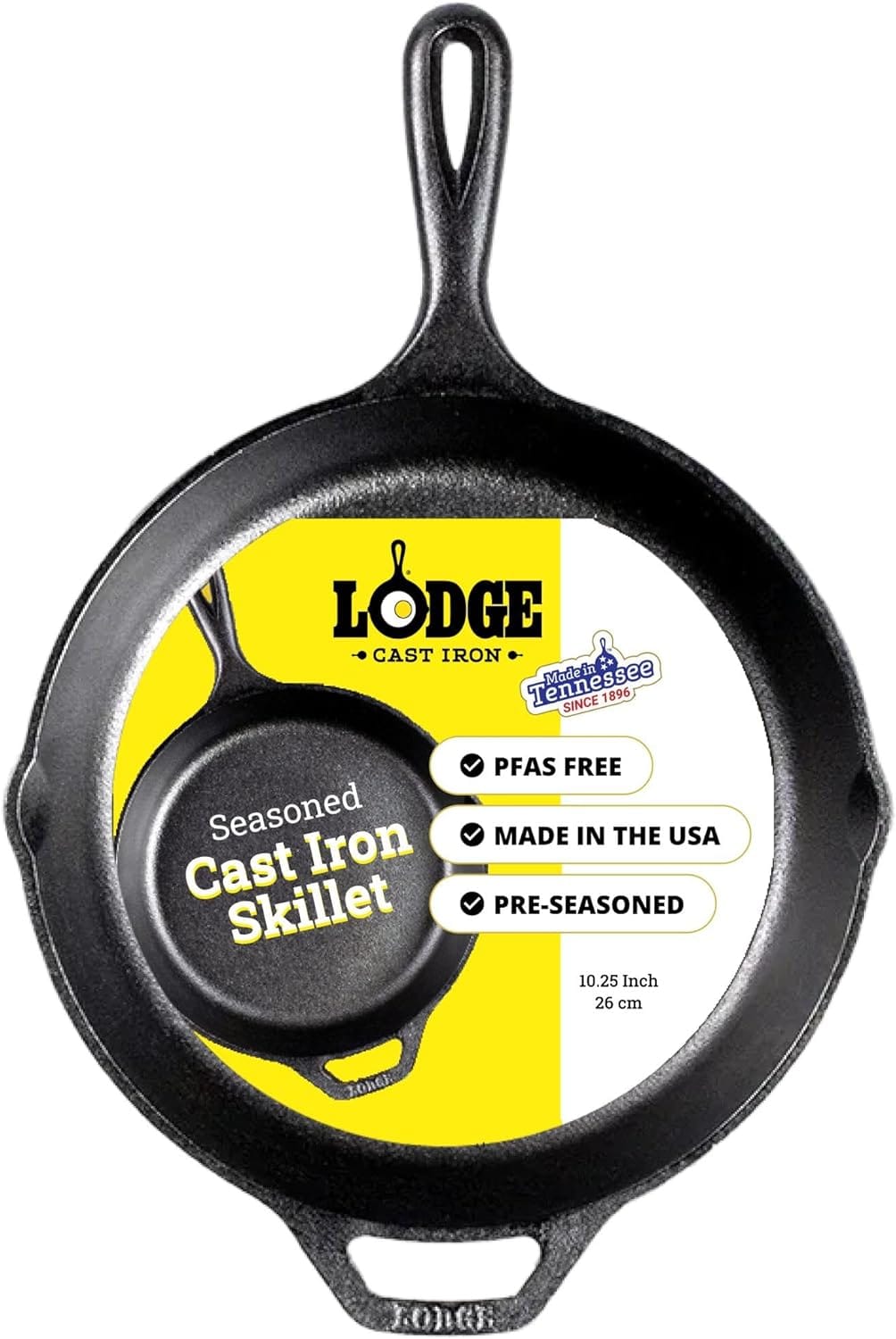
Speaking of the right pan, so much of this recipe’s success comes down to the sear. I can’t tell you how many pans I’ve used over the years, but I always come back to my trusty Lodge cast iron skillet. It holds heat like nothing else, which is the real secret to getting that crispy, golden-brown crust without overcooking the fish. That steady, even heat means no hot spots and no sticking, just a perfect sear that releases beautifully when it’s ready. It’s the difference between a good fish dinner and a great one.
If you want to take the guesswork out of searing, this is the one piece of equipment that will change your game.
Lodge 10.25 Inch Cast Iron Skillet with Assist Handle
✓ prime
We earn a commission if you make a purchase, at no additional cost to you.
The biggest thing I’ve learned over years of cooking fish straight off the water is that cold fish in a hot pan is a recipe for uneven cooking. Pull those fillets out of the fridge at least 10 to 15 minutes before you cook them. Room temperature fish sears more evenly and doesn’t seize up in the middle.
Don’t crowd the pan. I’ve made this mistake more times than I want to admit — trying to cook all four fillets at once in a pan that’s really only big enough for two. What happens is the temperature drops, the fish starts releasing moisture, and instead of a sear you get a sad, pale steam situation. Cook in batches if you need to.
When you’re making the cream sauce, keep the heat at medium. Heavy cream can break if you push it too hard. It’ll start to look grainy and separated, and there’s not much you can do to save it at that point. Low and slow keeps it silky.
A squeeze of fresh lemon right before serving cuts through all that richness beautifully. I don’t always include it in the recipe because some people don’t want the brightness, but personally I think it makes the whole dish come alive.
If your sauce feels too thick, a small splash of chicken broth or even just a little pasta water loosens it right up without thinning out the flavor. I’ve done this plenty of times and it works every single time.
Common Mistakes to Avoid
Moving the fish around in the pan while it’s searing. I know it’s tempting. You want to check it, peek at it, make sure it’s not burning. But every time you lift it before it’s ready, you’re pulling it away from the crust it’s trying to form. Leave it alone. It will release on its own when it’s ready.
Over-seasoning the sauce when you’re also using store-bought Creole seasoning. That stuff already has salt in it, sometimes a lot. Taste before you add more salt. I’ve over-salted this sauce before by not paying attention and there’s no fixing that once it’s done.
Using half-and-half instead of heavy cream. It sounds like a reasonable swap, but half-and-half doesn’t hold up the same way under heat. It can curdle when it meets the acidity of the tomatoes, and the sauce ends up thin and a little broken-looking. Heavy cream is worth it here.
Skipping the drying step on the fish. Wet fillets don’t sear — they steam. And steamed snapper in a pan is not the same thing as seared snapper. That golden crust is part of what makes this dish. Take the extra minute to dry the fish properly.
Variations and Serving Ideas
Spicy version: Double the cayenne in the spice rub and add a full teaspoon of hot sauce to the cream sauce. You can also stir in a pinch of crushed red pepper flakes when you add the garlic. It gets real warm real fast.
Mild version: Drop the cayenne entirely and use a mild Creole seasoning. The sauce still has great depth from the vegetables and cream without any real heat. Good for people who want the flavor without the fire.
Coastal twist: Add a handful of small shrimp to the sauce in the last few minutes of cooking. They cook fast and they soak up the Creole flavors beautifully. Suddenly you’ve got a surf-and-surf situation on the plate that feels very Gulf Coast.
What to Serve With
Steamed white rice is the classic move here and for good reason — it soaks up that cream sauce in the best way. Nothing fancy, just plain rice that gives the sauce somewhere to go.
If you want something with a little more texture contrast, crispy roasted potatoes on the side work really well. The crunch against the soft fish and rich sauce is satisfying in a way that feels balanced.
A simple green salad with a sharp vinaigrette cuts through the richness of the cream sauce and keeps the meal from feeling too heavy. Something with arugula or even just romaine with a lemon dressing does the job. For another great starter, our Easy Stuffed Mushrooms with Crab and Cheese are a fantastic pairing.
Crusty bread is never wrong when there’s a sauce this good in the pan. Something to drag through what’s left on the plate is almost mandatory.
Storage and Reheating
Store leftover fish and sauce separately if you can manage it. The fish will keep in the fridge for up to 2 days in an airtight container. The sauce, same deal — 2 days max.
To reheat the fish, use a skillet over low heat with a tiny bit of butter. DO NOT microwave the fish — it turns rubbery and smells up the whole kitchen in a way that nobody wants. Gentle heat in a pan keeps it from drying out completely.
The sauce reheats fine on the stovetop over low heat. Stir it as it warms and add a small splash of cream or broth if it’s gotten too thick in the fridge.
DO NOT freeze the cream sauce. It will separate when thawed and the texture becomes grainy and unpleasant. This is a make-and-eat dish, not a meal prep freezer situation.
FAQs (People Also Ask)
Can I use frozen red snapper for this recipe?
Yes, absolutely. Just make sure it’s fully thawed and dried really well before you season and sear it. Frozen fish tends to hold more moisture, so the drying step matters even more here.
How do I know when the snapper is fully cooked?
The flesh will flake easily when you press it gently with a fork, and it won’t look translucent in the center anymore. If you want to be precise, an internal temperature of 145°F is the target. But honestly, the flake test is what I use every time.
Can I substitute a different fish if I can’t find red snapper?
Grouper works great and has a similar texture. Mahi-mahi is another solid option. Tilapia will work in a pinch but it’s a thinner, more delicate fillet so watch the cook time — it goes fast.
How long does this take from start to finish?
About 35 minutes total, including prep. It’s genuinely a weeknight dinner. Nothing about this recipe requires you to plan ahead or spend your whole evening in the kitchen.
Is this recipe spicy?
It has a mild to medium heat level as written. The cayenne and hot sauce give it warmth but it’s not aggressive. You can pull back on both if you’re sensitive to heat, or push them up if you want more fire.
Can I make the sauce ahead of time?
The sauce can be made a day ahead and stored in the fridge. Reheat it gently on the stove before serving. Just cook the fish fresh — it doesn’t hold or reheat the same way the sauce does.
Nutrition Facts
(Per serving. Estimates only, varies by exact ingredients used)
Conclusion
Some meals just stick with you. Not because they were complicated or impressive, but because they were exactly right for the moment. That’s what this dish is for me — something that came out of a tired evening, a couple of fresh fillets, and whatever was already in the kitchen.
The cream sauce, the spice, the way the fish holds its texture even after sitting in all that richness — it still surprises me a little every time I make it. Like the pan remembers something I forgot.
If you’ve got a good piece of fish and thirty minutes, that’s really all you need here.
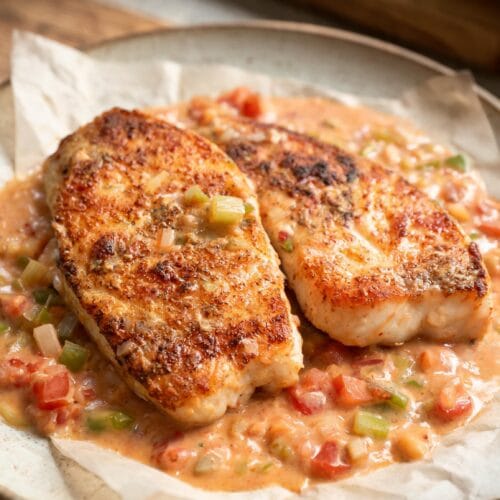
Pan-Seared Red Snapper Creamy Creole Sauce
Ingredients
- 4 red snapper fillets (about 6 oz each)
- 1 teaspoon smoked paprika
- 1 teaspoon garlic powder
- 1/2 teaspoon onion powder
- 1/2 teaspoon dried thyme
- 1/2 teaspoon cayenne pepper
- 1/2 teaspoon salt
- 1/4 teaspoon black pepper
- 2 tablespoons olive oil
- 2 tablespoons unsalted butter
- 3 cloves garlic, minced
- 1/2 cup yellow onion, finely diced
- 1/2 cup green bell pepper, finely diced
- 1/2 cup celery, finely diced
- 1 can (14.5 oz) diced tomatoes, drained
- 1 cup heavy cream
- 1 teaspoon Creole seasoning
- 1/2 teaspoon hot sauce
- Salt and pepper to taste
- Fresh parsley for topping
Instructions
- Pat the red snapper fillets completely dry with paper towels on both sides.
- Mix smoked paprika, garlic powder, onion powder, dried thyme, cayenne pepper, salt, and black pepper together and rub evenly over both sides of each fillet.
- Heat a large skillet over medium-high heat and add the olive oil. Let it heat until shimmering.
- Place the fillets skin-side down in the hot pan and cook undisturbed for 3 to 4 minutes until the flesh turns opaque from the bottom up.
- Flip the fillets carefully and cook for another 2 to 3 minutes until the fish flakes easily with a fork. Remove to a plate and tent loosely with foil.
- In the same skillet, melt the butter over medium heat. Add the diced onion, bell pepper, and celery and cook for about 5 minutes until softened.
- Add the minced garlic and stir for 30 seconds. Add the drained diced tomatoes and Creole seasoning and cook for 2 to 3 minutes, stirring occasionally.
- Pour in the heavy cream and add the hot sauce. Stir to combine and let the sauce simmer gently for 4 to 5 minutes until slightly thickened.
- Taste the sauce and adjust salt and pepper as needed.
- Return the fish fillets to the pan or spoon the sauce generously over them on the plate. Top with fresh parsley and serve immediately.