
Introduction
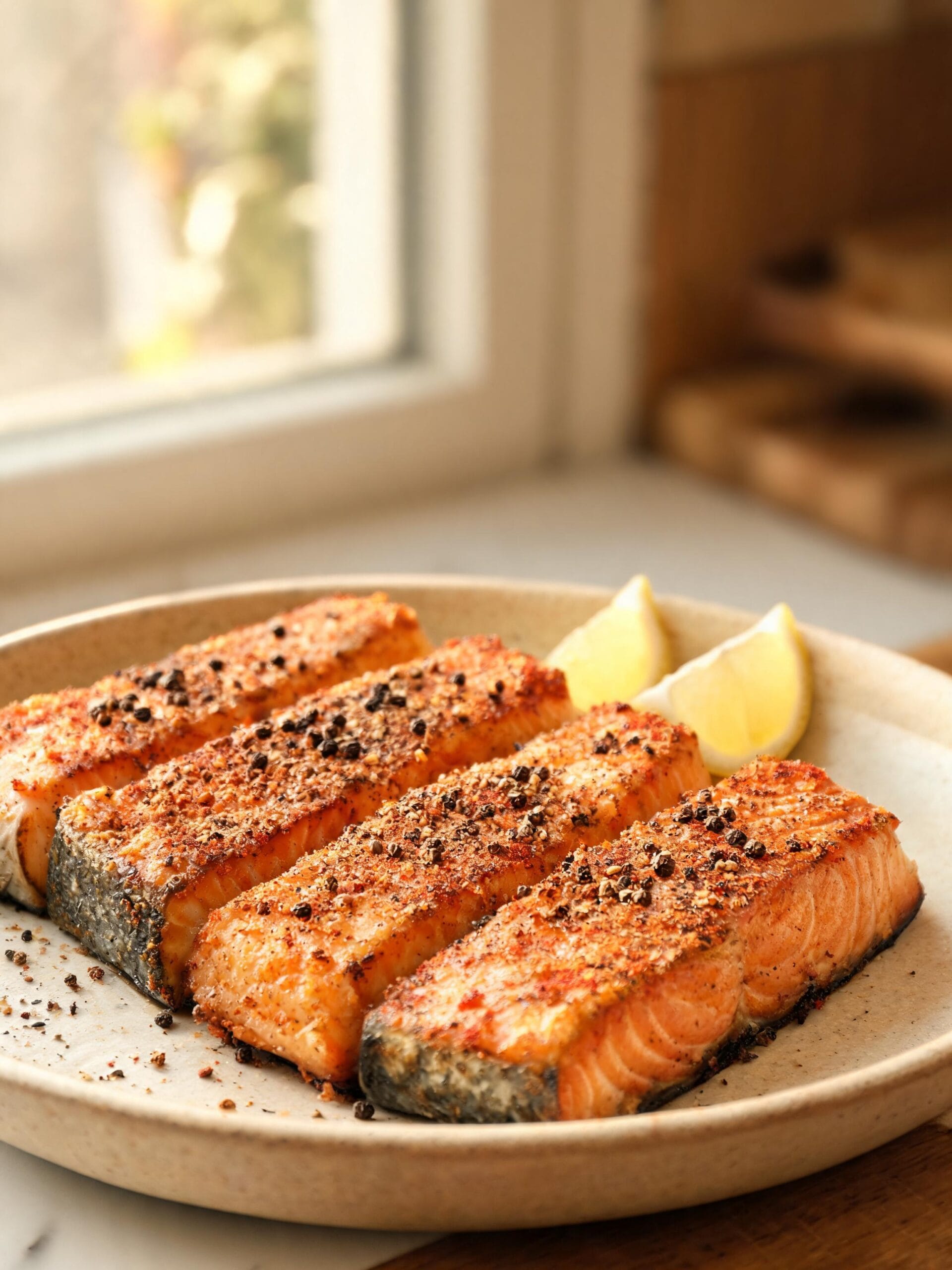
After two decades of working the line in busy seafood restaurants, I can tell you that the secret to incredible fish is precise temperature control and airflow. That’s why this air fryer salmon recipe isn’t just a trendy shortcut; it’s genuinely one of the best ways to cook salmon, period. The air fryer acts like a high-powered convection oven, circulating hot air that crisps the skin to absolute perfection while keeping the inside unbelievably moist and tender. It locks in the flavor and omega-3s without needing a ton of oil or a hot, smoky pan on the stovetop. Forget dry, overcooked fish. This method gives you restaurant-quality results with minimal effort and even less cleanup. It’s the weeknight dinner hero you’ve been looking for, and if you have leftovers, they’re perfect for making baked healthy salmon patties. Trust me, once you try it, you’ll never want to cook salmon any other way.
Why You’ll Love This Recipe
- Incredibly Fast and Efficient: From fridge to plate in about 20 minutes. The air fryer preheats in a fraction of the time an oven does, making it the perfect solution for busy weeknights when you want something healthy without the wait.
- Flawless Texture Every Time: The convection technology creates a beautiful contrast in textures. You get that sought-after crispy, crackly skin and succulent, flaky flesh that melts in your mouth. It’s a texture combination that’s difficult to achieve so consistently with other methods.
- Healthy and Flavorful: This recipe uses a minimal amount of oil, letting the natural flavor of the salmon shine. It’s a clean, simple preparation that’s packed with protein and healthy fats, fitting perfectly into a keto, low-carb, or Mediterranean diet.
Ingredients List
For this recipe, we’re focusing on quality ingredients that enhance the salmon, not mask it. Every component has a purpose. Serves 4.
- Salmon Fillets: 4 (6-ounce) center-cut, skin-on salmon fillets. Choosing center-cut pieces is crucial because they are thicker and more uniform in size than tail pieces. This ensures all four fillets cook evenly, preventing the thinner parts from drying out while the thicker parts finish cooking. The skin is non-negotiable for this recipe; it acts as a protective layer, shielding the delicate flesh from the direct heat and self-basting the fish as its fat renders. This process results in a juicier fillet and a crispy, chip-like skin that’s delicious to eat.
- Avocado Oil: 1 tablespoon. I specify avocado oil for its high smoke point (around 520°F). The air fryer environment is intense, and you need an oil that won’t burn and impart a bitter taste. Avocado oil remains stable, ensuring a clean flavor and helping the skin get extra crispy. Olive oil can work, but choose a refined one, not extra-virgin, which has a lower smoke point.
- Kosher Salt: 1 teaspoon. Kosher salt has larger, coarser grains than table salt. This makes it easier to distribute evenly and helps create a better crust. More importantly, it’s key for drawing initial moisture from the surface of the skin, which is the first step to achieving that perfect crispiness.
- Coarsely Ground Black Pepper: ½ teaspoon. Coarse ground pepper provides a better texture and a more pungent, spicy bite than fine powder. It stands up to the rich flavor of the salmon without getting lost.
- Smoked Paprika: 1 teaspoon. This is my secret weapon. Smoked paprika adds a subtle, smoky depth that complements the fish beautifully, giving it a just-off-the-grill flavor without any of the work. It also contributes to a gorgeous, deep reddish-brown color on the finished product.
- Garlic Powder: 1 teaspoon. Using garlic powder instead of fresh minced garlic is intentional. Fresh garlic can burn easily under the intense heat of the air fryer, becoming acrid and bitter. Garlic powder distributes evenly and toasts gently, infusing the fish with a savory, aromatic flavor.
- Onion Powder: ½ teaspoon. Onion powder provides a foundational savory note that rounds out the spice blend. It’s a background player that adds complexity and depth, making the overall seasoning taste more complete.
- Lemon Wedges: For serving. A fresh squeeze of lemon juice at the end is not just a garnish. The acidity cuts through the richness of the salmon, brightens all the flavors, and cleanses the palate, making each bite taste as good as the first.
Step-by-Step Instructions
- Prepare the Salmon: Remove the salmon fillets from the refrigerator about 15 minutes before cooking. This allows them to come closer to room temperature, which promotes even cooking. Pat the fillets completely dry with paper towels, especially the skin side. This is the most critical step for crispy skin; moisture is the enemy of crispiness.
- Make the Spice Rub: In a small bowl, combine the kosher salt, black pepper, smoked paprika, garlic powder, and onion powder. Mix until everything is evenly distributed. This ensures every bite of salmon is perfectly seasoned.
- Season the Fillets: Drizzle the avocado oil over the salmon fillets, using your hands to rub it evenly over the flesh and skin. This acts as a binder for the spices and helps with browning. Sprinkle the spice mixture generously over the flesh side of each fillet. Don’t be shy here; this is your flavor crust.
- Preheat the Air Fryer: Set your air fryer to 380°F (193°C) and let it preheat for 3-5 minutes. A hot start is essential for searing the skin quickly and preventing the salmon from sticking to the basket.
- Cook the Salmon: Place the salmon fillets in the preheated air fryer basket, skin-side up. Ensure they are in a single layer and not overlapping, which would cause them to steam instead of crisp. Air fry for 7-10 minutes. The exact time will depend on the thickness of your fillets and your specific air fryer model.
- Check for Doneness: The salmon is done when the internal temperature reaches 125-130°F (52-54°C) on an instant-read thermometer for medium. The flesh should be opaque and flake easily with a fork. The skin should be visibly browned and crispy. Be careful not to overcook it.
- Rest and Serve: Carefully remove the fillets from the air fryer. Let them rest for 2-3 minutes before serving. This allows the juices to redistribute throughout the fillet, ensuring a moist result. Serve immediately with fresh lemon wedges for squeezing over the top.
Chef’s Pro Tips for Success
If there’s one tool that separates the pros from the home cooks, it’s a precision thermometer. For a delicate fish like salmon, a few degrees is the difference between a succulent, buttery fillet and a dry, disappointing meal. This wireless meat thermometer is the one I rely on. It lets me track the internal temperature in real-time without opening the air fryer and losing heat, guaranteeing I can pull it at the exact moment of perfection.
Don’t leave your beautiful salmon to chance. Get the confidence of a professional chef with the tool I trust in my own kitchen.
ThermoMaven Smart Wireless Meat Thermometer
✓ prime
We earn a commission if you make a purchase, at no additional cost to you.
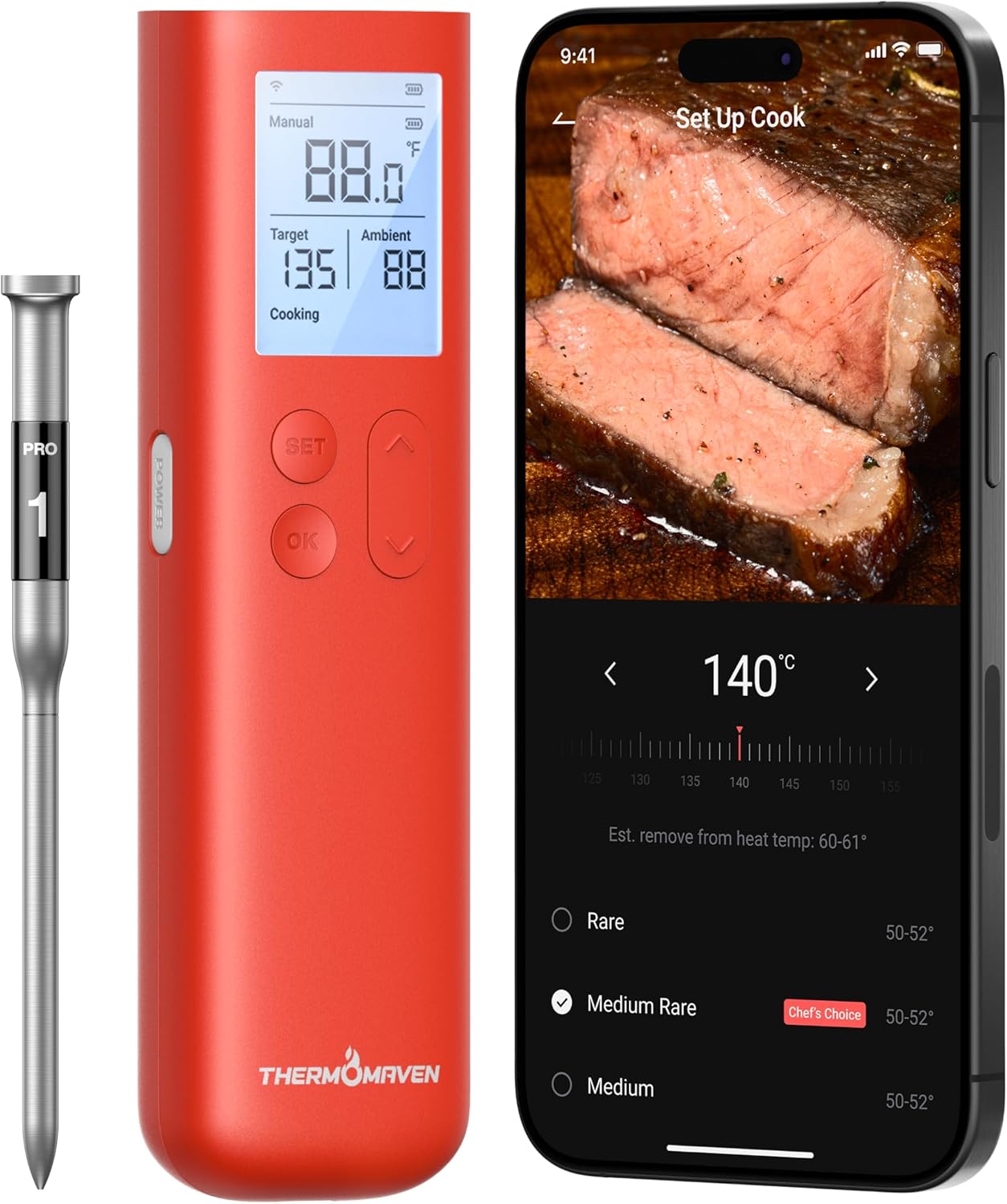
I’ve said it before and I’ll say it again: cooking by time alone is just guesswork. The difference between perfectly moist, flaky salmon and dry, chalky salmon is a matter of five degrees. That’s why I don’t go into service without a reliable digital thermometer. A tool like this wireless meat thermometer takes all the guesswork out of the equation. You can monitor the exact internal temperature without even opening the air fryer basket, ensuring you pull the fish at that perfect 125°F moment. It’s the single best tool for guaranteeing restaurant-quality results.
Stop guessing and start cooking salmon with total confidence. You can get the exact thermometer I trust on Amazon.
ThermoMaven Smart Wireless Meat Thermometer
✓ prime
We earn a commission if you make a purchase, at no additional cost to you.
Cooking great seafood is about technique, not just following steps. Here are the professional secrets to making a truly perfect air fryer salmon.
- The 15-Minute Dry Brine: After you pat the salmon dry, season it with just the kosher salt and let it sit at room temperature for 15 minutes. You’ll see moisture bead up on the surface. Pat it dry one more time before applying the oil and the rest of the spices. This simple step pulls out surface water, guaranteeing a much crispier skin and seasoning the fish more deeply than a surface-level sprinkle ever could.
- Skin-Side Up is the Only Way: Many recipes say to start skin-side down. I disagree, especially for the air fryer. By placing it skin-side up, the powerful top-down heat source directly hits the skin for the entire cook time. The fat from the skin renders and bastes the fish below it, keeping it moist, while the skin itself becomes incredibly crisp, like a potato chip. It also prevents the delicate flesh from overcooking on the hot metal basket.
- Respect the Airflow: The magic of an air fryer is convection. If you overcrowd the basket, you block the airflow. The hot air can’t circulate properly, and you end up steaming the salmon instead of ‘frying’ it. Always leave at least an inch of space between your fillets. If your air fryer is small, cook in two batches. It’s better to take an extra 10 minutes than to serve soggy fish.
- Calibrate Your Cook Time: No two salmon fillets are the same thickness, and no two air fryers run at the exact same temperature. The 7-10 minute window is a guide. A thin, wild-caught sockeye fillet might be done in 6 minutes. A thick, farm-raised Atlantic fillet might need 11. Start checking at the 6-minute mark. The best investment for any home cook is a $15 instant-read digital thermometer. Pull the salmon when it hits 125°F. It will rise to a perfect 130-135°F as it rests (carryover cooking).
- The Post-Cook Rest is Non-Negotiable: When you pull the salmon from the intense heat, the muscle fibers are tensed up and the juices are pushed toward the center. If you cut into it immediately, all that moisture will pour out onto your plate. Letting it rest for just 2-3 minutes allows the fibers to relax and reabsorb those flavorful juices, resulting in a much more succulent fillet.
Common Mistakes to Avoid
I’ve seen these simple mistakes ruin countless beautiful pieces of fish. Avoid them, and you’ll be ahead of 90% of home cooks.
- Cooking Ice-Cold Fish: Pulling salmon straight from the fridge and throwing it into a hot air fryer is a recipe for disaster. The outside will cook far too quickly while the inside remains raw and undercooked. This temperature shock causes the proteins to seize up, pushing out the white albumin and leaving you with a drier result. Letting it sit on the counter for 15-20 minutes makes a world of difference for even cooking.
- Not Drying the Fish Thoroughly: I can’t stress this enough. Any moisture left on the skin will turn to steam in the air fryer. Steam is the mortal enemy of a crispy sear. You must use paper towels and pat the entire surface of the fillet, especially the skin, until it feels tacky and dry to the touch. This single step is the difference between crispy, delicious skin and soggy, rubbery skin.
- Relying Only on Time: Cooking by time alone is just guesswork. Your ‘medium’ fillet might be my ‘large’ one. Your air fryer might run hotter than mine. The only way to guarantee perfectly cooked air fryer salmon is by checking the internal temperature. Overcooked salmon is dry, chalky, and a waste of a great ingredient. An instant-read thermometer takes all the guesswork out of the equation.
- Forgetting to Preheat: Placing salmon in a cold air fryer basket means the fish will slowly heat up with the appliance, steaming in its own juices rather than getting an immediate, crisping sear. Preheating ensures the cooking starts the moment the fish goes in, immediately beginning the process of crisping the skin and preventing it from sticking to the basket.
Variations and Serving Ideas
This classic recipe is a perfect canvas. Once you master the technique, you can easily adapt the flavors.
- Lemon Herb Salmon: Swap the paprika and onion powder for 1 teaspoon of dried dill and 1 teaspoon of dried parsley. After cooking, squeeze with lemon and top with fresh chopped chives. This gives it a bright, fresh, classic flavor profile.
- Spicy Cajun Salmon: Replace the spice blend with 2 teaspoons of your favorite store-bought or homemade Cajun seasoning. Be mindful of the salt content in the blend and adjust accordingly. Serve with a squeeze of lime to balance the heat.
- Honey Garlic Glaze: Create a glaze of 2 tablespoons honey, 1 tablespoon soy sauce, and 1 minced garlic clove. Cook the salmon for 5 minutes, then brush the glaze on top and cook for another 2-3 minutes until caramelized. The sugars can burn, so applying it late in the cooking process is key.
- Serve it in a Bowl: Flake the finished salmon and serve it over a bed of quinoa or rice. Add roasted broccoli, sliced avocado, and a drizzle of sriracha mayo for a complete, satisfying grain bowl.
What to Serve With
The beauty of salmon is its versatility. It pairs well with almost anything. For a balanced meal, I recommend:
- Roasted Vegetables: Asparagus, broccoli, or green beans are perfect. Toss them in a little oil and seasoning and you can often cook them right alongside the salmon in the air fryer for a true one-basket meal.
- A Crisp Salad: A simple arugula salad with a lemon vinaigrette, shaved Parmesan, and toasted pine nuts provides a fresh, peppery contrast to the rich salmon.
- Hearty Grains: Serve over a bed of fluffy quinoa or wild rice. For an Asian-inspired meal, it pairs wonderfully with the flavors in our Soy Ginger Baked Salmon recipe.
- Potatoes: Crispy roasted potatoes or a creamy potato gratin are classic pairings that never fail to satisfy.
Storage and Reheating
Leftover salmon can be fantastic, but only if you handle it correctly. Let the fillets cool completely to room temperature before storing. This prevents condensation from forming inside the container, which would make the skin soggy. Store in an airtight container in the refrigerator for up to 2 days.
To reheat, do not use the microwave. It will continue to cook the fish aggressively, making it rubbery and dry. The best method is to use the air fryer again. Preheat the air fryer to 350°F (175°C). Place the cold salmon fillet in the basket and heat for 3-4 minutes, just until warmed through. This will gently reheat the fish while re-crisping the skin, bringing it back to life.
FAQs (People Also Ask)
Can I cook frozen salmon in the air fryer?
Yes, you can, and it’s a great option for last-minute meals. Do not thaw it. Preheat your air fryer to 390°F. Place the frozen fillets in the basket and cook for 7 minutes. This initial high-heat blast thaws it. Then, pause the air fryer, brush the fillets with oil and your seasoning blend, and continue to cook for another 5-8 minutes, until the internal temperature reaches 125-130°F. The total time will be longer, but the result is surprisingly good.
Do I need to use parchment paper in the air fryer?
You can, but I don’t recommend it for this recipe if you want truly crispy skin. Parchment paper liners make cleanup easier, but they block airflow to the bottom of the fish. This means the skin won’t get as direct heat and will be less crispy. If you preheat the basket and use a light coating of oil, the salmon skin should not stick.
How do I know when my air fryer salmon is done without a thermometer?
While a thermometer is best, you can use visual cues. Look at the side of the fillet. You’ll see the color change from translucent pink/orange to opaque as it cooks. When the opaque color has moved more than halfway up the fillet, it’s close. The most reliable visual test is to gently press on the top of the fillet with a fork. If the flesh easily separates into large flakes, it’s done. If it’s resistant or looks very wet, it needs more time.
Can I make this recipe with skinless salmon?
Absolutely. The technique is largely the same. Since you don’t have the skin to protect the flesh, you might want to cook it at a slightly lower temperature, say 370°F, to be safe. It may also cook a minute or two faster. Make sure to oil the basket or use a parchment liner to prevent the delicate flesh from sticking. The flavor will be great, but you will miss out on that amazing crispy skin texture.
What’s the best type of salmon to use?
This comes down to personal preference and budget. King (Chinook) salmon has the highest fat content, making it rich, buttery, and very forgiving to cook. Sockeye salmon is leaner, with a firmer texture and a deeper, more pronounced flavor. Atlantic salmon, which is typically farmed, is a great all-purpose choice with a mild flavor and balanced fat content. For this air fryer salmon recipe, any of them will work beautifully, but a thicker, center-cut fillet will always yield the best results.
Nutrition Facts
(Per serving. Estimates only, varies by exact ingredients used)
Conclusion
This simple, reliable recipe proves that you don’t need complicated tools or techniques to produce phenomenal seafood at home. The air fryer does the heavy lifting, giving you a healthy and delicious meal that’s impressive enough for guests but fast enough for a Tuesday night. Give this method a try, and enjoy the confidence of knowing you can nail perfect salmon every single time.
Classic Air Fryer Salmon
Ingredients
- 4 (6-ounce) center-cut, skin-on salmon fillets
- 1 tbsp avocado oil
- 1 tsp kosher salt
- ½ tsp coarsely ground black pepper
- 1 tsp smoked paprika
- 1 tsp garlic powder
- ½ tsp onion powder
- Lemon wedges, for serving
Instructions
- Pat salmon fillets completely dry with paper towels. Let them sit at room temperature for about 15 minutes.
- In a small bowl, mix together the kosher salt, black pepper, smoked paprika, garlic powder, and onion powder.
- Rub the salmon fillets all over with avocado oil. Sprinkle the spice mixture evenly over the flesh side of the fillets.
- Preheat your air fryer to 380°F (193°C) for 3-5 minutes.
- Place the salmon fillets in the air fryer basket, skin-side up, in a single layer. Do not overcrowd.
- Air fry for 7-10 minutes, depending on fillet thickness, until the internal temperature reaches 125-130°F (52-54°C).
- Remove the salmon from the air fryer and let it rest for 2-3 minutes before serving with fresh lemon wedges.