Introduction
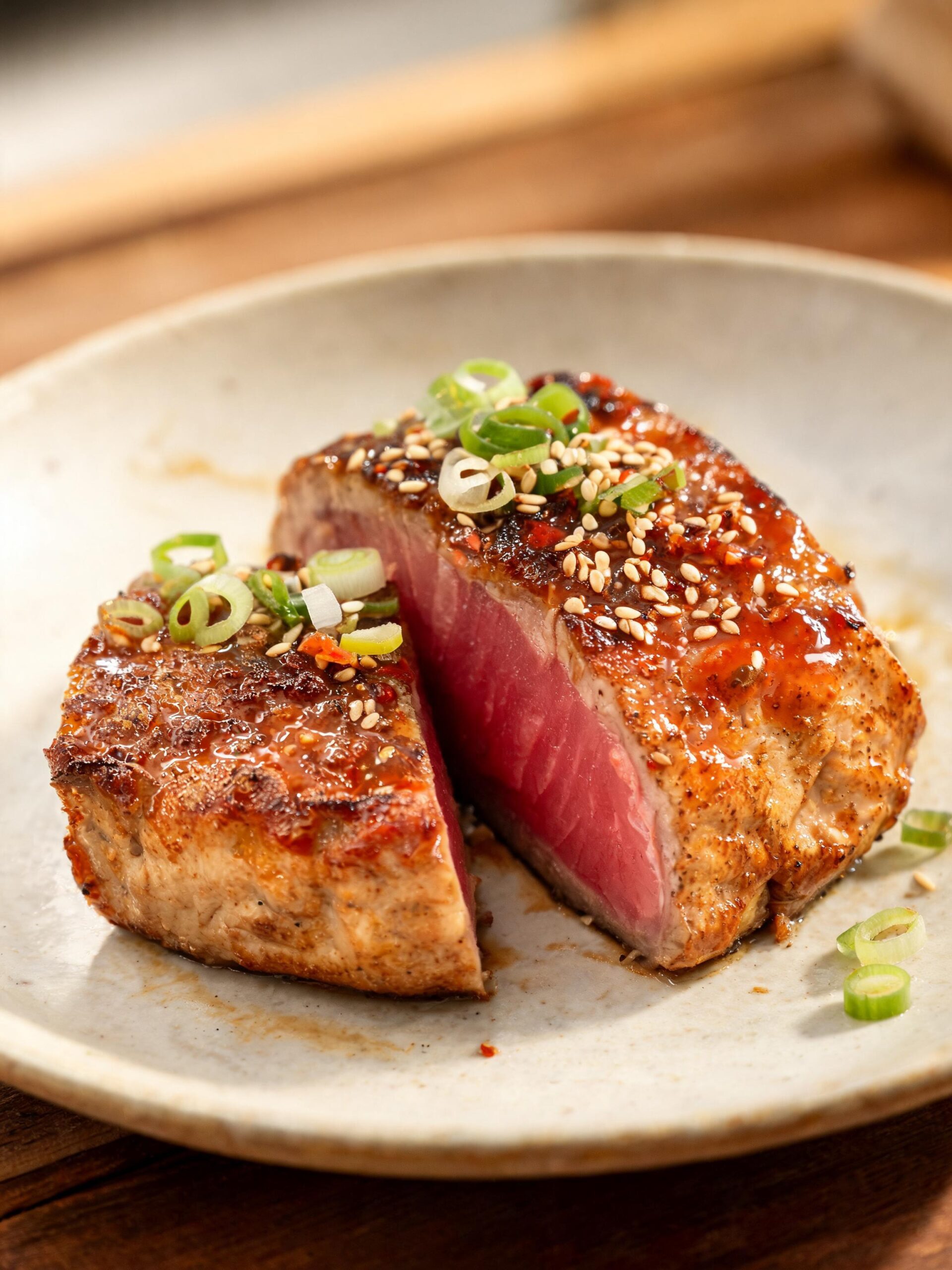
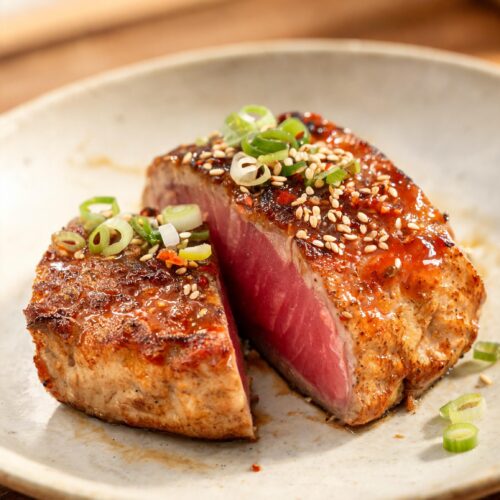
Making perfect, restaurant-quality Seared Ahi Tuna at home is not just possible—it’s surprisingly fast and straightforward. Forget paying top dollar at a steakhouse. This recipe for Spicy Pan-Seared Ahi Tuna Steaks with a homemade Ginger Chili Glaze gives you that incredible contrast of a warm, savory crust and a cool, ruby-red center that makes this dish so special. For years in my kitchens, we’ve relied on a few key principles to get this right every single time: high-quality fish, a screaming hot pan, and a very, very short cook time. This isn’t a dish you can walk away from. It demands your full attention for about four minutes, and the reward is a spectacular meal that feels luxurious and complex, but is actually one of the quickest seafood preparations you can master, much like our Crispy Salt and Pepper Fried Calamari. This guide will walk you through every detail, from picking the right tuna steak to slicing it like a pro. Get ready to impress yourself and anyone you’re cooking for.
Why You’ll Love This Recipe
- Incredibly Fast: From prep to plate, this entire meal comes together in under 30 minutes, making it a perfect option for a busy weeknight when you want something special without the time commitment.
- Bold, Dynamic Flavors: The spicy, sweet, and savory ginger chili glaze cuts through the rich flavor of the tuna perfectly. It’s a powerful combination that hits all the right notes without overwhelming the delicate fish.
- Healthy and Impressive: Ahi tuna is packed with lean protein and omega-3s. This is a light but satisfying dish that looks like it came from a high-end restaurant, making it ideal for a date night or dinner party.
Ingredients List
Precision is key in a recipe this simple. Use fresh ingredients wherever possible, especially for the aromatics in the glaze. This recipe serves four.
For the Ginger Chili Glaze:
- 1/2 cup Low-Sodium Soy Sauce: Provides the salty, umami backbone. Low-sodium is crucial to control the salt level as the sauce reduces.
- 1/4 cup Mirin: A sweet Japanese rice wine that adds a subtle sweetness and glossy finish.
- 2 tablespoons Rice Vinegar: Adds a sharp, acidic brightness to balance the sweetness of the mirin and honey.
- 1 tablespoon Honey: For a touch more sweetness and to help the glaze thicken. You can substitute with maple syrup.
- 1 tablespoon Sesame Oil: Toasted sesame oil adds a nutty, aromatic depth. A little goes a long way.
- 2 cloves Garlic, finely minced: Use a microplane or a sharp knife to get the pieces very small so they infuse the sauce without being chunky.
- 1 tablespoon Fresh Ginger, grated: Fresh ginger is non-negotiable here. It provides a warm, zesty spice that you can’t get from powder.
- 1 teaspoon Sriracha or Chili Garlic Sauce: This is for heat. Adjust the amount based on your preference for spice.
- 1 teaspoon Cornstarch mixed with 1 tablespoon cold water (slurry): This is your insurance policy to thicken the glaze to the perfect consistency.
For the Seared Ahi Tuna:
- 4 (6-ounce) Ahi Tuna Steaks: Look for sushi-grade or sashimi-grade steaks, about 1.5 inches thick. This thickness is vital for achieving a rare center with a seared exterior.
- 2 tablespoons Avocado Oil: Or another high-smoke-point oil like grapeseed or canola oil. Do not use olive oil.
- 1 teaspoon Kosher Salt: For seasoning the exterior.
- 1 teaspoon Coarsely Ground Black Pepper: Freshly cracked pepper provides the best flavor and texture.
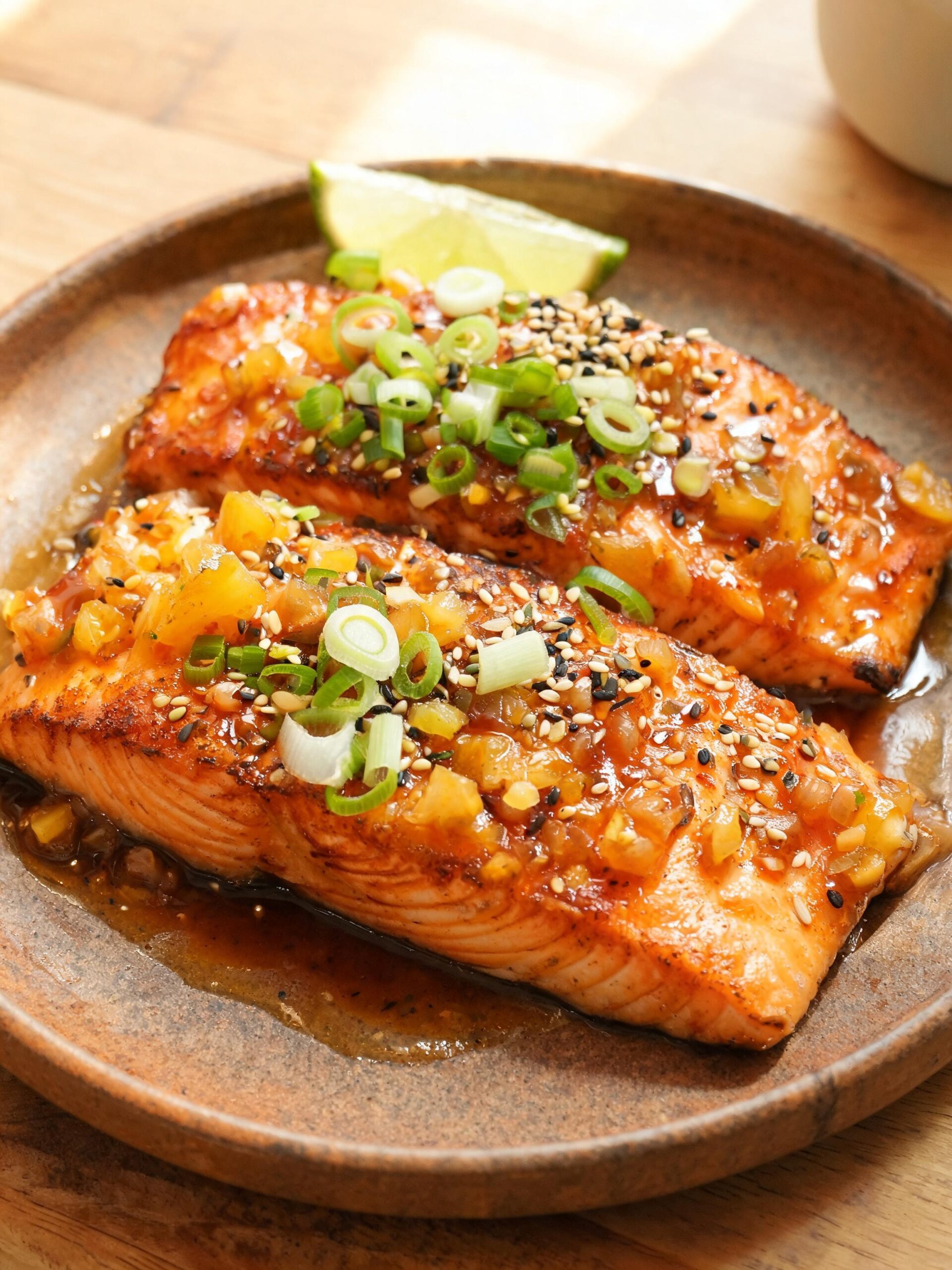
- Optional for Garnish: Toasted sesame seeds (black and white), thinly sliced scallions (green parts only).
Step-by-Step Instructions
Follow these steps closely. The cooking process for the tuna is very fast, so have everything ready to go before you turn on the stove.
- Prepare the Tuna: Remove the ahi tuna steaks from the refrigerator about 15 minutes before cooking. Use paper towels to pat them completely dry on all sides. This is the most critical step for getting a good sear. Moisture will steam the fish instead of searing it. Season generously on all sides with kosher salt and black pepper.
- Make the Ginger Chili Glaze: In a small saucepan, combine the soy sauce, mirin, rice vinegar, honey, sesame oil, minced garlic, grated ginger, and sriracha. Bring the mixture to a simmer over medium heat, whisking occasionally. Let it simmer for 3-4 minutes to allow the flavors to meld.
- Thicken the Glaze: While whisking, slowly pour in the cornstarch slurry. Continue to simmer for another 1-2 minutes, whisking constantly, until the glaze has thickened enough to coat the back of a spoon. Remove from the heat and set aside.
- Heat the Pan: Place a heavy-bottomed skillet (cast iron is ideal) over high heat. Add the avocado oil. Heat the pan until the oil is shimmering and you see the faintest wisp of smoke. The pan must be extremely hot.
- Sear the Tuna: Carefully place the seasoned tuna steaks in the hot pan. You should hear a loud, aggressive sizzle. Do not overcrowd the pan; cook in two batches if necessary. Sear for 60 to 90 seconds on the first side. The bottom edge should look opaque and cooked, about 1/4 inch up the side.
- Flip and Finish: Using tongs, flip the steaks and sear for another 60 to 90 seconds on the other side. For a perfect rare result, the center should still feel soft and look deep red. If you like it medium-rare, you can sear the thin edges for about 15-20 seconds each. Immediately remove the tuna from the pan and place it on a cutting board.
- Rest, Slice, and Serve: Let the Seared Ahi Tuna rest for at least 5 minutes. This allows the juices to redistribute. Using a very sharp knife, slice the tuna against the grain into 1/4-inch thick pieces. Arrange the slices on a plate, drizzle generously with the warm ginger chili glaze, and garnish with toasted sesame seeds and sliced scallions. Serve immediately.
Chef’s Pro Tips for Success
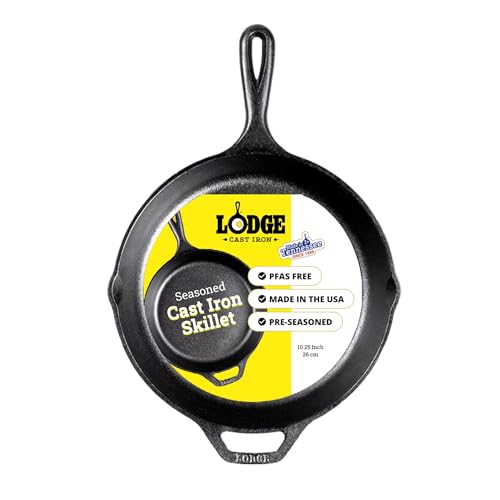
Speaking of a ‘violently hot pan,’ my absolute go-to for this recipe is the classic Lodge Cast Iron Skillet. I’ve used countless pans over the years, but nothing holds and distributes that scorching-hot temperature as effectively as seasoned cast iron. It’s the key to getting that instantaneous, deep-brown crust in 60 seconds flat, ensuring the center stays cool and rare. This is the workhorse that delivers a perfect, steakhouse-quality sear every time.
Get the skillet that professionals trust for that perfect sear.
Lodge 10.25 Inch Cast Iron Skillet with Assist Handle
✓ prime
We earn a commission if you make a purchase, at no additional cost to you.
After cooking thousands of pounds of tuna, I’ve learned that success comes down to a few non-negotiable details. Pay attention to these, and you’ll nail it.
- Source the Best Possible Tuna: The term “sushi-grade” isn’t regulated by the FDA, but it’s the standard term fishmongers use for their highest quality fish intended for raw consumption. Look for tuna that is a vibrant, deep ruby red or purplish color. Avoid any steaks that look dull, brownish, or have a rainbow-like sheen. It should smell clean like the ocean, not overtly “fishy.” If you’re buying frozen, look for vacuum-sealed portions that were flash-frozen at sea. The quality will be far superior.
- The Pan Must Be Violently Hot: I can’t stress this enough. A moderately hot pan will not work. It will slowly cook the tuna, resulting in a thick, unappetizing gray band of overcooked fish. You need the pan to be ripping hot, just at the point where the oil starts to smoke. This extreme heat creates an instant crust via the Maillard reaction, sealing the exterior while leaving the inside cool and rare. A cast-iron skillet is your best friend here because it holds heat incredibly well.
- The Dry Surface is Non-Negotiable: Any moisture on the surface of the tuna will turn to steam the second it hits the hot pan. Steam is the enemy of a good sear. It prevents a crust from forming and essentially poaches the fish. Before seasoning, take multiple paper towels and press firmly on all sides of the tuna steaks until they feel tacky and dry to the touch. This single step makes a world of difference.
- Understand Your Oil’s Smoke Point: Using an oil with a low smoke point, like extra virgin olive oil, is a common mistake. It will burn and break down at the high temperatures required for searing, creating a bitter, acrid taste that will ruin your expensive fish. You need a neutral oil with a high smoke point (above 400°F). Avocado oil, grapeseed oil, canola oil, or clarified butter are all excellent choices.
- Slice Against the Grain with a Sharp Knife: Just like a good steak, ahi tuna has a grain (lines of muscle fibers running in one direction). For the most tender bite, you must slice against, or perpendicular to, these lines. Look closely at the steak to identify the direction of the fibers. Use your sharpest, longest knife (a slicing or carving knife is ideal) and make long, confident, single strokes. Don’t saw back and forth, as this will tear the delicate flesh. A clean slice preserves the beautiful texture of the Seared Ahi Tuna.
Common Mistakes to Avoid
This dish is simple, but a few small errors can lead to disappointing results. Here’s what to watch out for.
- The Overcooked Center: This is the cardinal sin of cooking ahi tuna. It happens when the heat is too low, the steak is too thin, or you leave it in the pan for even 30 seconds too long. A 1.5-inch thick steak needs only 60-90 seconds per side on a scorching hot pan. The goal is a very thin, cooked outer layer and a raw, sashimi-like interior. If you’re nervous, err on the side of undercooking it. You can’t undo an overcooked piece of tuna.
- A Weak, Pasty Sear: This is almost always caused by two things: a pan that isn’t hot enough or a wet tuna steak. If you place the tuna in the pan and hear a gentle sizzle instead of a loud, aggressive one, your pan is too cold. The result will be a pale, gray exterior with no crust. Similarly, if you don’t pat the tuna completely dry, the moisture will prevent that beautiful brown crust from forming.
- Adding the Glaze to the Searing Pan: It might seem tempting to pour the glaze into the hot pan with the tuna to coat it. Do not do this. The sugars in the honey and mirin will burn instantly in the high heat, creating a sticky, bitter mess and filling your kitchen with smoke. The glaze is a finishing sauce, meant to be drizzled over the rested and sliced tuna just before serving.
- Skipping the Rest: When you sear meat or fish at high temperatures, the muscle fibers tense up and push the juices toward the cooler center. If you slice it immediately after taking it out of the pan, all those delicious juices will pour out onto your cutting board, leaving you with dry fish. Resting the Seared Ahi Tuna for 5 minutes allows the fibers to relax and reabsorb those juices, ensuring every slice is moist and flavorful.
Variations and Serving Ideas
Once you’ve mastered the basic technique, you can easily adapt this recipe.
- Sesame Crusted Ahi Tuna: After seasoning with salt and pepper, press the tuna steaks into a plate of black and white sesame seeds to create a full crust on the top and bottom. Sear as directed. The seeds add a fantastic nutty flavor and crunchy texture.
- Spicy Togarashi Rub: Instead of just salt and pepper, season the tuna with Shichimi Togarashi, a Japanese seven-spice blend containing chili pepper, orange peel, sesame seeds, and nori. It adds a complex layer of heat and umami.
- Ahi Tuna Poke Bowls: Instead of serving as steaks, dice the seared and cooled tuna into cubes. Serve it over a bowl of sushi rice with edamame, avocado, pickled ginger, and a drizzle of the glaze and some spicy mayo.
- Tuna Appetizer Crisps: Slice the Seared Ahi Tuna and serve each slice on a crispy fried wonton chip with a dollop of wasabi aioli and a sliver of jalapeño. It’s an elegant and easy appetizer for parties.
What to Serve With
To make this a complete meal, pair the tuna with sides that complement its rich flavor and the zesty glaze. For a more elaborate seafood feast, you could even serve smaller portions alongside another showstopper like our Easy Authentic Spanish Seafood Paella.
- Rice and Noodles: Simple steamed jasmine or sushi rice is perfect for soaking up the extra glaze. For a more flavorful option, try coconut-infused rice. Cold soba noodles tossed in a light sesame dressing also work beautifully.
- Vegetables: Lightly steamed or sautéed greens are an excellent choice. Try bok choy with a bit of garlic, sesame-ginger green beans, or sautéed spinach. A crisp, refreshing cucumber salad also provides a great textural contrast.
- Potatoes: For a unique fusion side, serve the tuna with a scoop of wasabi mashed potatoes. The creamy texture and pungent heat of the wasabi are a fantastic counterpoint to the rich tuna.
Storage and Reheating
Leftover seared tuna requires careful handling to preserve its quality.
- Storage: Store any leftover sliced tuna in an airtight container in the refrigerator for up to 2 days. Be aware that the texture will change; the rare center will firm up and become more opaque as it sits.
- Reheating: I strongly advise against reheating Seared Ahi Tuna. Microwaving or pan-searing it again will cook it through, ruining the rare center and making it tough and dry.
- Serving Leftovers: The best way to enjoy leftovers is cold or at room temperature. Flake the tuna and toss it into a salad with a citrus vinaigrette, or mix it with mayonnaise, sriracha, and scallions to create a delicious spicy tuna salad for sandwiches or lettuce wraps.
FAQs (People Also Ask)
1. Can I use frozen ahi tuna for this recipe?
Absolutely. In many places, especially those far from the coast, high-quality frozen ahi tuna is a better choice than the “fresh” fish that has been sitting in a display case for days. Look for vacuum-sealed, deep-red steaks. Thaw them overnight in the refrigerator, never at room temperature or in the microwave. Before cooking, ensure you pat them exceptionally dry, as thawed fish releases more moisture.
2. What does “sushi-grade” or “sashimi-grade” really mean?
These are marketing terms, not official FDA grades. They imply that the fish is of the highest quality and that the seller deems it safe for raw consumption. This usually means it was handled with extreme care and flash-frozen to sub-zero temperatures to kill any potential parasites, a critical safety step.
3. My glaze is too thin or too thick. How can I fix it?
This is an easy fix. If your glaze is too thin after simmering, it likely just needs to be reduced more or needs a bit more thickener. You can add another half-teaspoon of cornstarch mixed with cold water and simmer until it thickens. If it’s too thick (it will thicken more as it cools), simply whisk in a tablespoon of warm water or low-sodium chicken broth until it reaches your desired consistency.
4. Can I make the ginger chili glaze ahead of time?
Yes, the glaze is perfect for making ahead. You can prepare it up to 3 days in advance and store it in an airtight container in the refrigerator. When you’re ready to use it, gently warm it in a small saucepan over low heat before drizzling it over the cooked tuna.
5. What is the best type of pan for searing tuna?
A well-seasoned cast-iron skillet is the number one choice because of its superior heat retention and even heat distribution. A heavy-bottomed carbon steel or stainless steel skillet is also an excellent option. While you can use a non-stick pan, they often don’t get as screaming hot as cast iron, which can compromise the quality of the sear.
Nutrition Facts
(Per serving. Estimates only, varies by exact ingredients used)
Conclusion
You now have all the tools and techniques to create a truly spectacular Spicy Pan-Seared Ahi Tuna dish right in your own kitchen. It’s a recipe that proves a memorable meal doesn’t need to be complicated or time-consuming. Trust the process, get that pan hot, and don’t be afraid of a beautifully rare center. I hope you enjoy making—and eating—this as much as I do. Give it a try, and let me know how it turns out.
Spicy Pan-Seared Ahi Tuna Steaks with Ginger Chili Glaze
Ingredients
- 1/2 cup Low-Sodium Soy Sauce
- 1/4 cup Mirin
- 2 tablespoons Rice Vinegar
- 1 tablespoon Honey
- 1 tablespoon Sesame Oil
- 2 cloves Garlic, finely minced
- 1 tablespoon Fresh Ginger, grated
- 1 teaspoon Sriracha or Chili Garlic Sauce
- 1 teaspoon Cornstarch mixed with 1 tablespoon cold water
- 4 (6-ounce) Ahi Tuna Steaks, 1.5 inches thick
- 2 tablespoons Avocado Oil
- 1 teaspoon Kosher Salt
- 1 teaspoon Coarsely Ground Black Pepper
- Toasted sesame seeds for garnish
- Thinly sliced scallions for garnish
Instructions
- Remove ahi tuna steaks from the fridge 15 minutes before cooking. Pat them completely dry with paper towels and season all sides with kosher salt and black pepper.
- In a small saucepan, combine soy sauce, mirin, rice vinegar, honey, sesame oil, garlic, ginger, and sriracha. Bring to a simmer over medium heat for 3-4 minutes.
- Whisk in the cornstarch slurry and continue to simmer for 1-2 minutes until the glaze thickens enough to coat a spoon. Remove from heat.
- Heat a cast-iron skillet over high heat. Add avocado oil and heat until shimmering and almost smoking.
- Carefully place the tuna steaks in the hot pan. Sear for 60-90 seconds per side for a rare center. The seared edge should be about 1/4 inch thick.
- Immediately remove the tuna from the pan and place it on a cutting board to rest for at least 5 minutes.
- Using a very sharp knife, slice the tuna against the grain into 1/4-inch thick pieces.
- Arrange the slices on a plate, drizzle with the warm ginger chili glaze, and garnish with toasted sesame seeds and scallions. Serve immediately.