Introduction
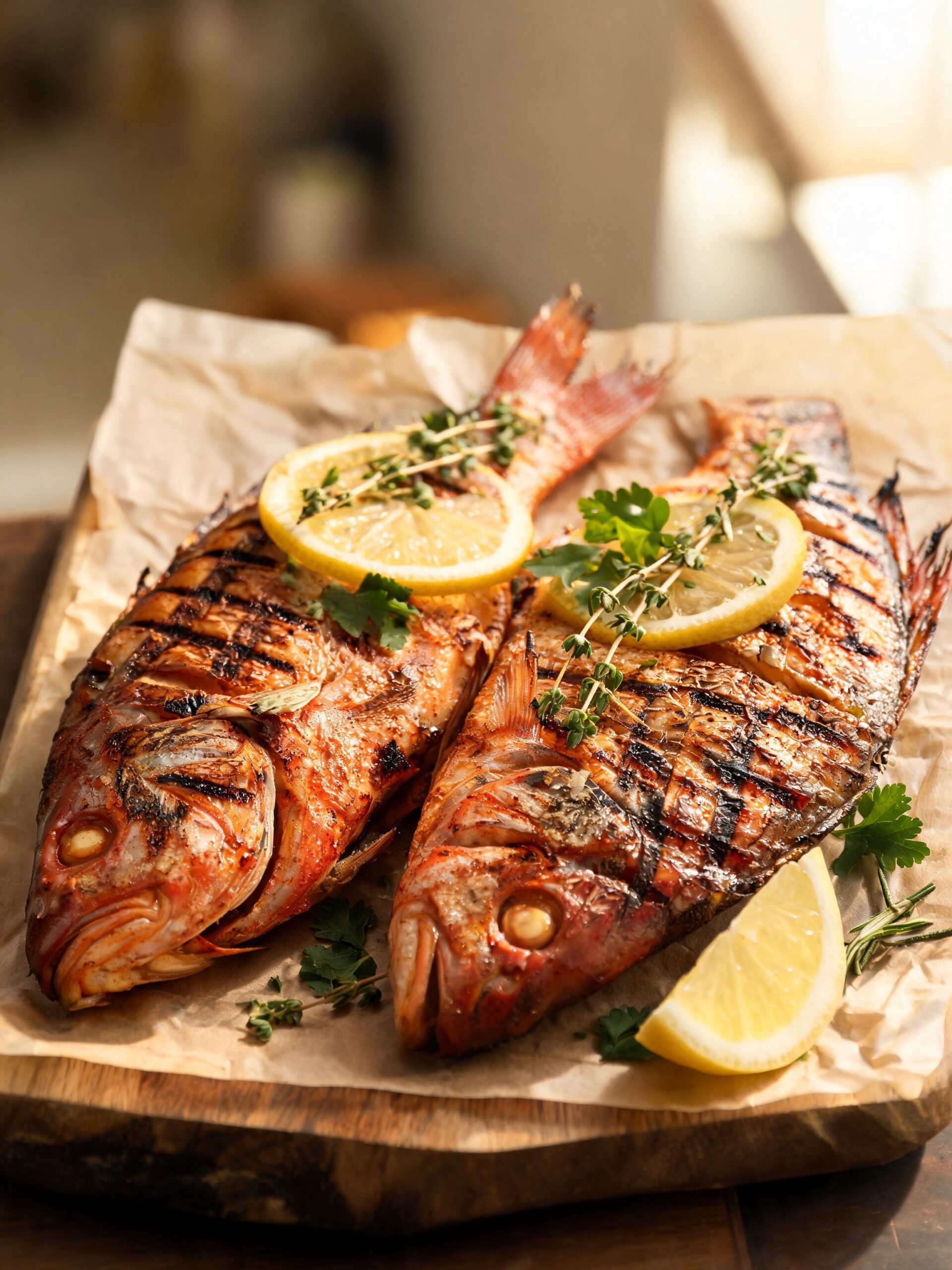
The first time I made a whole grilled snapper recipe at home, I was standing in my backyard with wet boots still on from the dock. We’d pulled in a couple of beautiful red snappers that afternoon, and while I love a good crispy fish fillet recipe for a weeknight, this time I didn’t want to overthink it. Just the fish, the grill, some garlic, lemon, and whatever herbs were still alive in the pot by the back door.
That’s kind of how this whole thing started for me. Not from a cookbook. Not from watching someone on TV. Just from having a fish in my hand and a grill that was already warm.
This easy whole grilled snapper is the kind of meal that makes you feel like you did something right. The skin crisps up in a way that feels almost too good for something so simple. The flesh stays moist inside because the whole fish holds everything together while it cooks. And the smell — that smoky, herby, slightly charred smell — it just takes you somewhere.
If you’ve never cooked a whole fish before, I get it. It looks a little intimidating sitting there on the grill. But honestly? It’s one of the more forgiving things you can cook once you understand a couple of basics. And I’ll walk you through all of it.
Why You’ll Love This Recipe
- It comes together fast — from grill to table in under 35 minutes, which is a real weeknight win when you’re tired and hungry.
- The flavor is genuinely something else. Cooking the fish whole keeps the meat juicy and the skin gets this crispy, slightly smoky edge that you just can’t fake with fillets.
- You don’t need much. A handful of ingredients you probably already have, a hot grill, and a little patience. That’s really it.
Quick Recipe Snapshot
Recipe: Whole Grilled Snapper
Serves: 4
Prep Time: 15 minutes
Cook Time: 20 minutes
Total Time: 35 minutes
Difficulty: Easy — beginner friendly
Best For: Weeknight dinner, weekend grill, coastal-style meal
Key Flavors: Smoky, garlicky, bright with lemon and herbs
Special Equipment: Outdoor grill or grill pan, sharp knife, tongs
Ingredients List
For the Fish
- 2 whole red snappers, about 1.5–2 lbs each, cleaned and scaled — fresh is best, but a properly thawed frozen fish works fine too
- 3 tablespoons olive oil — helps the skin crisp without burning and keeps it from sticking to the grates
- 1 teaspoon kosher salt
- ½ teaspoon black pepper
- 1 teaspoon smoked paprika — this is the quiet ingredient that gives the skin that deep, slightly smoky color
- ½ teaspoon garlic powder
For the Cavity Stuffing
- 4 garlic cloves, lightly smashed — they steam from the inside and perfume the whole fish
- 1 lemon, sliced into thin rounds
- 6–8 sprigs of fresh thyme or rosemary — whatever you have
- A small handful of fresh parsley
For Finishing
- Extra lemon wedges for serving
- A drizzle of good olive oil right before serving
- Flaky sea salt if you have it — not required but it makes a difference
Step-by-Step Instructions
- Get your grill hot. Preheat your grill to medium-high heat — around 400°F if yours has a thermometer. Let it sit there for at least 10 minutes. A cold grill is how fish ends up stuck and torn and frustrating.
- Score the fish. Using a sharp knife, make 3 diagonal cuts on each side of the fish, cutting down to the bone. This isn’t just for looks — it helps the heat get into the thickest part of the flesh so it cooks evenly, and it lets the seasoning sink in a little.
- Season everything. Rub the olive oil all over the outside of both fish, getting into those cuts. Mix the salt, pepper, paprika, and garlic powder together and rub that all over too. Don’t be shy about it. Season inside the cavity as well.
- Stuff the cavity. Tuck the smashed garlic cloves, lemon slices, and herb sprigs inside each fish. Don’t pack it so tight that it won’t close, but get a good amount in there. This is where a lot of the flavor comes from.
- Oil the grill grates. Fold a paper towel, dip it in oil, and use tongs to wipe down the grates right before the fish goes on. This step matters more than people think. I skipped it once and lost half the skin. Never again.
- Grill the fish. Lay the fish on the grill at a slight diagonal to the grates — this gives you better grill marks and makes flipping easier. Close the lid and cook for 8–10 minutes on the first side. Don’t move them. Don’t peek every two minutes. Just let the grill do its thing.
- Flip carefully. Use a wide spatula and tongs together. Slide the spatula under the fish from the belly side and use the tongs to guide from the top. It should release cleanly if it’s ready. If it’s sticking, give it another minute — it’ll tell you when it’s done.
- Cook the second side. Another 7–9 minutes on the second side. The fish is done when the flesh in the deepest part of those score cuts turns opaque and flakes easily when you press it gently with a fork. The skin should look dark and crisp in spots.
- Rest and serve. Pull the fish off the grill and let it sit for 2–3 minutes. Squeeze fresh lemon over the top, drizzle with a little olive oil, and hit it with flaky salt if you’ve got it. Serve the whole fish right on the platter — it looks beautiful and it tastes even better.
Small Tricks From Cooking Fish at Home
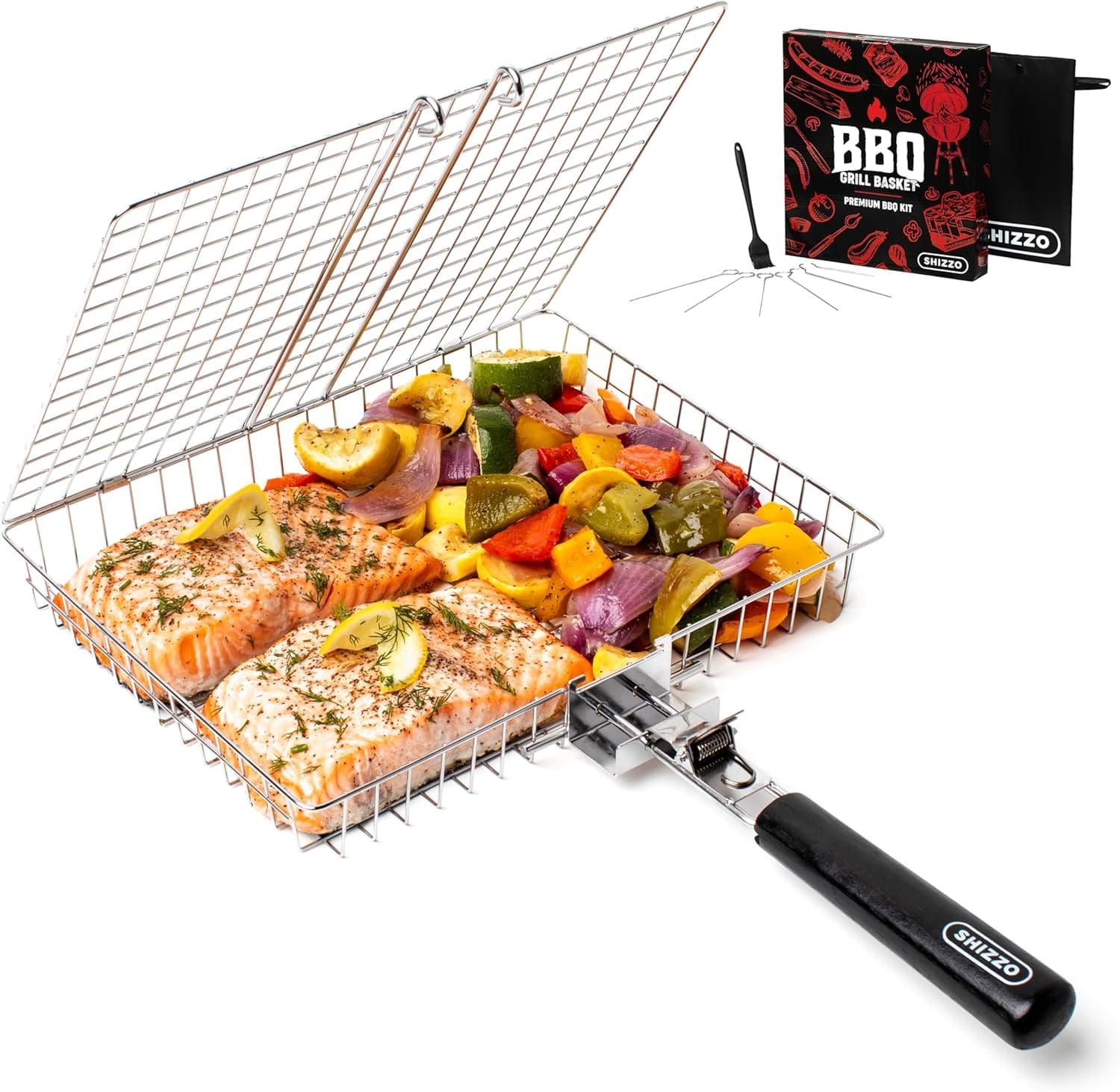
Look, I know the most nerve-wracking part of this whole process is the flip. You’ve done all this work, the fish looks perfect, and then you try to slide a spatula underneath and… disaster. Half the skin rips off and sticks to the grate. To take all that guesswork and stress out of the equation, I rely on a simple grilling basket. It holds the fish securely, letting you flip it with total confidence while still getting that gorgeous char and smoky flavor. It’s my go-to tool for guaranteeing a whole fish comes off the grill looking as good as it tastes.
Grab the grilling basket I use in my own backyard and never worry about a broken fish again.
Barbecue Grill Basket – Stainless Steel Folding Grilling Basket for Fish
✓ prime
We earn a commission if you make a purchase, at no additional cost to you.
Dry the fish before you season it. I mean really dry it — paper towels, inside and out. Any moisture on the skin will steam instead of crisp and you’ll end up with something soft and a little sad. I learned this the hard way on a humid August evening when the fish came off the grill looking pale and limp. Now I dry it like I mean it.
Don’t skip the scoring. I know it feels like extra work but those cuts are doing real work. The thickest part of a snapper near the spine takes longer to cook, and without those cuts the outside can overcook before the inside catches up. Three cuts per side, down to the bone, and you’re set.
The grill temperature matters more than the timing. Every grill runs a little different. Mine runs hot on the left side. My neighbor’s grill is basically a furnace. Medium-high is the target but watch the fish, not the clock. If the skin is charring too fast, move it to a cooler spot or close the vents a little.
Fresh herbs in the cavity aren’t just for flavor — they create a little steam pocket inside the fish as it cooks. That steam keeps the flesh from drying out. I’ve used rosemary, thyme, parsley, even a few basil leaves when that’s all I had. All of it works.
Let the fish tell you when to flip. If you try to lift it and it pulls back, it’s not ready. A fish that’s properly seared releases on its own. That’s the moment. Wait for it.
Common Mistakes to Avoid
Cooking it straight from the fridge. Cold fish on a hot grill cooks unevenly. The outside gets done while the inside is still cold. Pull the fish out about 15–20 minutes before grilling and let it come closer to room temperature. It makes a real difference.
People also tend to flip the fish too early and too often. You flip it once. One time. If you keep moving it around, the skin tears, the fish falls apart, and you lose all that good crust you were building. Patience here is not optional.
Under-seasoning is more common than you’d think. Whole fish needs more seasoning than a fillet because you’re working with a bigger surface area and a thick piece of meat. Be generous with the salt especially — it draws out a little moisture, seasons the flesh, and helps the skin crisp.
Forgetting to oil the grates is probably the most common mistake I see. Even with oil on the fish itself, those grates need to be slicked down right before the fish goes on. Otherwise you’re just hoping for the best, and hope is not a cooking technique.
Variations and Serving Ideas
Spicy version: Add ½ teaspoon of cayenne to the spice rub and stuff a few thin slices of fresh jalapeño into the cavity alongside the lemon and herbs. The heat mellows out as it cooks but you still feel it at the end. Really good with a cold beer on a hot evening.
Mild and simple: Skip the paprika and just go with salt, pepper, olive oil, lemon, and garlic. Sometimes that’s all you want. The fish is good enough to carry it.
Coastal herb twist: Use a mix of fresh dill and parsley in the cavity with lemon and a little orange zest rubbed into the outside. It has this bright, almost floral quality that reminds me of eating somewhere near the water with a breeze coming in.
What to Serve With
Grilled whole snapper is rich and smoky so you want things alongside it that are fresh and a little light. A simple tomato and cucumber salad with red onion and a splash of red wine vinegar cuts right through the richness. Grilled corn works beautifully too — something about charred corn and charred fish just belongs together, a classic pairing that works for everything from grilled snapper to crispy fried fish.
For something more filling, a bowl of seasoned white rice or some crusty bread to soak up the juices is all you really need. I’ve also served it with roasted potatoes and a handful of arugula dressed with lemon and olive oil. That combination never fails.
Keep it simple. The fish is the star and it doesn’t need much competition on the plate.
Storage and Reheating
Leftover grilled snapper keeps in the fridge for up to 2 days in an airtight container. Pull the meat off the bones before storing — it’s easier to work with and reheats more evenly.
To reheat, put it in a skillet over low heat with a tiny splash of water or olive oil and cover it loosely. Give it just a few minutes. You’re warming it through, not cooking it again.
DO NOT microwave it on high. The flesh turns rubbery and the smell fills your whole kitchen in a way that nobody in your house will forgive you for.
DO NOT freeze cooked snapper if you can help it. The texture after freezing and reheating is just not the same. It gets watery and falls apart. If you have extra raw fish, freeze that instead before cooking.
FAQs (People Also Ask)
Can I use a different fish if I can’t find snapper?
Yes, absolutely. Sea bass, branzino, or even a small striped bass all work great with this same approach. The cooking time might shift slightly depending on the size, but the method is the same.
How do I know when the fish is fully cooked?
The flesh in the score cuts should be completely opaque — no translucent or glassy-looking spots. It should also flake easily when you press it gently with a fork near the thickest part. If you have an instant-read thermometer, you’re looking for 145°F at the thickest point near the spine.
Can I use frozen snapper for this recipe?
You can, but thaw it completely in the fridge overnight first. Never grill fish straight from frozen — it won’t cook evenly and the texture suffers. Pat it very dry after thawing because frozen fish releases more water.
How long does this actually take from start to finish?
Realistically, about 35 minutes including prep. If your grill takes a while to heat up, factor that in. It’s genuinely a quick weeknight dinner once you’ve done it once or twice.
Can I make this on a grill pan indoors?
Yes. Use a large cast iron grill pan over medium-high heat. It won’t have quite the same smoky depth as an outdoor grill but the skin still crisps up nicely and the flavor is really good. Open a window though — it does smoke a bit.
Do I need to remove the head before grilling?
No, and I’d actually say don’t. Cooking the fish whole with the head on keeps the moisture in and the presentation is honestly beautiful. If it bothers you, ask your fishmonger to remove it when they clean the fish.
Nutrition Facts
(Per serving. Estimates only, varies by exact ingredients used)
Conclusion
There’s something about serving a whole fish at the table that feels different from anything else. It’s not fancy. It’s actually the opposite of fancy. It’s honest. It looks like what it is — a fish that came out of the water, got seasoned and grilled, and ended up on your table still looking like itself.
My best memories around food are usually the simple ones. The ones where nobody planned too hard and the meal just happened. This coastal style grilled snapper is that kind of meal. Make it once and it’ll become the thing you reach for every time you want something that feels real.
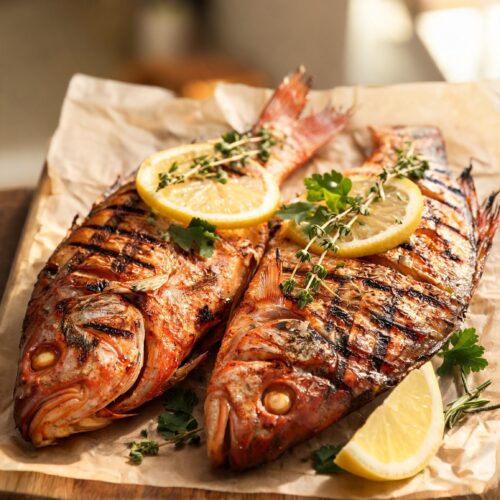
Whole Grilled Snapper Recipe
Ingredients
- 2 whole red snappers (1.5–2 lbs each, cleaned and scaled)
- 3 tablespoons olive oil
- 1 teaspoon kosher salt
- ½ teaspoon black pepper
- 1 teaspoon smoked paprika
- ½ teaspoon garlic powder
- 4 garlic cloves, lightly smashed
- 1 lemon, sliced into thin rounds
- 6–8 sprigs fresh thyme or rosemary
- Small handful fresh parsley
- Extra lemon wedges for serving
- Drizzle of olive oil for finishing
- Flaky sea salt for finishing (optional)
Instructions
- Preheat your grill to medium-high heat (around 400°F) and let it heat for at least 10 minutes.
- Pat both fish completely dry inside and out with paper towels.
- Score each fish with 3 diagonal cuts per side, cutting down to the bone.
- Rub olive oil all over the outside and inside cavity of both fish.
- Mix salt, pepper, smoked paprika, and garlic powder together and rub all over both fish including into the score cuts.
- Stuff each cavity with smashed garlic cloves, lemon slices, and fresh herb sprigs.
- Oil the grill grates using a folded paper towel dipped in oil held with tongs.
- Place fish on the grill at a slight diagonal. Close the lid and cook for 8–10 minutes without moving.
- Carefully flip each fish using a wide spatula and tongs together. Cook for another 7–9 minutes until flesh is opaque and flakes easily.
- Remove from grill and rest for 2–3 minutes. Finish with fresh lemon juice, a drizzle of olive oil, and flaky sea salt before serving.