Introduction
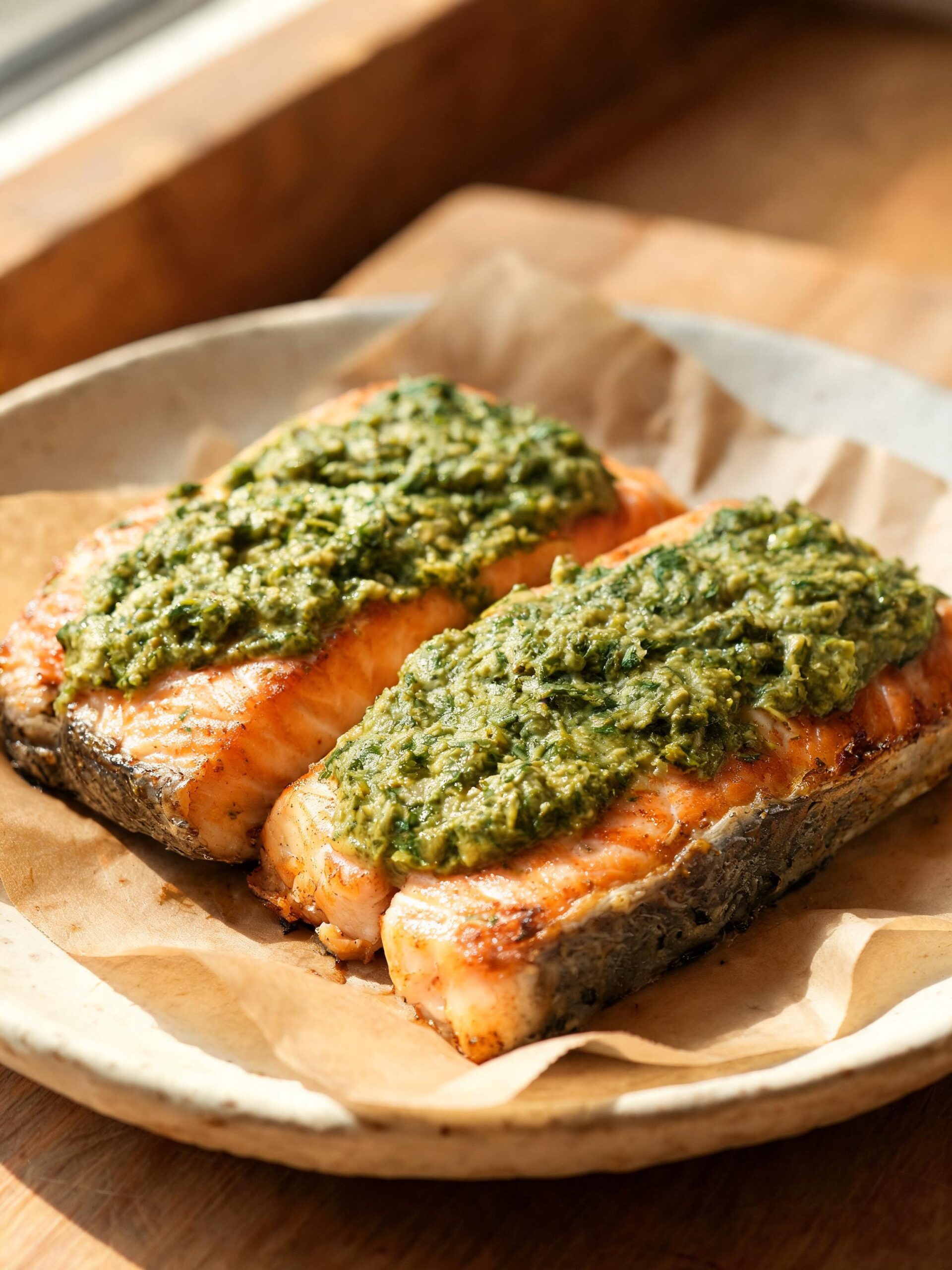
After two decades behind the line in professional kitchens, I can tell you one thing for sure: the simplest dishes are often the best. This Pesto Baked Salmon is the perfect example. It’s the kind of meal I make at home after a long week—it’s fast, incredibly flavorful, and uses straightforward, honest ingredients. While I love recreating complex restaurant dishes like a Creamy Homemade Lobster Bisque, this simple salmon is what I turn to most often. We’re not just slathering a store-bought sauce on a piece of fish here. We’re creating a vibrant, fresh herb green sauce from scratch that elevates the rich flavor of the salmon without overpowering it. This isn’t just another fish recipe; it’s a technique that delivers a perfectly cooked, flaky, and moist piece of salmon every single time. It’s elegant enough for guests but easy enough for a Tuesday night. Forget dry, bland baked fish. This recipe is your new go-to for a healthy, satisfying seafood dinner that actually tastes incredible.
Why You’ll Love This Recipe
- Incredibly Fast: From start to finish, you can have this on the table in under 30 minutes. The fresh herb sauce comes together in the food processor in about five minutes, and the salmon bakes to perfection in 15-20 minutes. It’s the ultimate answer to the “what’s for dinner?” question on a busy night.
- Packed with Flavor: The homemade green herb sauce—a classic pesto—is bright, nutty, and savory. It forms a beautiful crust on the salmon as it bakes, locking in moisture and infusing the fish with the taste of fresh basil, garlic, and Parmesan.
- Healthy and Foolproof: Salmon is a powerhouse of Omega-3 fatty acids, and this recipe keeps things clean and simple. Baking is one of the healthiest ways to cook fish, and my method ensures you won’t overcook it. This is a reliable recipe that works every time, making it a fantastic choice for even novice cooks looking to make a great Pesto Baked Salmon.
Ingredients List
Good cooking starts with good ingredients. There’s nowhere to hide in a simple recipe like this, so quality matters. Here’s what you’ll need and why each component is chosen specifically for this dish.
For the Fresh Herb Green Sauce (Pesto):
- Fresh Basil (2 cups, packed): This is the soul of your sauce. Use sweet Italian basil. The leaves should be bright green and fragrant. Avoid any bunches that are wilted or have dark spots. Don’t be shy when packing it into the measuring cup; you want a ton of that fresh, peppery flavor.
- Pine Nuts (¼ cup, toasted): Toasting the pine nuts is a non-negotiable step. It takes 3-4 minutes in a dry pan and awakens their natural oils, giving the pesto a deep, nutty, and buttery flavor that you just don’t get from raw nuts.
- Garlic (2 cloves, peeled): Use fresh garlic cloves, not the pre-minced stuff in a jar. Two medium cloves will give you a nice, pungent kick that cuts through the richness of the salmon and oil. If your cloves are huge, just use one.
- Parmigiano-Reggiano (¼ cup, grated): The real deal. Get a block and grate it yourself. It provides a salty, umami-rich backbone to the sauce that pre-grated cheese simply can’t match due to anti-caking agents.
- Extra Virgin Olive Oil (¼ cup): Since this is a raw sauce, the flavor of your olive oil will shine through. Use a good quality, cold-pressed extra virgin olive oil with a fruity or peppery note.
- Lemon Juice (1 tablespoon, fresh): This is for brightness. A squeeze of fresh lemon juice cuts the fat, lifts all the other flavors, and keeps the pesto a vibrant green.
- Kosher Salt (½ teaspoon): To season the sauce from within.
- Black Pepper (¼ teaspoon, freshly ground): For a little bit of spice.
For the Salmon:
- Salmon Fillets (4 fillets, 6 ounces each, skin-on or off): The star of the show. I prefer King (Chinook) or Coho salmon for their rich flavor and high fat content, which makes them more forgiving. Atlantic salmon works well too. Look for fillets that are about 1 to 1.5 inches thick. This ensures they cook evenly and stay moist. Skin-on helps insulate the fish from the hot pan, resulting in a more tender fillet.
- Olive Oil (1 tablespoon): Just a little to coat the fish before seasoning. It helps the salt and pepper adhere and promotes a nice sear on the bottom.
- Kosher Salt and Black Pepper (to taste): Always season the fish itself, not just the topping. This builds layers of flavor.
Step-by-Step Instructions
Follow these steps closely, and you’ll have a perfect meal. The key is in the prep and the timing.
- Preheat and Prepare: First thing’s first, get your oven preheating to 400°F (200°C). Position a rack in the middle of the oven. Line a baking sheet with parchment paper. This isn’t just for easy cleanup; it also prevents the salmon from sticking and ensures gentle, even cooking.
- Make the Herb Sauce (Pesto): In a dry, small skillet over medium-low heat, toast the pine nuts for 3-5 minutes, shaking the pan often, until they are golden brown and fragrant. Watch them carefully as they can burn in an instant. Immediately transfer them to a small bowl to stop the cooking process.
- Combine Pesto Ingredients: In the bowl of a food processor, combine the toasted pine nuts, packed basil leaves, garlic cloves, and grated Parmigiano-Reggiano. Pulse 5-6 times until everything is coarsely chopped.
- Emulsify the Sauce: Scrape down the sides of the food processor bowl. With the processor running on low, slowly stream in the ¼ cup of extra virgin olive oil. Continue processing until the sauce is mostly smooth but still has some texture. Don’t overdo it, or the heat from the blades can make the basil taste bitter. Stir in the a href=”https://bluerecipes.com/how-long-to-boil-potatoes-2/”>fresh lemon juice, ½ teaspoon of kosher salt, and ¼ teaspoon of black pepper. Taste and adjust seasoning if needed.
- Prep the Salmon: Pat the salmon fillets completely dry with a paper towel. This is a critical step for getting a good texture. A dry surface allows the fish to bake, not steam. Place the fillets on the prepared baking sheet, leaving an inch or two between them. Drizzle with the 1 tablespoon of olive oil and use your hands to rub it evenly over the tops and sides. Season each fillet generously with kosher salt and freshly ground black pepper.
- Top and Bake: Spoon the fresh herb sauce evenly over the top of each salmon fillet, spreading it into a thick, even layer. It should look like a vibrant green crust.
- Bake to Perfection: Place the baking sheet in the preheated oven. Bake for 15-20 minutes. The exact time will depend on the thickness of your fillets. The salmon is done when it flakes easily with a fork at its thickest point, or when an instant-read thermometer inserted into the center registers 130-135°F (54-57°C) for medium. The pesto should be lightly browned in spots. Let it rest for a few minutes before serving.
Chef’s Pro Tips for Success
Over the years, I’ve learned a few tricks that take this simple dish from good to great. Pay attention to these details.
One of the small details that makes a huge difference between a homemade meal and a restaurant-quality dish is prepping the fish properly. Even the best fillets can have stubborn little pin bones left in them. There’s nothing worse than serving a beautiful piece of salmon to a guest, only for them to get an unpleasant surprise. That’s why I always take a minute to run my fingers over the fillets and use a sturdy pair of fish bone pliers to pull any I find. It’s a quick, easy step that elevates the entire eating experience.
If you’re serious about cooking fish properly at home, a good pair of pliers is a non-negotiable tool. Grab the pair I trust in my own kitchen to ensure every bite is perfect.
Fish Bone Pliers/Tweezers – Ergonomic Non-Slip Grip, Food-Grade Stainless Steel Deboner
✓ prime
We earn a commission if you make a purchase, at no additional cost to you.

- Bring Salmon to Room Temperature: Don’t cook your salmon straight from the fridge. Let it sit on the counter for 15-20 minutes before baking. A freezing cold fillet hitting a hot oven will cook unevenly, leaving the outside dry before the inside is cooked through. This small step ensures a perfectly flaky, evenly cooked piece of fish from edge to center.
- The Importance of a Dry Surface: I mentioned it in the instructions, but it’s worth repeating. Patting the salmon dry with paper towels is non-negotiable. Moisture is the enemy of texture. A dry surface allows the heat to properly cook the fish and helps the pesto topping adhere and form a delicious crust, rather than just sliding off a wet fillet.
- Don’t Over-Process the Pesto: When making the sauce, you want texture, not a completely smooth puree. Over-processing can generate heat, which will bruise the basil leaves, turning your vibrant green sauce a murky, dark color and giving it a slightly bitter taste. Pulse the dry ingredients first, then stream in the oil just until it comes together.
- Understand Carry-Over Cooking: Salmon is a delicate protein. It will continue to cook from its own residual heat after you pull it from the oven. For the most succulent, moist result, I recommend pulling it when the center is about 130°F. Let it rest on the baking sheet for 3-5 minutes, during which time the internal temperature will rise to a perfect 135-140°F (medium). This is the secret to never eating dry salmon again.
- Season the Fish, Not Just the Sauce: A common mistake is relying solely on the pesto for seasoning. The sauce seasons the topping, but the fish itself needs salt and pepper directly on its flesh. Seasoning the fillet before adding the pesto creates a more deeply flavorful dish from the inside out. This makes a huge difference in the final taste of your Pesto Baked Salmon.
Common Mistakes to Avoid
I’ve seen it all in the kitchen. Here are some common ways this dish can go wrong and how to make sure you get it right.
- Overcooking the Salmon: This is the number one sin in seafood cookery. People are often afraid of undercooked fish, so they blast it until it’s tough and chalky. Salmon cooking time is all about thickness. A thin fillet might be done in 12 minutes, while a thick one might need 20. The best way to check is with a fork; gently press on the thickest part. If it starts to separate into flakes, it’s done. An instant-read thermometer is your best friend for guaranteed results.
- Using Low-Quality Pesto: If you choose to use store-bought pesto, please invest in a good one. Look for refrigerated pestos in the deli section, not the jarred stuff on the shelf. The shelf-stable versions often have preservatives, less fresh basil flavor, and can be overly oily or salty, which will ruin the delicate balance of this Pesto Baked Salmon dish.
- Not Preheating the Oven Properly: Placing your salmon in a cool or warming oven is a recipe for disaster. It will cause the fish to cook slowly and unevenly, essentially steaming it in its own juices and making it mushy. A properly preheated 400°F oven ensures the heat hits the fish immediately, helping it to cook quickly and retain its moisture.
- Crowding the Pan: Give each fillet its own space on the baking sheet. If you cram them together, they will steam instead of bake. The hot air needs to circulate around each piece of fish to cook it properly and form that lovely crust on top. If you’re doubling the recipe, use two baking sheets.
Variations and Serving Ideas
Once you’ve mastered the basic recipe, you can get creative with this salmon, as it’s a fantastic canvas for other flavors. If you enjoy mastering elegant seafood dishes and want to try another classic, our Elegant Classic Crab Thermidor Recipe is a wonderful next step for a show-stopping meal.
- Nut Variations: If you don’t have pine nuts or have an allergy, toasted walnuts or almonds make a fantastic substitute in the pesto. Walnuts will give it a more robust, earthy flavor, while almonds provide a milder, sweeter nuttiness. For a nut-free version, try using toasted sunflower or pumpkin seeds (pepitas).
- Add Sun-Dried Tomatoes: For a pop of color and a sweet, tangy flavor, finely chop 3-4 oil-packed sun-dried tomatoes and pulse them into your pesto. This creates a beautiful Pesto Rosso that pairs wonderfully with salmon.
- Sheet Pan Dinner: Turn this into a complete one-pan meal. Toss some asparagus spears, cherry tomatoes, or thinly sliced zucchini with olive oil, salt, and pepper. Arrange them on the baking sheet around the salmon fillets and bake everything together. The vegetables will be perfectly roasted in the time it takes the salmon to cook. This is my favorite way to make a complete Pesto Baked Salmon meal with minimal cleanup.
- Add a Crunchy Topping: Just before baking, sprinkle a mixture of panko breadcrumbs and a little extra grated Parmesan over the pesto. This will create a wonderfully crunchy, golden-brown crust that adds another layer of texture to the dish.
What to Serve With
This salmon is versatile and pairs well with many sides. You want something that complements the rich fish and bright pesto without competing with it.
- Starches: A simple lemon-butter orzo or a creamy Parmesan risotto are fantastic options. For a healthier choice, serve it over a bed of fluffy quinoa or with a side of roasted baby red potatoes seasoned with rosemary.
- Vegetables: Roasted asparagus with a squeeze of lemon is a classic pairing for a reason. Sautéed spinach with garlic, steamed green beans, or a simple arugula salad with a light vinaigrette also work beautifully to cut through the richness of the salmon.
- Wine Pairing: A crisp, dry white wine is the perfect partner. I’d reach for a Sauvignon Blanc, whose citrusy and herbal notes will echo the flavors in the pesto, or a dry Pinot Grigio for a clean, refreshing contrast.
Storage and Reheating
Leftover salmon can be tricky, but if you handle it right, it’s delicious the next day.
- Storage: Let the salmon cool completely to room temperature. Store it in an airtight container in the refrigerator for up to 2 days. Storing it while still warm will create condensation and can make the fish soggy.
- Reheating: The goal is to warm it through without cooking it further. The microwave is your enemy here; it will dry out the salmon in seconds. The best method is to use the oven. Preheat it to a low 275°F (135°C). Place the salmon fillet on a piece of foil, sprinkle it with a teaspoon of water or a squeeze of lemon juice, and wrap it loosely. Heat for 10-15 minutes, or until just warmed through.
- Enjoying Cold: Honestly, leftover pesto salmon is fantastic cold. Flake the chilled salmon and toss it into a green salad for a quick and healthy lunch, or mix it with a little Greek yogurt and herbs to make a delicious salmon salad for sandwiches or crackers.
FAQs (People Also Ask)
- Can I use frozen salmon for this recipe?
- Absolutely. Just make sure you thaw it properly first. The best way is to transfer it from the freezer to the refrigerator the night before you plan to cook it. Never thaw fish at room temperature. Before cooking, pat it exceptionally dry with paper towels, as frozen fish tends to release more moisture.
- Can I make the pesto ahead of time?
- Yes, you can make the pesto up to 3 days in advance. To keep it from browning, press a piece of plastic wrap directly onto the surface of the pesto before sealing the container. This prevents air from getting to it and oxidizing the basil. When you’re ready to use it, just give it a good stir.
- Is this Pesto Baked Salmon recipe keto-friendly?
- Yes, it is. Salmon is packed with healthy fats and protein, and this pesto is naturally low in carbohydrates. Parmesan cheese, pine nuts, and olive oil are all keto-approved. It’s a fantastic, flavorful meal for anyone following a low-carb or ketogenic diet.
- What can I use if I have a nut allergy?
- For a nut-free pesto, simply substitute the pine nuts with an equal amount of raw sunflower seeds or pepitas (shelled pumpkin seeds). Be sure to toast them just like you would the pine nuts to bring out their flavor. The taste will be slightly different but still delicious.
- Can I grill this salmon instead of baking it?
- You can, but the technique is a bit different. I recommend grilling on a cedar plank. Soak the plank in water for at least an hour. Place the seasoned and pesto-topped salmon on the plank and grill over indirect medium heat for 15-20 minutes with the lid closed. The plank protects the fish from the direct flame and infuses it with a wonderful smoky flavor.
Nutrition
Nutrition Facts
(Per serving. Estimates only, varies by exact ingredients used)
Conclusion
This recipe is more than just a set of instructions; it’s a reliable technique for cooking salmon perfectly every time. The fresh, vibrant herb sauce cuts through the richness of the fish, creating a balanced and deeply satisfying meal that tastes like it came from a high-end restaurant but takes less than 30 minutes to make. I hope this becomes a staple in your kitchen, just as it is in mine. Give it a try, and enjoy a truly great plate of food.
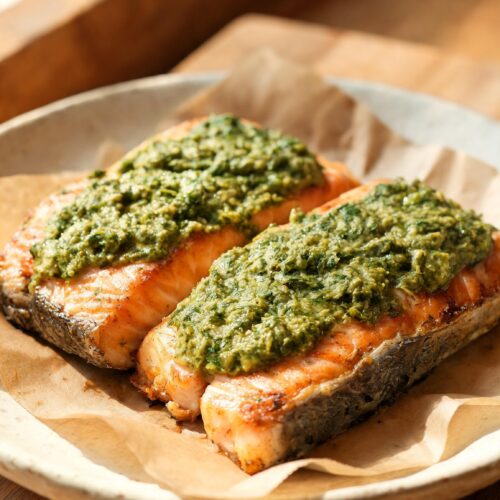
Healthy Baked Salmon with Fresh Herb Green Sauce
Ingredients
- 2 cups fresh basil, packed
- ¼ cup pine nuts, toasted
- 2 cloves garlic, peeled
- ¼ cup Parmigiano-Reggiano, grated
- ¼ cup extra virgin olive oil
- 1 tbsp fresh lemon juice
- ½ tsp kosher salt
- ¼ tsp black pepper, freshly ground
- 4 (6-ounce) salmon fillets, skin-on or off
- 1 tbsp olive oil
- Kosher salt and black pepper to taste
Instructions
- Preheat oven to 400°F (200°C). Line a baking sheet with parchment paper.
- Toast pine nuts in a dry skillet over medium-low heat for 3-5 minutes until golden and fragrant. Remove immediately to cool.
- In a food processor, pulse the toasted pine nuts, basil, garlic, and Parmesan until coarsely chopped.
- With the processor running, slowly stream in the ¼ cup of extra virgin olive oil until the sauce is mostly smooth.
- Stir in the lemon juice, ½ teaspoon kosher salt, and ¼ teaspoon black pepper. Set aside.
- Pat salmon fillets completely dry with a paper towel. Place on the prepared baking sheet.
- Drizzle the fillets with 1 tablespoon of olive oil, and season generously with salt and pepper.
- Spoon the pesto evenly over the top of each salmon fillet, spreading it into a thick layer.
- Bake for 15-20 minutes, or until the salmon flakes easily with a fork and reaches an internal temperature of 130-135°F.
- Let the salmon rest for 3-5 minutes on the baking sheet before serving.