Introduction
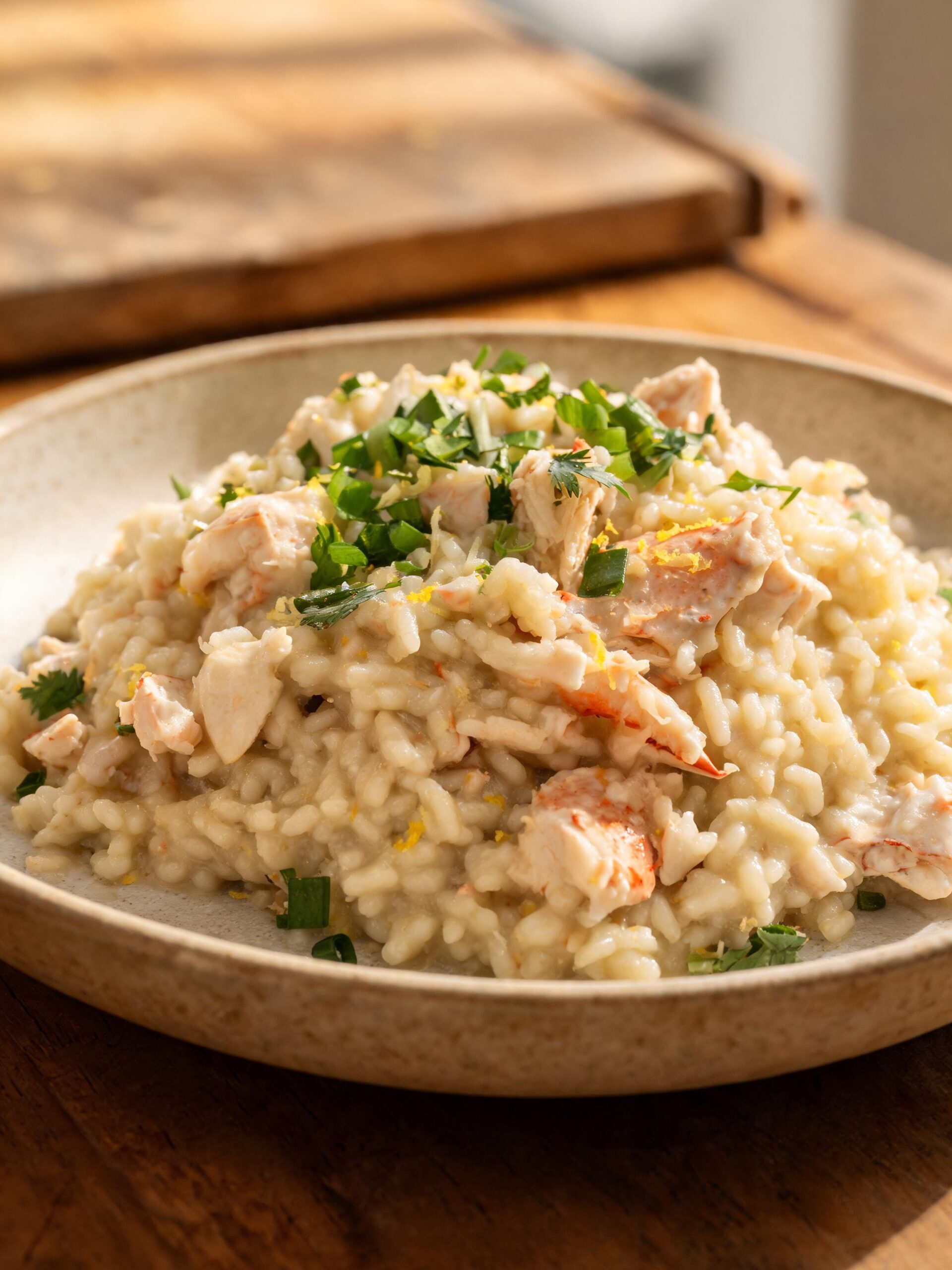
For twenty years, I’ve stood on the line in professional kitchens, and I can tell you one dish that separates the pros from the amateurs: risotto. But I’m here to tell you that a perfect, restaurant-quality Crab Risotto is completely achievable in your own home. Forget the intimidating reputation. This dish isn’t about complex techniques; it’s about patience, good ingredients, and understanding the process. It’s a dish that feels incredibly luxurious and special, yet it comes together with a handful of pantry staples and some beautiful crab meat. We’re going to walk through every single step, from toasting the rice to the final, creamy stir, so you can serve up a bowl of this elegant comfort food with total confidence. Much like our Creamy Homemade Lobster Bisque, this recipe is your blueprint for a truly memorable meal.
Why You’ll Love This Recipe
- Restaurant-Quality Results: This isn’t a shortcut recipe. This is the real-deal method used in high-end seafood restaurants, broken down into simple, manageable steps for the home cook.
- Surprisingly Simple Ingredients: While the final dish tastes complex and decadent, it’s built on a foundation of simple, accessible ingredients like rice, broth, and aromatics. The crab is the star, and we let it shine.
- Perfect for Special Occasions: Whether it’s a date night, a dinner party, or a holiday meal, this dish has a ‘wow’ factor that makes any evening feel special without requiring you to spend all day in the kitchen.
Ingredients List
The quality of your ingredients will directly impact the final dish. There’s nowhere to hide in a simple recipe like this, so choose the best you can find. This recipe serves four as a main course.
For the Risotto Base:
- 6 cups Low-Sodium Chicken or Vegetable Broth: The liquid is the soul of the risotto. Using a low-sodium broth allows you to control the salt level, which is crucial when you’re adding salty cheese later. I prefer chicken broth for its depth, but a good vegetable broth works wonderfully. Keep it simmering in a separate pot throughout the cooking process.
- 2 tbsp Unsalted Butter: Used for sautéing the aromatics and adding richness at the end.
- 1 tbsp Olive Oil: Helps prevent the butter from browning too quickly at the start.
- 1 large Shallot, finely minced: Shallots provide a more delicate, sweet onion flavor than yellow onions, which complements the crab perfectly.
- 2 cloves Garlic, finely minced: A classic aromatic that builds a base layer of flavor.
- 1 ½ cups Arborio Rice: This is non-negotiable. Arborio is a short-grain Italian rice with a high amylopectin starch content. This is what creates the signature creamy texture of risotto as the grains rub against each other. Do not rinse the rice; you want to keep all that beautiful starch.
- ½ cup Dry White Wine: Use something you’d actually drink, like a Pinot Grigio, Sauvignon Blanc, or an unoaked Chardonnay. The wine’s acidity cuts through the richness and adds a critical layer of bright flavor.
- ¾ cup finely grated Parmigiano-Reggiano cheese: Please, use a real block of Parmigiano-Reggiano and grate it yourself. The pre-shredded kind is often coated with anti-caking agents that will make your risotto grainy.
- Salt and Freshly Ground Black Pepper to taste: Season as you go, but be mindful of the salt in the broth and cheese.
For the Crab and Garnish:
- 8 oz Lump Crab Meat: This is the star. ‘Lump’ crab meat offers the perfect balance of flavor and texture, with noticeable pieces of crab. Gently pick through it to remove any bits of shell or cartilage, but try to keep the lumps intact.
- 2 tbsp Fresh Chives, finely chopped: For a mild, fresh oniony finish.
- 1 tbsp Fresh Parsley, finely chopped: Adds freshness and color.
- Zest of ½ Lemon (optional): A little bit of lemon zest stirred in at the very end can brighten all the flavors and cut the richness beautifully.
Step-by-Step Instructions
The key to risotto is preparation and attention. Have all your ingredients prepped and ready next to the stove before you begin. This process moves quickly once it starts.
- Warm the Broth: Pour your 6 cups of broth into a medium saucepan and place it over medium-low heat. Keep it at a gentle simmer. This is the most important step. Adding cold broth to the rice will shock it and stop the cooking process, resulting in a gummy texture.
- Sauté Aromatics: In a large, heavy-bottomed pot or Dutch oven, melt 1 tablespoon of the butter with the olive oil over medium heat. Add the minced shallot and a small pinch of salt. Cook, stirring frequently, until the shallot is soft and translucent, about 3-4 minutes. Add the minced garlic and cook for another minute until fragrant. Don’t let it brown.
- Toast the Rice (Tostatura): Add the Arborio rice to the pot. Stir constantly for about 2 minutes, ensuring every grain is coated in the fat. The rice will become slightly translucent around the edges with a white, opaque center. This toasting step is essential for developing a nutty flavor and helping the grains maintain their shape.
- Deglaze with Wine: Pour in the white wine. Stir continuously, scraping up any bits from the bottom of the pot. The wine will sizzle and steam. Continue stirring until the wine has been almost completely absorbed by the rice and the smell of alcohol has cooked off, about 1-2 minutes.
- Begin Adding Broth: Add one ladleful (about ¾ cup) of the hot broth to the rice. Stir constantly but gently. Let the rice absorb the liquid almost completely before adding the next ladleful. The motion should be slow and steady, not a frantic whip.
- Continue the Process: Continue adding the broth, one ladle at a time, stirring frequently. Allow each addition to be absorbed before adding the next. This entire process should take about 18-20 minutes. The constant stirring is what releases the starches from the rice, creating that creamy texture without any cream.
- Check for Doneness: After about 18 minutes, start tasting the rice. It should be tender with a slight al dente bite in the center. The risotto’s consistency should be creamy and fluid, like slow-moving lava. If you drag a spoon through it, the path should slowly fill back in. If it’s too thick, add another splash of broth. If the rice is still too crunchy, continue adding broth and cooking for a few more minutes.
- Finish the Risotto (Mantecatura): Once the rice is cooked, remove the pot from the heat. Vigorously stir in the remaining 1 tablespoon of butter and the grated Parmigiano-Reggiano. This final step, called ‘mantecatura’, emulsifies the fats and starches, creating an exceptionally creamy finish. Season with salt and pepper to taste.
- Add the Crab and Herbs: Gently fold in the lump crab meat, chopped chives, parsley, and optional lemon zest. You are just warming the crab through, not cooking it. Overcooking will make it tough and stringy.
- Serve Immediately: Ladle the risotto into warm, shallow bowls. Garnish with a few extra chives and a crack of black pepper. Risotto waits for no one, so serve it right away.
Chef’s Pro Tips for Success
After making thousands of risottos, I’ve learned a few non-negotiable rules. Follow these, and your Crab Risotto will be flawless.
Before we get to the cooking rules, let’s talk about prep. The difference between a good dish and a great one is in the details, and for crab risotto, that means ensuring there are absolutely no stray bits of shell or cartilage. While the recipe says to ‘pick through’ the crab meat, I use a specific tool for perfect results: a pair of high-quality food-grade tweezers. They give me the precision to quickly and easily remove any imperfections without shredding the delicate lump crab meat, guaranteeing a truly luxurious texture in every single bite.
If you want to be sure your special occasion meal is absolutely perfect, these are a must-have in your kitchen drawer.
Fish Bone Pliers/Tweezers – Ergonomic Non-Slip Grip, Food-Grade Stainless Steel Deboner
✓ prime
We earn a commission if you make a purchase, at no additional cost to you.

- Hot Broth is Mandatory: I can’t stress this enough. Adding cold or even room-temperature broth to your hot pan will drastically lower the temperature, shocking the rice grains. This seizes up the starches and prevents them from releasing properly, leading to a poor texture. Keep your broth in a separate pot at a low, steamy simmer right next to your risotto pot.
- Master the ‘All’onda’ Consistency: In Italy, the perfect risotto texture is described as ‘all’onda’, meaning ‘on the wave’. It should be fluid enough to ripple like a wave when you shake the pan. It should not be a stiff, thick pile of rice that holds its shape like a scoop of mashed potatoes. If it’s too thick when you’re ready to serve, don’t be afraid to stir in one last splash of hot broth off the heat to loosen it.
- Stir, Don’t Whip: The goal of stirring is to gently knock the rice grains against each other to release their outer layer of starch. You need to stir consistently, but not violently. A slow, steady figure-eight motion with a wooden spoon is perfect. Whipping the risotto incorporates too much air and can break the delicate grains, resulting in a pasty texture.
- Respect the Crab: The crab is already cooked. Your only job is to warm it through at the very end. Add it off the heat with the butter and cheese. The residual heat of the risotto is more than enough to warm it perfectly. If you add it too early, it will break down into shreds and become tough. Use high-quality lump crab for the best texture.
- Season in Layers: Don’t just dump all the salt in at the end. Start by seasoning the shallots. Your broth should be seasoned. The Parmigiano-Reggiano is salty. Taste the risotto *after* you’ve added the cheese, and only then make your final adjustments for salt. Building flavor in layers results in a much more complex and well-rounded dish.
Common Mistakes to Avoid
It’s easy to go wrong with risotto if you don’t know what to look for. Here are the most common pitfalls and how to steer clear of them.
- Mistake: Adding all the broth at once.
The Scenario: You get impatient and decide to pour in half the broth, thinking it will save time. The result is a pot of rice that’s boiling on the outside and raw on the inside, with no creaminess in sight.
The Fix: This mistake is fundamental. The gradual, ladle-by-ladle addition of liquid is what allows the rice to cook evenly and, more importantly, what coaxes the starch out of the grains through constant agitation. There is no shortcut. Embrace the slow, methodical process. - Mistake: Using cold, unseasoned broth.
The Scenario: You grab a carton of broth from the pantry and start adding it directly to the rice. The pan stops sizzling, the temperature plummets, and your final dish tastes bland and one-dimensional.
The Fix: As mentioned in the pro tips, your broth must be hot. Furthermore, taste your broth before you start! If it’s bland, your risotto will be bland. You can simmer it with a bay leaf, a few peppercorns, or a parmesan rind to boost its flavor while you prep your other ingredients. - Mistake: Overcooking the rice until it’s mush.
The Scenario: You’re afraid of crunchy rice, so you keep adding liquid and cooking until the grains have completely broken down into a starchy porridge. The individual grains are gone, replaced by a uniform paste.
The Fix: A perfect risotto grain is ‘al dente’—soft on the outside with a tiny, firm bite right in the center. Start tasting the risotto after about 15 minutes of cooking. The moment it hits that perfect al dente texture, it’s time to pull it off the heat for the final ‘mantecatura’. Remember, it will continue to cook from residual heat even after you take it off the stove. - Mistake: Adding the cheese and crab over direct heat.
The Scenario: You finish cooking the rice and, with the burner still on, you dump in the cheese and crab. The cheese becomes oily and stringy, and the delicate crab meat becomes tough and rubbery.
The Fix: The ‘mantecatura’ (adding fat like butter and cheese) must be done off the heat. This allows the ingredients to emulsify into the starchy sauce rather than melting and separating. The crab, being delicate and pre-cooked, should also only be added off the heat to be gently warmed through. This preserves its sweet flavor and tender texture, making it the star of your Crab Risotto.
Variations and Serving Ideas
While this classic Crab Risotto is fantastic as is, it’s also a great canvas for other flavors. Here are a few ideas:
- Saffron and Crab Risotto: Add a generous pinch of saffron threads to your simmering broth. Let them steep for about 10 minutes to infuse the liquid with their color and unique flavor before you start adding it to the rice. This creates a beautiful golden risotto that pairs wonderfully with seafood.
- Spicy Crab Risotto: For a little kick, add ¼ teaspoon of red pepper flakes along with the garlic. You can also finish the dish with a drizzle of chili-infused olive oil for an extra layer of heat that cuts through the richness.
- Lemony Asparagus and Crab Risotto: In the last 5 minutes of cooking the risotto, fold in 1 cup of thinly sliced asparagus tips. They will cook to a perfect crisp-tender texture. Add the zest of a full lemon at the end instead of just half for an extra bright, fresh flavor.
- Serving Presentation: Always serve risotto in a wide, shallow bowl, often called a pasta bowl. This allows it to spread out and cool slightly. Give the bowl a firm tap on the counter to help the risotto settle evenly. Garnish with a sprinkle of fresh herbs, a final grating of cheese, and maybe a drizzle of extra-virgin olive oil.
What to Serve With
Crab risotto is rich and satisfying, so you don’t need much on the side. The goal is to complement the dish, not overpower it.
- Wine Pairing: Stick with the type of dry white wine you used in the recipe. A crisp, acidic Sauvignon Blanc from the Loire Valley or a clean Italian Pinot Grigio is perfect. Their acidity will cleanse the palate between rich, creamy bites.
- Simple Green Salad: A simple salad of arugula or mixed greens tossed in a lemon vinaigrette is the ideal companion. The bitterness of the arugula and the sharpness of the dressing provide a perfect contrast to the risotto’s richness.
- Roasted or Steamed Vegetables: Simple is best. Steamed asparagus with a squeeze of lemon, or roasted broccolini with a little garlic and olive oil, adds a welcome touch of green and a different texture to the meal without competing for attention.
Storage and Reheating
Let’s be honest: risotto is at its absolute peak the moment it comes out of the pan. It does not reheat perfectly, as the starches will seize up upon cooling. However, if you have leftovers, don’t throw them away!
- Storage: Store any leftover risotto in an airtight container in the refrigerator for up to 2 days.
- Reheating Method: The best way to reheat risotto is on the stovetop. Place the cold risotto in a small saucepan over low heat. Add a generous splash of broth, water, or even milk. Stir gently and constantly as it heats up to try and reactivate the starches and restore some of the creaminess. It won’t be the same as fresh, but it will still be delicious. Avoid the microwave, which tends to make it gummy and unevenly heated.
- The Ultimate Leftover Upgrade (Arancini): The best use for leftover risotto is to make arancini (fried rice balls). Chill the risotto completely until it’s firm. Scoop the cold risotto, press a small cube of mozzarella into the center, and roll it into a ball. Dredge the ball in flour, then beaten egg, then breadcrumbs. Fry in 350°F oil until golden brown and crispy. It’s the best way to give leftover risotto a second life.
FAQs (People Also Ask)
1. Can I use frozen crab meat for this recipe?
Absolutely. Frozen crab meat is a great, often more affordable, option. The key is to thaw it properly. Place it in the refrigerator overnight to thaw gently. Before using, gently squeeze out any excess water and pat it dry with a paper towel. This prevents your final Crab Risotto from becoming watery.
2. What can I substitute for the white wine?
If you prefer not to cook with alcohol, you can substitute an equal amount of your simmering broth. To mimic the acidity that the wine provides—a key component in many classic seafood preparations like Crab Thermidor—add about 1 teaspoon of white wine vinegar or fresh lemon juice to the rice along with that first ladle of broth.
3. I don’t have Arborio rice. Can I use another type?
For a true risotto, you need a high-starch, short-grain rice. The best substitutes for Arborio are Carnaroli (often called the ‘king’ of risotto rices, it holds its shape well) or Vialone Nano. Do not use standard long-grain rice like Basmati or Jasmine; they lack the necessary starch and will result in a dry, separated dish, not a creamy risotto.
4. How do I know for sure when the risotto is done cooking?
The visual and textural cues are key. Visually, it should be creamy and flowing. When you pull a spoon through it, the channel should fill in slowly. Texturally, you need to taste it. Fish out a single grain of rice and bite into it. It should be mostly soft and creamy, but with a very tiny, firm point in the very center. This is ‘al dente’. If it’s chalky and hard, it needs more time. If it’s uniformly soft and mushy, it’s slightly overcooked.
5. Can I make this dish ahead of time for a party?
Unfortunately, no. Risotto is a dish that must be made and served immediately. It loses its signature texture within minutes of leaving the pan. You can, however, do all of your prep (mise en place) ahead of time: mince the shallots and garlic, measure the rice, grate the cheese, and have your broth simmering. This way, the active cooking process, which takes only about 20-25 minutes, is all you have to do right before serving.
Nutrition
Nutrition Facts
(Per serving. Estimates only, varies by exact ingredients used)
Conclusion
Making a truly great risotto is a rite of passage for any home cook. It teaches you patience, attention, and the magic of transforming simple ingredients into something extraordinary. This crab risotto is more than just a recipe; it’s a technique and a feeling. I hope you enjoy the process as much as the final, delicious result. Get in the kitchen and give it a try—you’ve got this.

Elegant & Creamy Homemade Crab Risotto
Ingredients
- 6 cups Low-Sodium Chicken or Vegetable Broth
- 2 tbsp Unsalted Butter, divided
- 1 tbsp Olive Oil
- 1 large Shallot, finely minced
- 2 cloves Garlic, finely minced
- 1 ½ cups Arborio Rice
- ½ cup Dry White Wine (like Pinot Grigio or Sauvignon Blanc)
- ¾ cup finely grated Parmigiano-Reggiano cheese
- Salt and Freshly Ground Black Pepper to taste
- 8 oz Lump Crab Meat, picked over for shells
- 2 tbsp Fresh Chives, finely chopped
- 1 tbsp Fresh Parsley, finely chopped
- Zest of ½ Lemon (optional)
Instructions
- Warm the Broth: In a medium saucepan, bring the broth to a gentle simmer over medium-low heat. Keep it warm throughout the cooking process.
- Sauté Aromatics: Melt 1 tbsp of butter and the olive oil in a large, heavy-bottomed pot over medium heat. Add the shallot and cook until translucent, about 3-4 minutes. Add the garlic and cook for 1 minute more until fragrant.
- Toast the Rice: Add the Arborio rice to the pot and stir constantly for 2 minutes until the edges of the grains are translucent.
- Deglaze: Pour in the white wine and stir until it's almost completely absorbed by the rice.
- Add Broth Gradually: Add one ladle of hot broth to the rice and stir gently but constantly until the liquid is absorbed. Repeat this process, adding one ladle at a time and waiting for it to be absorbed before adding the next.
- Cook to Al Dente: Continue the process for about 18-20 minutes, until the risotto is creamy and the rice is tender with a slight al dente bite. The consistency should be fluid, not stiff.
- Finish the Risotto (Mantecatura): Remove the pot from the heat. Stir in the remaining 1 tbsp of butter and the grated Parmigiano-Reggiano cheese until fully incorporated and creamy. Season to taste with salt and pepper.
- Fold in Crab and Herbs: Gently fold in the lump crab meat, chives, parsley, and optional lemon zest. Be careful not to break up the crab.
- Serve Immediately: Ladle the risotto into warm bowls and serve right away, garnished with extra chives if desired.