Introduction
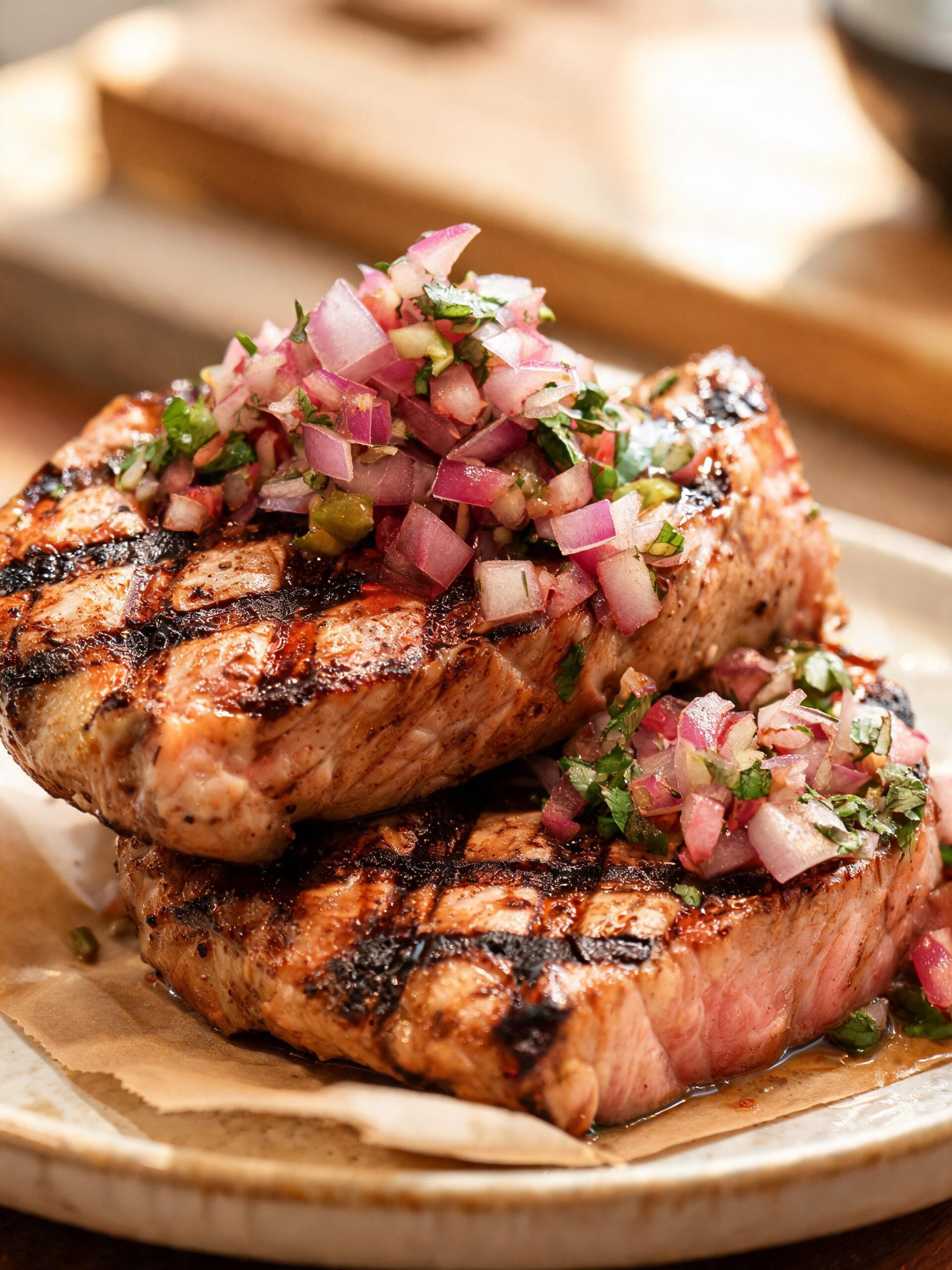
After more than two decades working in professional kitchens, I can tell you that a perfectly executed Grilled Ahi Tuna is one of the most impressive, yet surprisingly simple, dishes you can master at home. It’s about respecting a high-quality ingredient with a straightforward technique. This recipe isn’t about masking the fish with heavy sauces; it’s about creating a perfect, ruby-red center with a beautifully seared, seasoned crust. The fresh red onion salsa cuts through the richness of the tuna with bright acidity and a little heat, creating a balanced and unforgettable main course. Forget what you think you know about cooking fish at home. This is the definitive guide to making incredible grilled ahi tuna that will rival any high-end seafood restaurant, much like our impressive Creamy Homemade Lobster Bisque.
Why You’ll Love This Recipe
- Incredibly Fast: From prep to plate, this entire meal comes together in about 30 minutes. The tuna itself cooks in less than 5 minutes, making it a perfect solution for a busy weeknight when you want something special without the time commitment.
- Bold, Fresh Flavors: The combination of the savory, umami-rich tuna and the bright, acidic crunch of the fresh red onion and jalapeño salsa is a masterclass in flavor and texture contrast. It’s light, healthy, and deeply satisfying.
- Restaurant-Quality Results: This recipe demystifies the process of searing tuna. By following these precise steps and pro tips, you’ll achieve that coveted perfectly rare center and beautifully crusted exterior that you expect when ordering this dish at a fine dining establishment.
Ingredients List
The quality of your ingredients is paramount here, especially the tuna. This recipe serves four people.
For the Grilled Ahi Tuna:
- Ahi Tuna Steaks: 4 (6-ounce) steaks, sushi-grade or sashimi-grade, about 1.5 inches thick. This is non-negotiable. “Sushi-grade” indicates the fish is high-quality and safe to be consumed rare. The thickness is crucial for achieving a good sear on the outside while keeping the inside rare.
- Avocado Oil or Grapeseed Oil: 2 tablespoons. You need a high-smoke-point oil to prevent burning on the hot grill. Olive oil is not the best choice here as it will smoke and impart a bitter taste.
- Low-Sodium Soy Sauce or Tamari: 2 tablespoons. This adds a savory, umami depth and helps with the browning of the crust.
- Fresh Ginger: 1 teaspoon, finely grated. Use a microplane for the best results. It adds a warm, aromatic spice.
- Fresh Garlic: 1 clove, finely minced or grated. Complements the ginger and adds a pungent base note.
- Kosher Salt: 1/2 teaspoon.
- Coarsely Ground Black Pepper: 1/2 teaspoon.
For the Fresh Red Onion Salsa:
- Red Onion: 1/2 cup, finely diced. Red onions are sweeter and less pungent than yellow onions, making them ideal for a raw salsa.
- Fresh Cilantro: 1/2 cup, chopped. Provides a bright, herbaceous, and almost citrusy note that is essential for this salsa.
- Jalapeño: 1 small, seeds and ribs removed, minced. This adds a controlled kick of heat. If you prefer more spice, leave some of the seeds in.
- Lime Juice: 2 tablespoons, freshly squeezed. The acid is critical; it mellows the onion and brings all the flavors together. Do not use bottled juice.
- Extra Virgin Olive Oil: 1 tablespoon. Use a good quality one for flavor. It rounds out the salsa and adds a touch of richness.
- Kosher Salt: 1/4 teaspoon, or to taste.
Step-by-Step Instructions
Follow this sequence for perfect timing. Make the salsa first to allow the flavors to meld while you prepare and grill the fish.
- Prepare the Salsa: In a small bowl, combine the finely diced red onion, chopped cilantro, minced jalapeño, fresh lime juice, and extra virgin olive oil. Season with 1/4 teaspoon of kosher salt. Stir everything together and set it aside. Letting it sit for at least 15 minutes allows the lime juice to slightly pickle the onion, softening its bite and allowing the flavors to marry.
- Preheat the Grill: Preheat your gas or charcoal grill to high heat, aiming for a temperature of 450-500°F (232-260°C). A screaming hot grill is the key to a great sear. Clean the grill grates thoroughly with a wire brush.
- Prepare the Tuna Steaks: While the grill heats, prepare the tuna. Pat the steaks completely dry with paper towels. This step is critical for getting a good sear; any surface moisture will steam the fish instead of searing it.
- Season the Tuna: In a small bowl, whisk together the avocado oil, soy sauce, grated ginger, and minced garlic. Brush this mixture evenly over all sides of the tuna steaks. Immediately season them with the kosher salt and coarsely ground black pepper.
- Oil the Grates: Just before grilling, use tongs to wipe the hot grill grates with a paper towel lightly soaked in high-smoke-point oil. This is your insurance policy against sticking.
- Grill the Tuna: Place the tuna steaks on the hottest part of the grill. For a rare center (highly recommended), grill for approximately 90 seconds to 2 minutes per side. You are looking for well-defined grill marks and an opaque exterior, but the sides should still show a deep red color. Do not press down on the fish.
- Rest the Tuna: Immediately remove the tuna from the grill and place it on a clean cutting board. Let it rest for 5 minutes. This allows the juices to redistribute throughout the steak, ensuring it’s moist and tender. Do not skip this step.
- Slice and Serve: After resting, use a very sharp knife to slice the tuna against the grain into 1/2-inch thick pieces. Arrange the slices on a platter or individual plates. Spoon the fresh red onion salsa generously over the top and serve immediately. This Grilled Ahi Tuna is best enjoyed the moment it comes off the cutting board.
Chef’s Pro Tips for Success
Speaking of getting that intense heat, one of the most reliable tools in my arsenal for this dish, especially when I can’t use my outdoor grill, is a heavy-duty cast iron grill pan. It gets ferociously hot and holds that temperature across the entire surface, which is absolutely critical for creating that perfect, deeply seared crust and classic grill marks in just a minute or two. The Lodge Pro-Grid is my workhorse; its superior heat retention is exactly what you need to form that crust instantly without a single second of steaming the fish.
If you’re serious about achieving that restaurant-quality sear at home, this is the tool I trust to deliver every single time.
Lodge LPGI3 Pro-Grid Cast Iron Reversible Grill/Griddle, 20-inch x 10.44-inch
✓ prime
We earn a commission if you make a purchase, at no additional cost to you.

After cooking thousands of pounds of tuna, I’ve learned a few non-negotiable rules. Pay attention to these details; they make all the difference.
- Source the Best Possible Fish: This is the most important tip. Your final dish will only be as good as your starting ingredient. Look for tuna labeled “sushi-grade” or “sashimi-grade.” The flesh should be a vibrant, translucent ruby red, not dull or brownish. It should smell fresh like the ocean, not “fishy.” Build a relationship with a reputable fishmonger.
- The Grill Must Be Ferociously Hot: I can’t stress this enough. A lukewarm grill will result in a grey, steamed, and often stuck piece of fish. You need intense, direct heat to create the Maillard reaction—the chemical process that gives seared food its distinctive flavor and color—in a very short amount of time. This is how you get a crust on the outside before the inside overcooks.
- Dryness is Your Ally: Before seasoning, the surface of that tuna steak must be bone dry. Use paper towels and pat it gently but thoroughly. Moisture is the enemy of a good sear. It creates steam, which prevents the surface from browning and forming that delicious crust.
- Slice Against the Grain: Just like a beef steak, a tuna loin has a grain—lines of muscle fibers running in one direction. Look closely at the steak. To serve, slice perpendicular to these lines. This shortens the muscle fibers, resulting in a much more tender, melt-in-your-mouth texture. Slicing with the grain will make it chewy.
- Don’t Marinate, Just Season: Avoid long marination times for high-quality tuna. The acid in many marinades (like citrus juice or vinegar) can begin to “cook” the fish, a process called ceviche. This alters the delicate texture. A quick brush of a soy-ginger mixture right before grilling is all you need to add flavor without compromising the integrity of the fish.
Common Mistakes to Avoid
Here are some common pitfalls I’ve seen home cooks fall into. Avoid these, and you’ll be in great shape.
- Overcooking the Tuna: This is the cardinal sin. Ahi tuna is extremely lean. When overcooked, it becomes dry, tough, and tastes disappointingly similar to canned tuna. The goal is a quick sear on the outside and a raw, warm center. If you’re nervous, err on the side of undercooking. You can always put it back on the grill for 20 seconds, but you can never undo an overcooked piece of fish.
- Using Low-Quality or Improperly Thawed Fish: Using a lower-grade tuna steak and trying to serve it rare is not only a flavor issue but a potential food safety risk. If using frozen tuna, it must be thawed properly in the refrigerator overnight, not under hot water or in the microwave. Improper thawing damages the cell structure, leading to a mushy texture.
- Not Cleaning and Oiling the Grill Grates: Delicate fish like tuna will stick to a dirty or dry grill grate, tearing the beautiful steak apart when you try to flip it. Always start with a grill that has been scraped clean with a wire brush and then wiped with a high-smoke-point oil just before the fish goes on.
- Slicing the Tuna Immediately: I see this all the time. The tuna comes off the grill, and the cook immediately slices into it. This causes all the delicious juices to run out onto the cutting board. Resting the fish for 5 minutes is crucial. It allows the muscle fibers to relax and reabsorb their moisture, ensuring every bite is succulent.
Variations and Serving Ideas
While this recipe is fantastic as is, the Grilled Ahi Tuna is a versatile base for many other dishes.
- Grilled Tuna Tacos: Slice the tuna into smaller strips and serve in warm corn tortillas. Top with the red onion salsa, some shredded cabbage, a slice of avocado, and a drizzle of chipotle crema.
- Ahi Tuna Salad: This is not a mayonnaise-based salad. Serve the sliced tuna over a bed of mixed greens like arugula and frisée. Add sliced avocado, cherry tomatoes, and cucumber. Drizzle with a light ginger-lime vinaigrette.
- Spicy Tuna Rice Bowl: Serve the sliced tuna over a bowl of steamed jasmine or sushi rice. Add edamame, shredded carrots, and pickled ginger. Drizzle with sriracha mayo and a sprinkle of toasted sesame seeds.
- Blackened Tuna Steaks: Instead of the soy-ginger glaze, coat the tuna steaks in a generous layer of blackening spice before grilling. Serve with a cool and creamy avocado sauce to balance the heat.
What to Serve With
To make this a complete meal, pair the tuna with sides that complement its fresh, clean flavors. For a truly show-stopping seafood dinner, you could even serve it alongside another main course like our Elegant Classic Crab Thermidor Recipe for the ultimate feast.
- Coconut Rice: The subtle sweetness and creamy texture of coconut-infused jasmine rice is a perfect counterpoint to the savory tuna and zesty salsa.
- Grilled Asparagus: Toss asparagus spears in a little oil, salt, and pepper and grill them alongside the tuna. A squeeze of lemon at the end makes them a perfect, simple vegetable side.
- Soba Noodle Salad: A cold soba noodle salad with a sesame-ginger dressing, edamame, and shredded carrots works beautifully with the Asian-inspired flavors of the tuna glaze.
- Simple Arugula Salad: A peppery arugula salad dressed with nothing more than extra virgin olive oil, lemon juice, and shaved Parmesan cheese adds a fresh, green component to the plate.
Storage and Reheating
Properly storing leftover cooked tuna is key to enjoying it later, but a word of caution: it will never be as good as it is fresh off the grill.
- Storage: Allow the tuna to cool completely. Store it in an airtight container in the refrigerator for up to 2 days. Store the salsa separately in its own airtight container.
- Reheating: I strongly advise against reheating grilled tuna. The residual heat will cook the rare center through, making it dry and tough.
- Best Way to Use Leftovers: The best way to enjoy leftover tuna is cold. Flake it into a green salad, mix it into a cold noodle salad, or make a simple tuna salad with a bit of mayo, celery, and onion to serve on crackers or in a sandwich. The texture will be different, but the flavor will still be enjoyable.
FAQs (People Also Ask)
1. Can I use frozen Ahi tuna for this recipe?
Yes, absolutely, provided it is high-quality, vacuum-sealed, and labeled as sushi or sashimi-grade. The key is to thaw it correctly. Place the sealed package in the refrigerator for 24 hours. Never thaw it at room temperature or in the microwave, as this will ruin the texture and can be unsafe.
2. How can I tell when the Grilled Ahi Tuna is done without cutting it open?
For a rare sear, you rely on time and visual cues. On a very hot grill (450-500°F), 90 seconds to 2 minutes per side is the sweet spot for a 1.5-inch thick steak. Look at the side of the steak as it cooks. You’ll see a band of cooked, opaque fish moving up from the bottom. You want that cooked band to be very thin, about 1/4 inch on each side, leaving a large, deep red center.
3. Can I cook this on a grill pan on the stove?
Yes, a cast-iron grill pan is a great alternative. The same principles apply. Get the pan smoking hot over high heat. Add a little high-smoke-point oil to the pan. Sear the tuna for the same amount of time, 90-120 seconds per side. Make sure your kitchen is well-ventilated, as it will produce a good amount of smoke.
4. I don’t like cilantro. What’s a good substitute?
While cilantro is classic, you can substitute it with fresh flat-leaf parsley. It will change the flavor profile, giving the salsa a more green, peppery taste instead of the distinctive citrusy notes of cilantro, but it will still be delicious. Some people also enjoy a small amount of fresh mint.
5. Is it really safe to eat Ahi tuna rare?
Yes, it is safe as long as you purchase fish that is explicitly labeled “sushi-grade” or “sashimi-grade.” This designation means the fish was handled and frozen in a way that kills any potential parasites, making it safe for raw or near-raw consumption. Never attempt this recipe with standard-grade tuna from the grocery store counter.
Nutrition
Nutrition Facts
(Per serving. Estimates only, varies by exact ingredients used)
Conclusion
This recipe proves that you don’t need complicated techniques or a long list of ingredients to create a truly spectacular meal. It’s about heat, timing, and most importantly, a fantastic piece of fish. I hope you’ll fire up your grill and give this recipe a try. When you slice into that perfectly seared tuna and see that beautiful red center, you’ll feel like a professional chef in your own backyard.
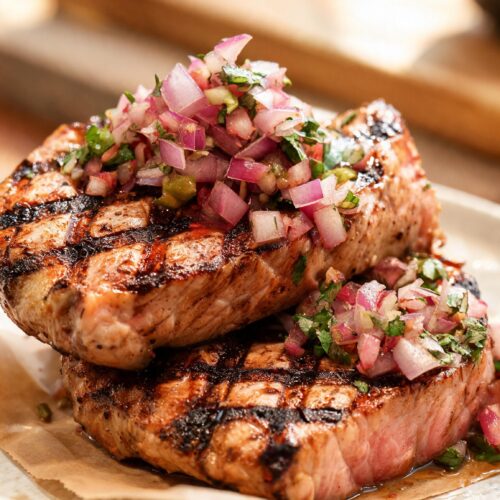
Grilled Ahi Tuna Steaks with Fresh Red Onion Salsa
Ingredients
- 4 (6-ounce) Ahi Tuna steaks, sushi-grade, 1.5 inches thick
- 2 tbsp avocado oil or grapeseed oil
- 2 tbsp low-sodium soy sauce or tamari
- 1 tsp fresh ginger, finely grated
- 1 clove fresh garlic, minced
- 1/2 tsp kosher salt
- 1/2 tsp coarsely ground black pepper
- 1/2 cup red onion, finely diced
- 1/2 cup fresh cilantro, chopped
- 1 small jalapeño, minced (seeds removed)
- 2 tbsp fresh lime juice
- 1 tbsp extra virgin olive oil
- 1/4 tsp kosher salt (for salsa)
Instructions
- In a small bowl, combine the diced red onion, cilantro, jalapeño, lime juice, and extra virgin olive oil. Season with 1/4 tsp salt. Stir and set aside for at least 15 minutes.
- Preheat your grill to high heat (450-500°F). Clean the grates thoroughly.
- Pat the tuna steaks completely dry with paper towels.
- In a small bowl, whisk together the avocado oil, soy sauce, ginger, and garlic. Brush this mixture over all sides of the tuna steaks. Season with salt and pepper.
- Lightly oil the hot grill grates with a paper towel soaked in high-smoke-point oil.
- Place the tuna on the grill and cook for 90 seconds to 2 minutes per side for a rare center.
- Remove tuna from the grill and let it rest on a cutting board for 5 minutes.
- Using a sharp knife, slice the tuna against the grain into 1/2-inch thick pieces. Serve immediately, topped with the red onion salsa.